I kind of accidentally bought this bumper so bear with me while I tell the story. Regular readers will know that I recently bought a 1998 Jeep Cherokee after chasing a guy down in traffic to buy it. It’s got a little bit of a lift and some 31″ tires. This one came from the factory with a donut spare, which is something I’d never even heard of before in a Cherokee. Because of that, it didn’t have the necessary hardware to properly hold a full-size spare–which only matters a little because the maximum tire size for the factory hardware is…31″.
This is my third XJ. For both of my previous Jeeps, I wanted new bumpers but didn’t really find it necessary to spend the money. I really like the way tire carrier rear bumpers look, this one needed one, so there’s all the excuse I needed. I bought this XJ for less than I sold my WRX for, so that’s where my budget came from.
Looking around, most of the bumpers that did what I wanted were in the $1200 range. That was basically my whole budget for upgrades so I kept looking. Smittybilt came out with one that got mixed reviews mostly from people who’d never seen one. “Trail Ready” and “Smittybilt” aren’t usually used in the same sentence. There were lots of questions about the thickness of the steel, the quality of the welds, and whether they tied into the frame or just used the stock bumper mounts. There weren’t any good writeups out there because the manufacturer has had problems with lead times. I think it was 6 months to a year before the first paying customers actually got their bumpers in hand.
If I’m completely honest with myself, the bumper would be just for show. I went wheeling exactly one time with the previous two Cherokees…and rode with someone else. The Smittybilt bumper was $750 pretty much everywhere, so I could save $450 if I bought theirs.
I live about 3 miles from a retail store for 4 Wheel Parts. They’re a retailer for Smittybilt, so one Saturday I took liwizard and we went investigating. They didn’t have any of the Cherokee bumpers on display, but they did have others in the XRC line for me to look at. They had something else, too.
There was a single sales flyer about the size of a postcard sitting on top of one of the Wrangler bumpers: “Buy a Cherokee front and rear XRC bumper by June 30th, get XRC Rock Sliders for free.” The sliders are about $500.
So for the cost of a “standard” tire carrier bumper, I could get the front and rear bumpers plus rock sliders. Yeah, so that was kind of a no-brainer.
Unfortunately–and this was not explained to me properly when I made my purchase–everything except the front bumper was backordered. For four months. Apparently “They’re in the warehouse in California and will take 3 weeks to get here” doesn’t actually mean that the ones in the warehouse haven’t already been bought by someone else. I learned that when I picked up the front bumper and the counter guy casually mentioned my other stuff was on backorder.
Things you should probably know up front
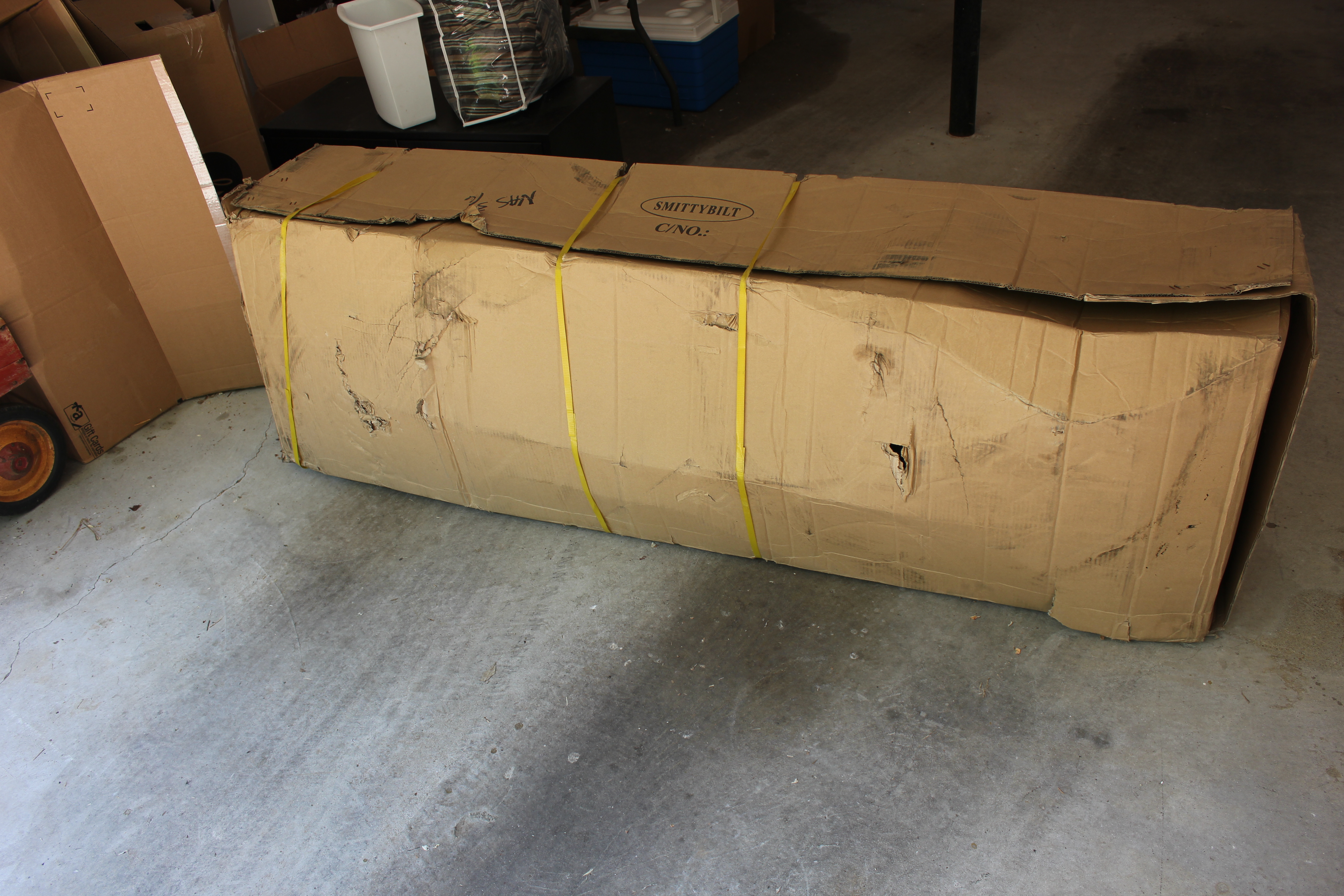
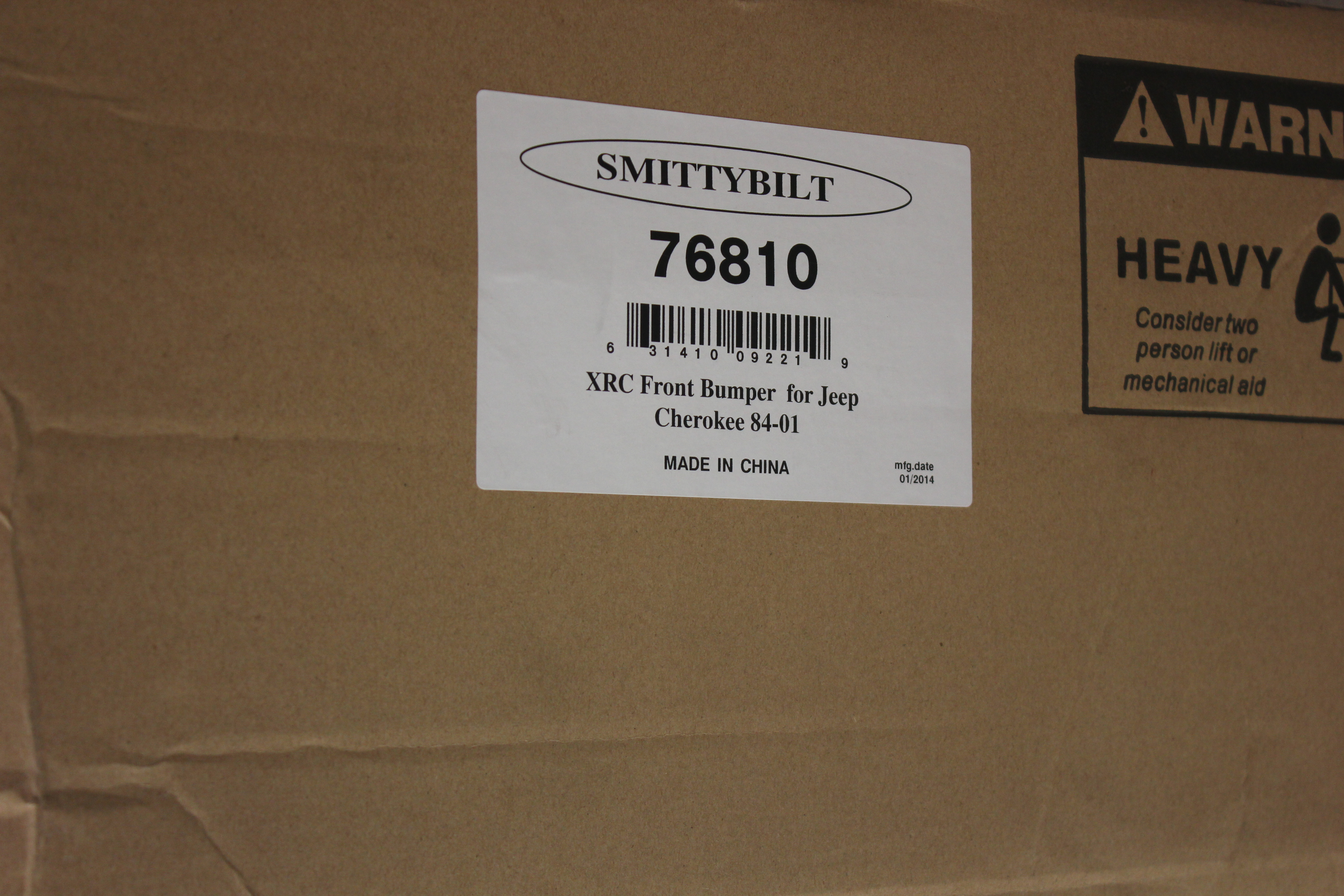
The box is much larger than you’d think. When I went to pick it up the first time we discovered it won’t actually fit in the back of a Cherokee. So unless you’re getting it freighted to your house, you’re going to need a bigger boat. The actual dimensions of the box are 71 1/2″ x 23″ x 13″ and it’s listed weight is 185 lbs.
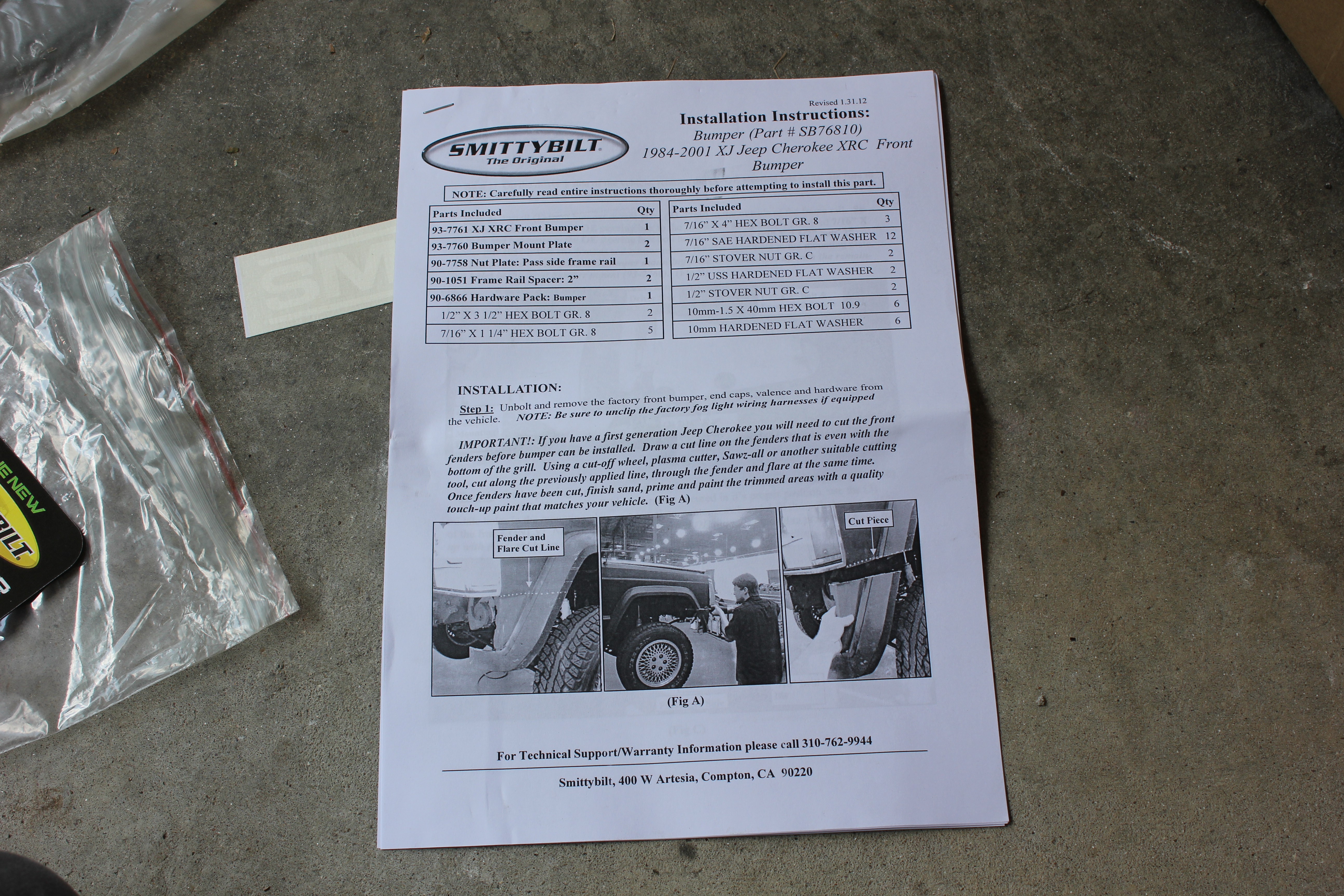
The instructions are, well, lacking. I didn’t have any luck finding them posted anywhere, so I scanned them and uploaded them here in hopes that some other poor soul can find them:
XJ XRC Front Bumper SB76810 Install Instructions
I apologize for the quality of the photos in the instructions…but that’s what ships with the bumper. No color photos, and the black and white ones are pretty grainy.
There more bolts and washers included than you’ll need, but there aren’t more nuts than you’ll need. I suspect this is the standard hardware they send out with several models.
There are two different sized washers. For the standard head bolts, use the smaller ones.
The 2″ spacer they mention is actually a 2″ washer
On 1996 and older models, cutting is required on the front fenders. I’ve seen some folks complain that the instructions tell you to cut too much, so there’s that.
Also, since you’re going to be in there anyway, you might want to pick up a steering box brace. I’ve heard good things about the M.O.R.E. brace. It didn’t occur to me until I was already in there that this would have been a perfect time to do it. Oh well.
Tools I used:
Sockets:
–XRC: Hex Cap bolts 5/8″ nuts 17mm (11/16″)
–XRC: Hex screw nuts 3/4″ (19mm)
–Jeep: Bumper Bracket Bolts 15mm
–Jeep: Other: 10mm and 1/4″
3/8-Inch Drive Ratchet
Black & Decker RCT100 TriRatchet 3/8-inch Drive Ratchet
DeWalt DC825B 1/4-Inch 18-Volt Cordless Impact Driver
12″ impact ready bit holder extension
ratcheting box wrenches
Plastic Fastener Remover
DeWalt Pivoting Bit Holder
Plastic Fastener Remover
3/8 Drive Wobble Extensions
1/2″ Drive Click Stop Torque Wrench
Blue Loctite 6-ml
DeWalt 18V 1/2″ Cordless XRP Drill
7/16-Inch Drill Bit
T-25 Torx bit
T-50 Torx Bit Socket
XJ Field Service Manual
Stanley Snips


Really would have been helpful, and I’ve bought since then:
DEWALT DW2547Ir 1/4-Inch Hex Shank To 1/2-Inch Socket Adaptor

Tons and tons of pictures after the break….
The Unboxening
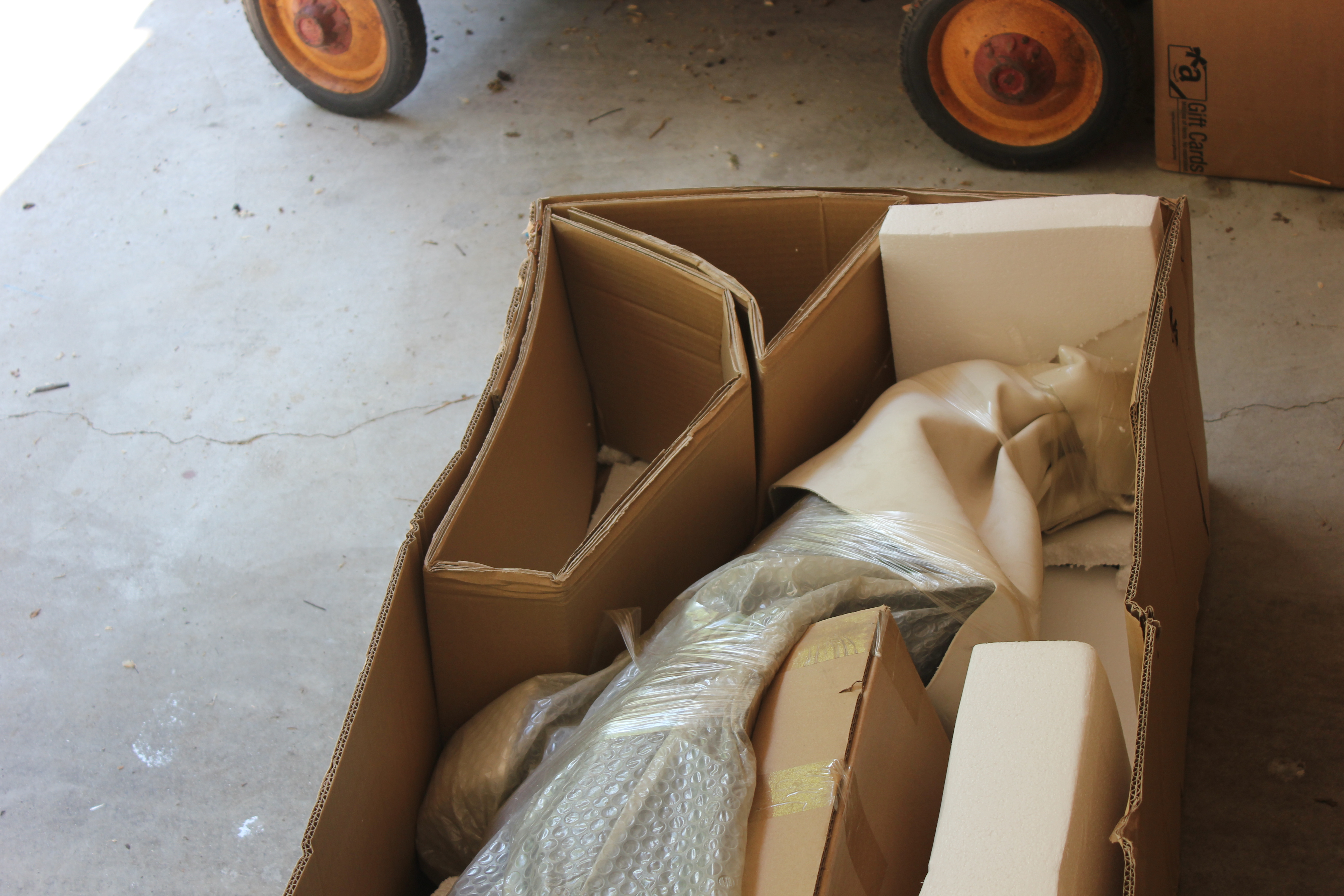
The box, sitting in my garage after pulling it out of my wife’s crossover:
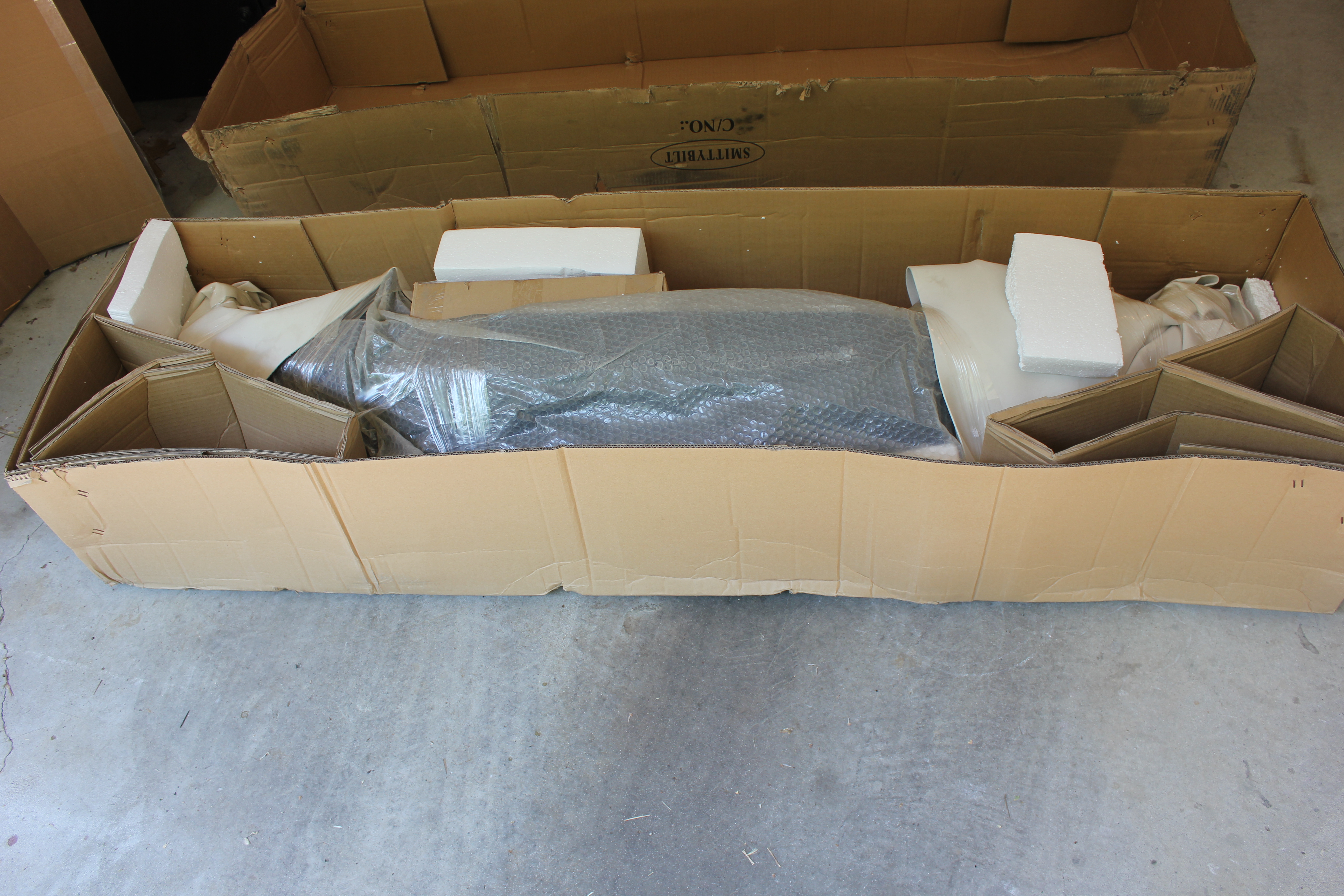
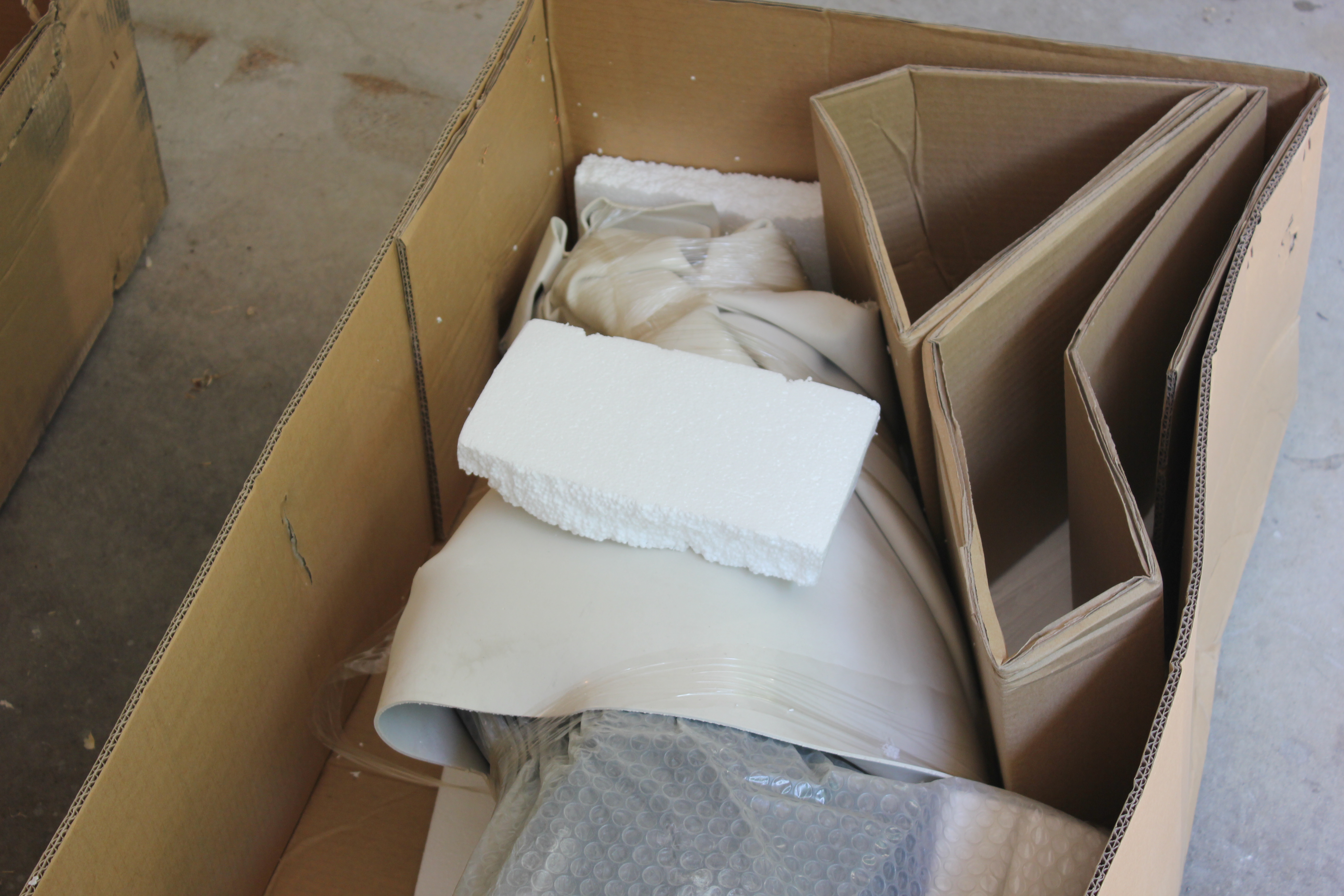 The cardboard box in between the bumper and the large styrofoam block is where all the hardware and instructions are.
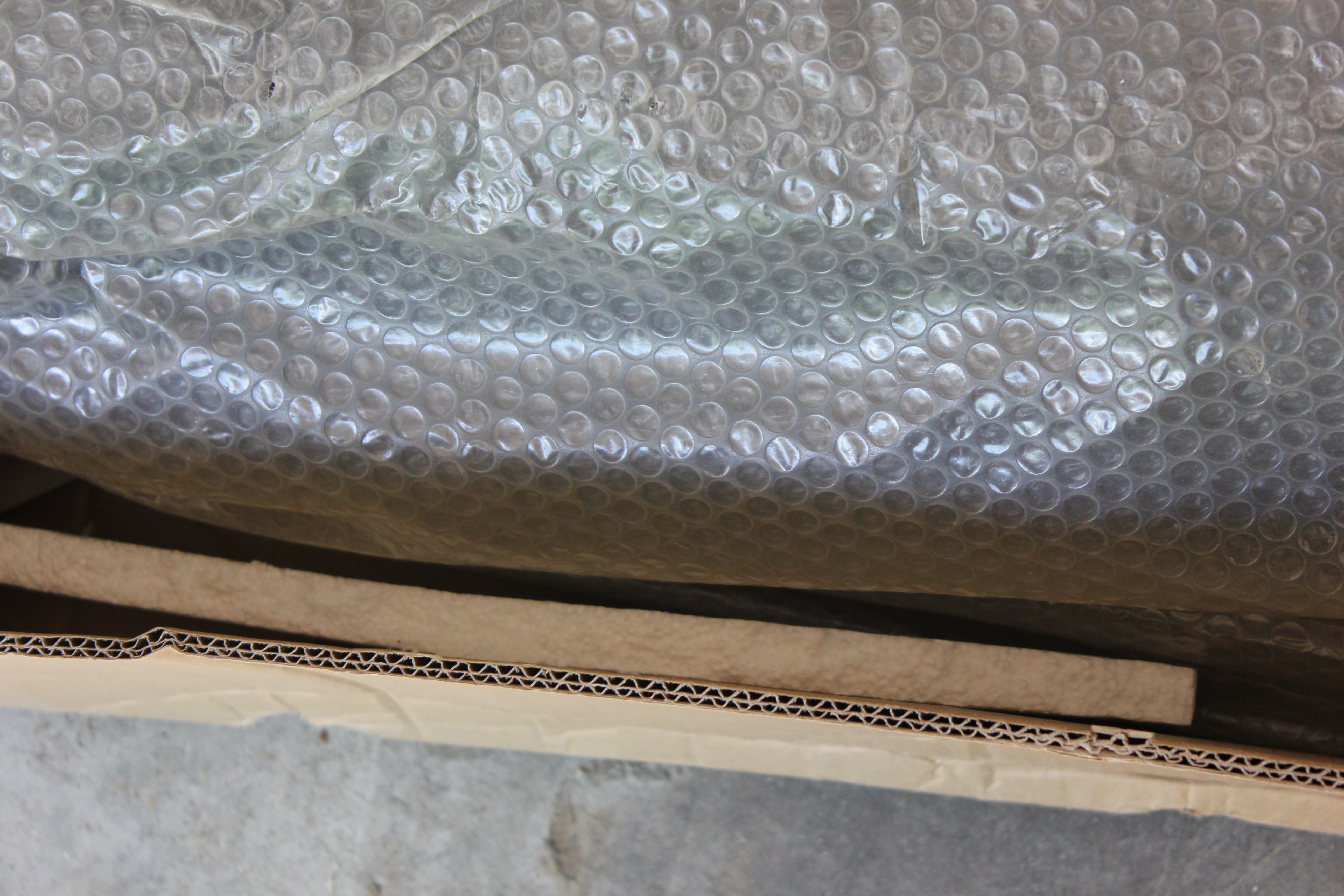
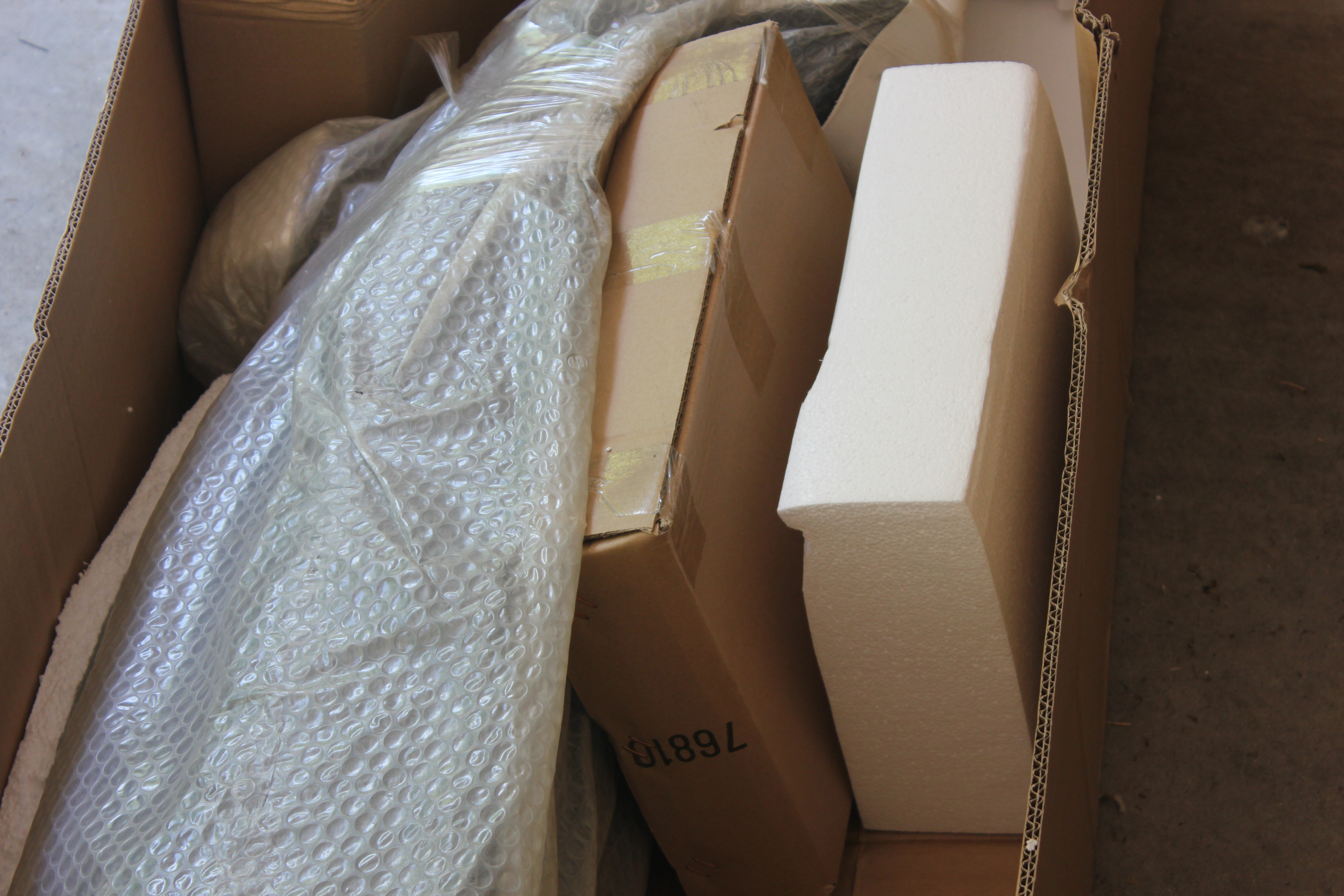 Bubblewrap. To protect a 3/16″ steel bumper.
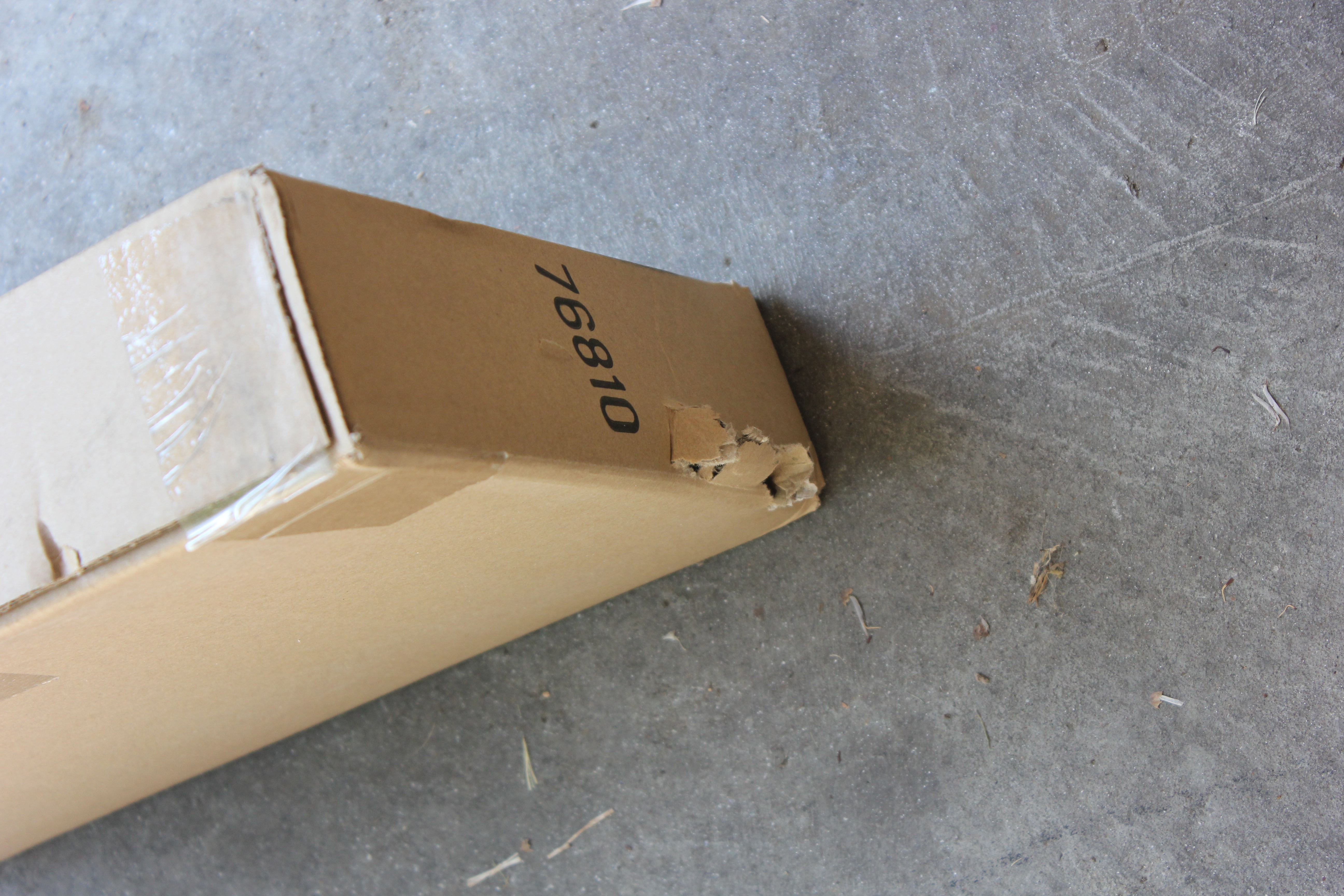
 Didn’t protect the cardboard 🙂
 Inside the hardware box.
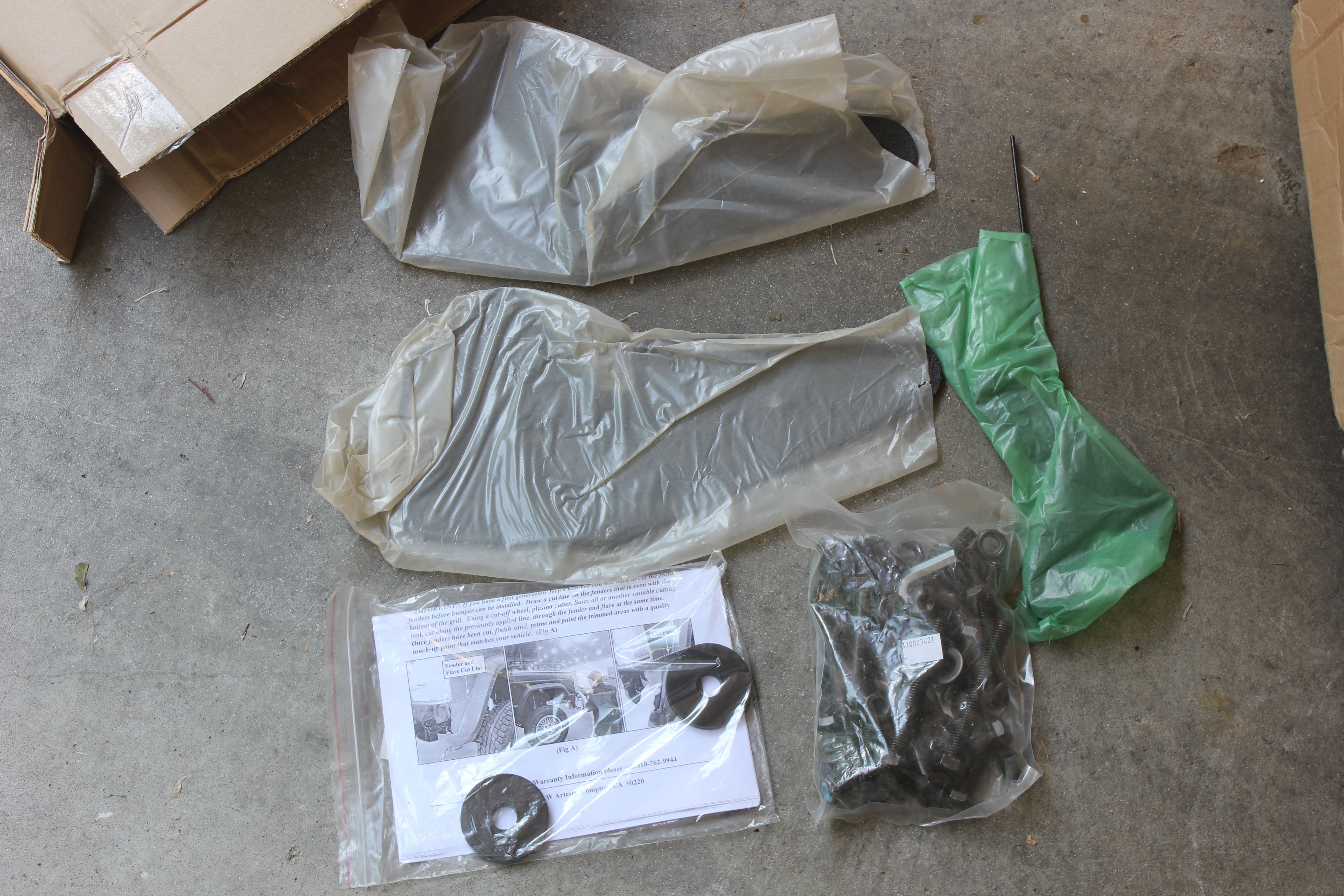
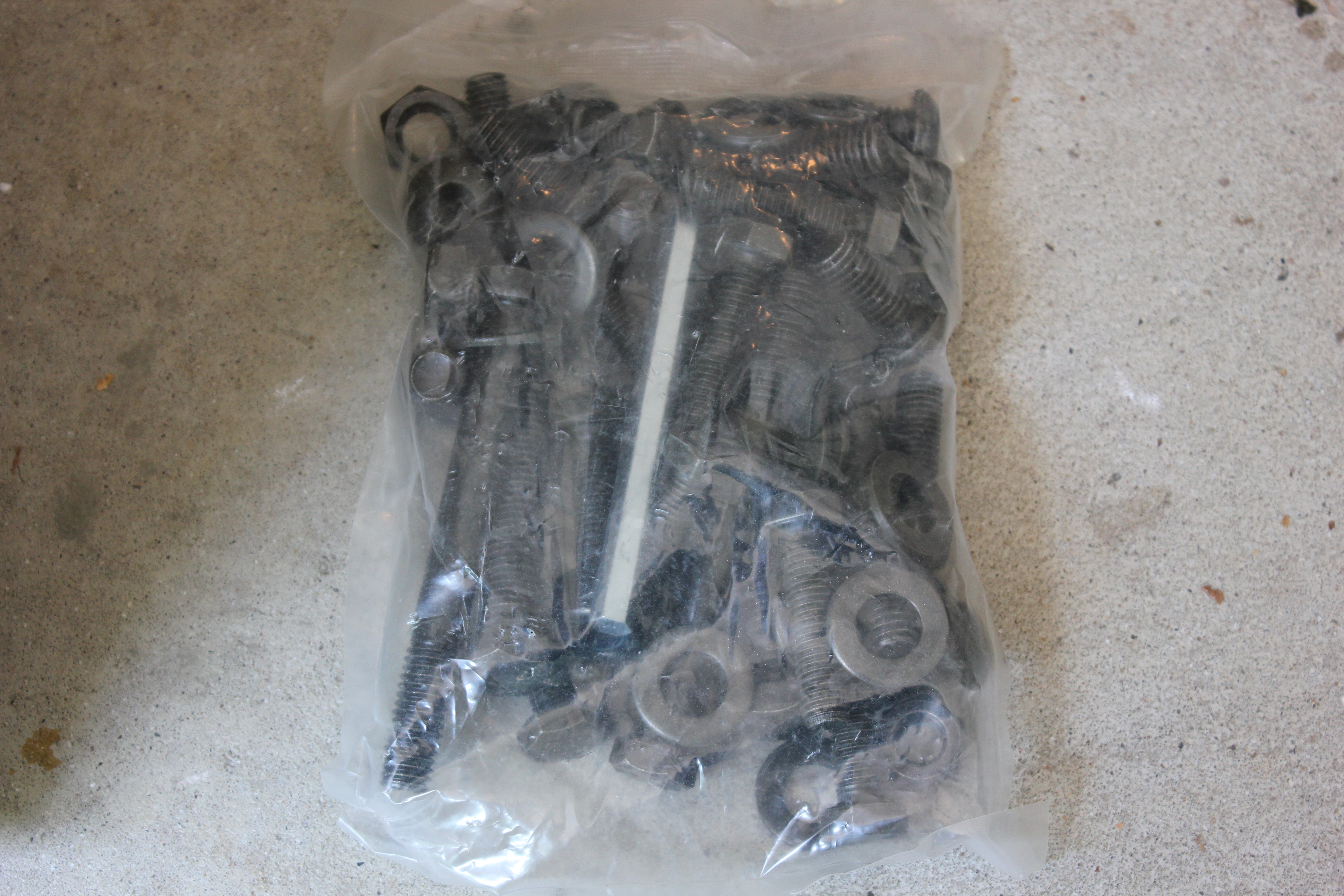
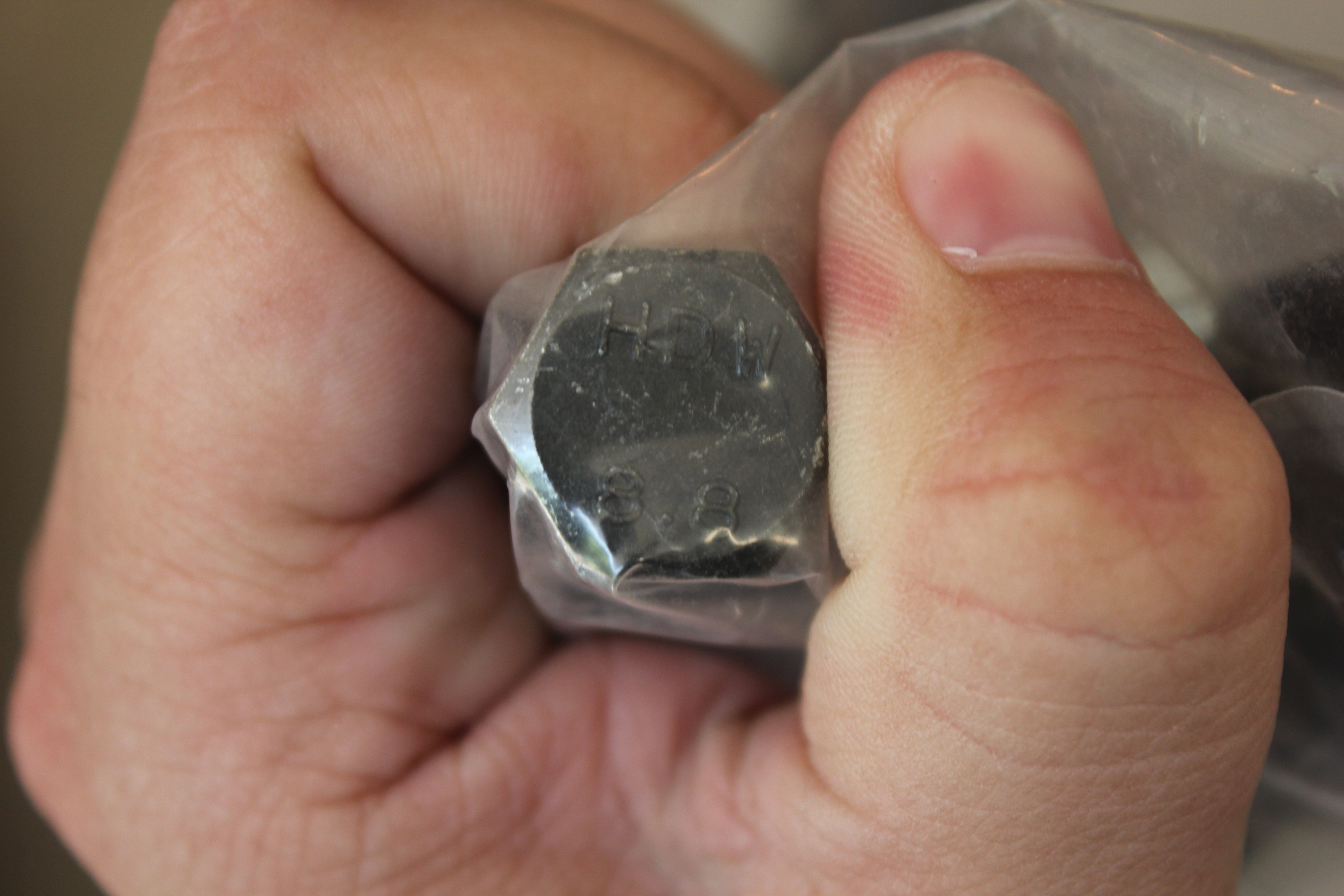
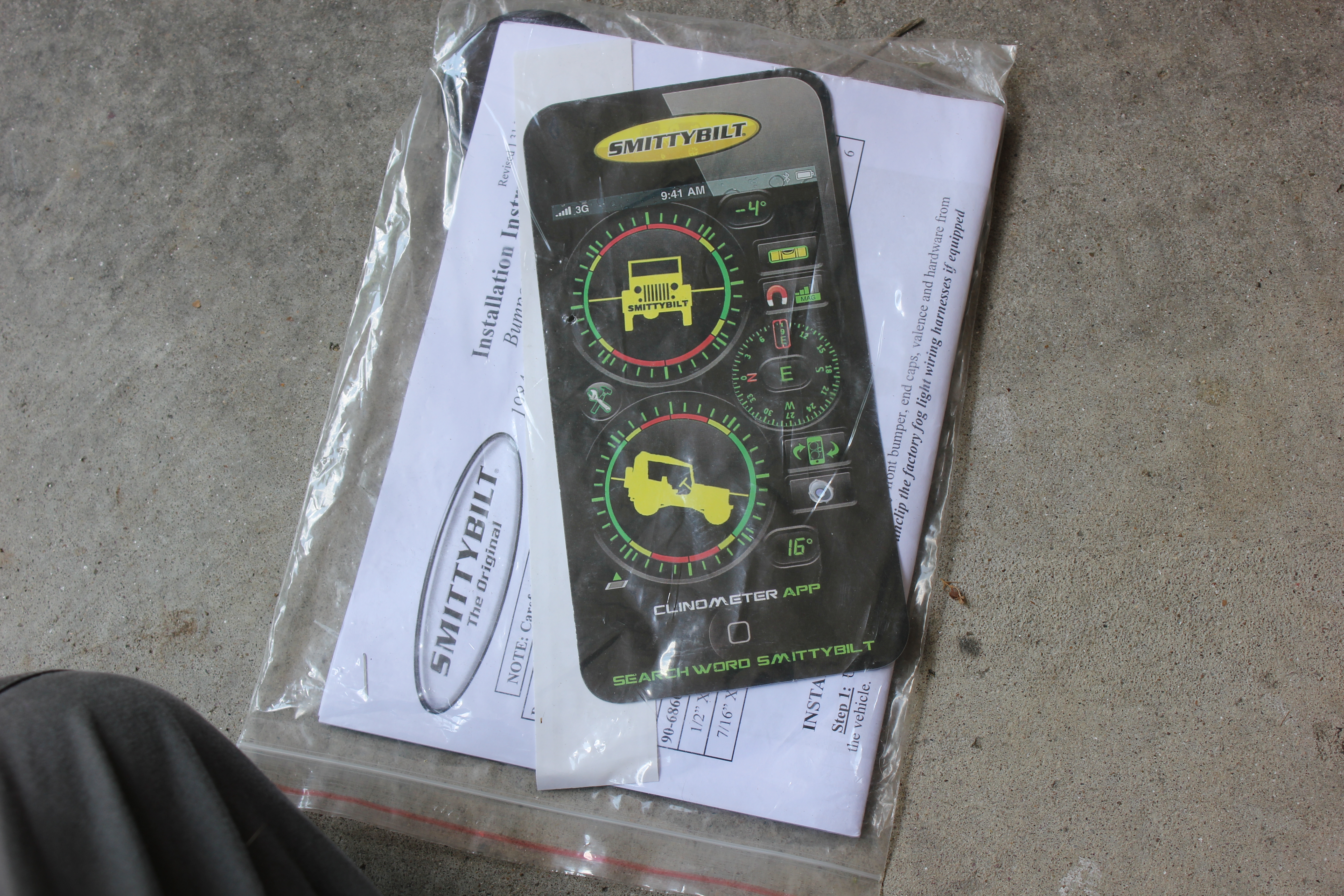
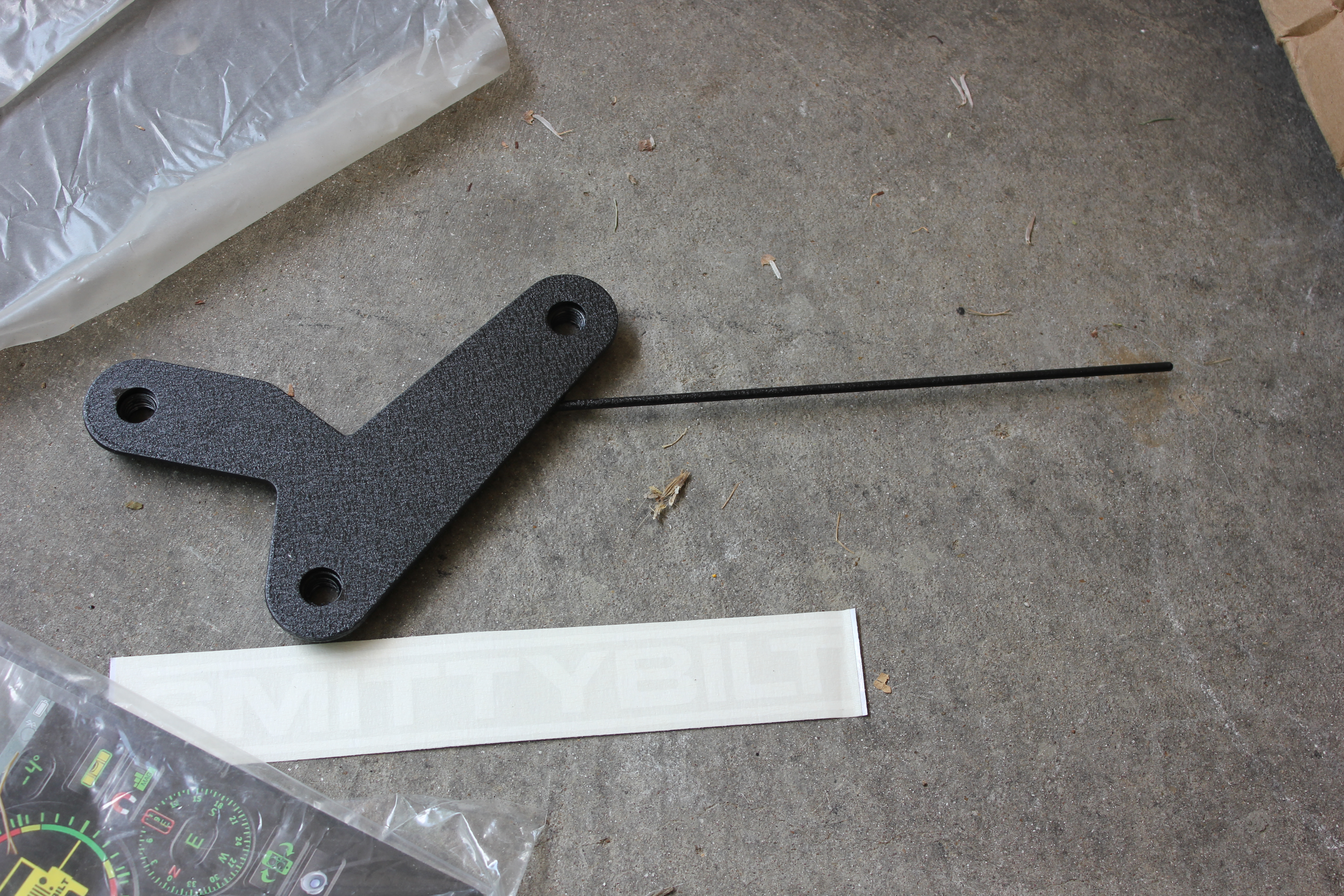
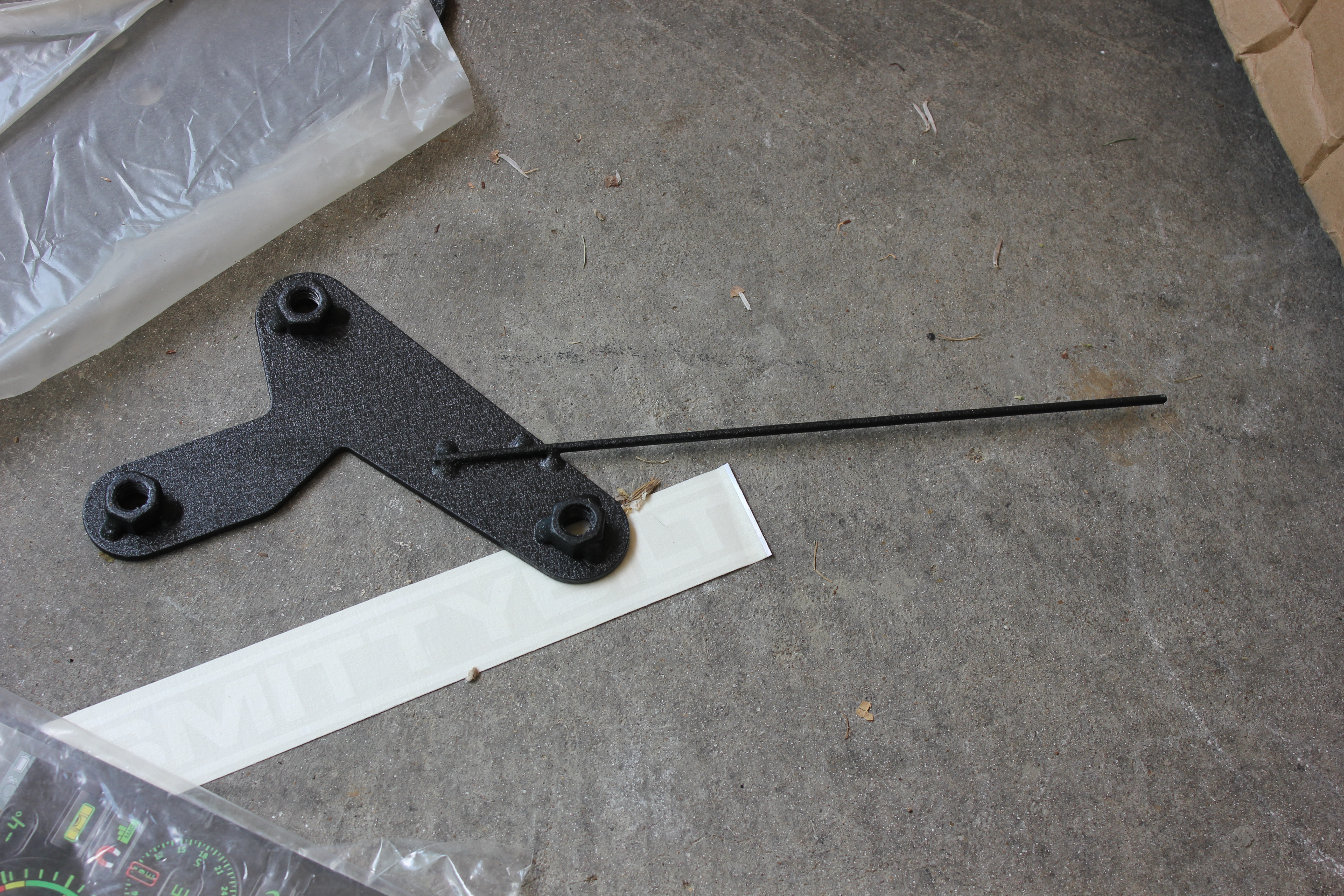
This is the nut plate. On the driver side, you have the steering box to hold the bolts in place, but on the passenger side you have to use this. The long wire is so that you can fish it into place.
The bumper brackets
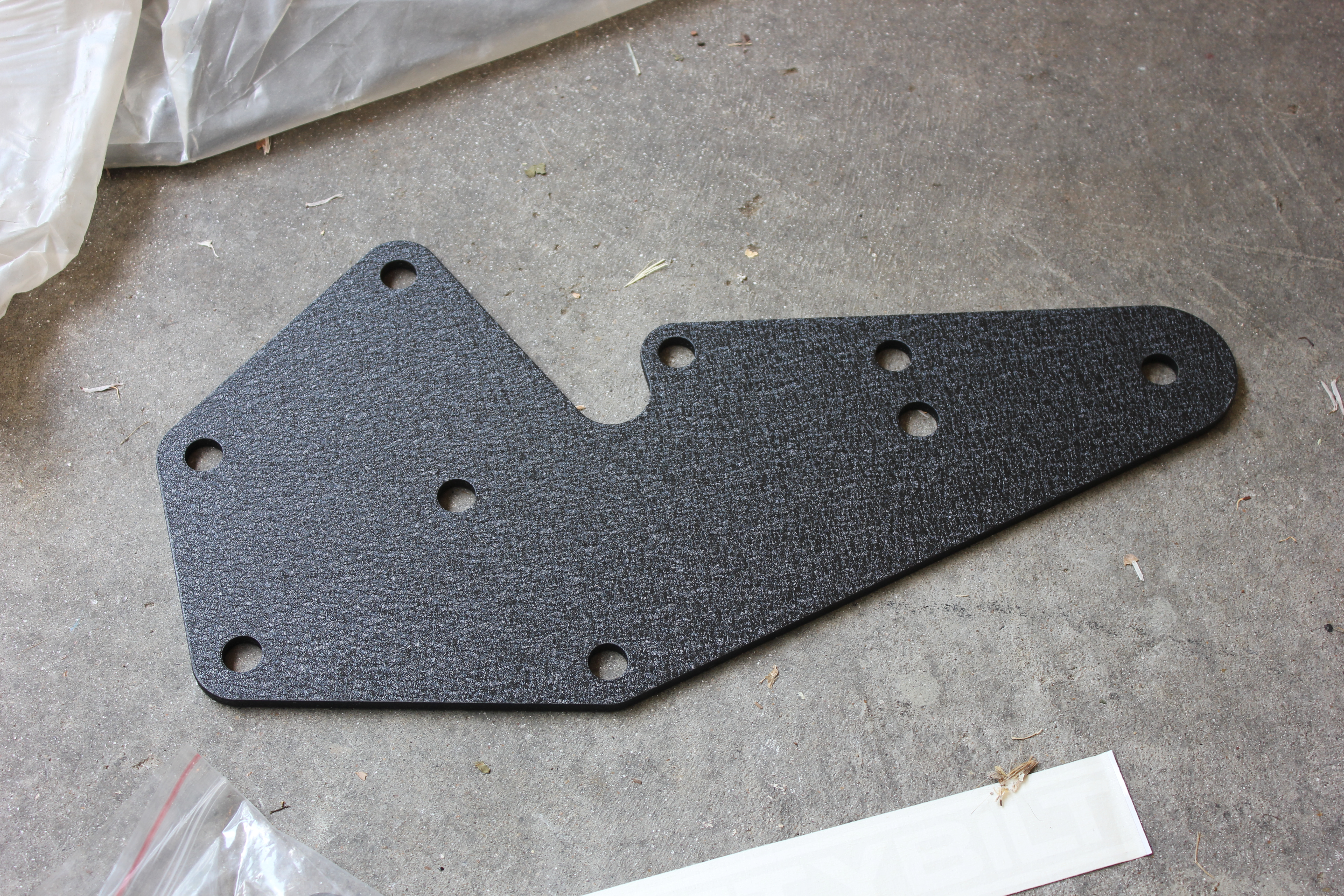
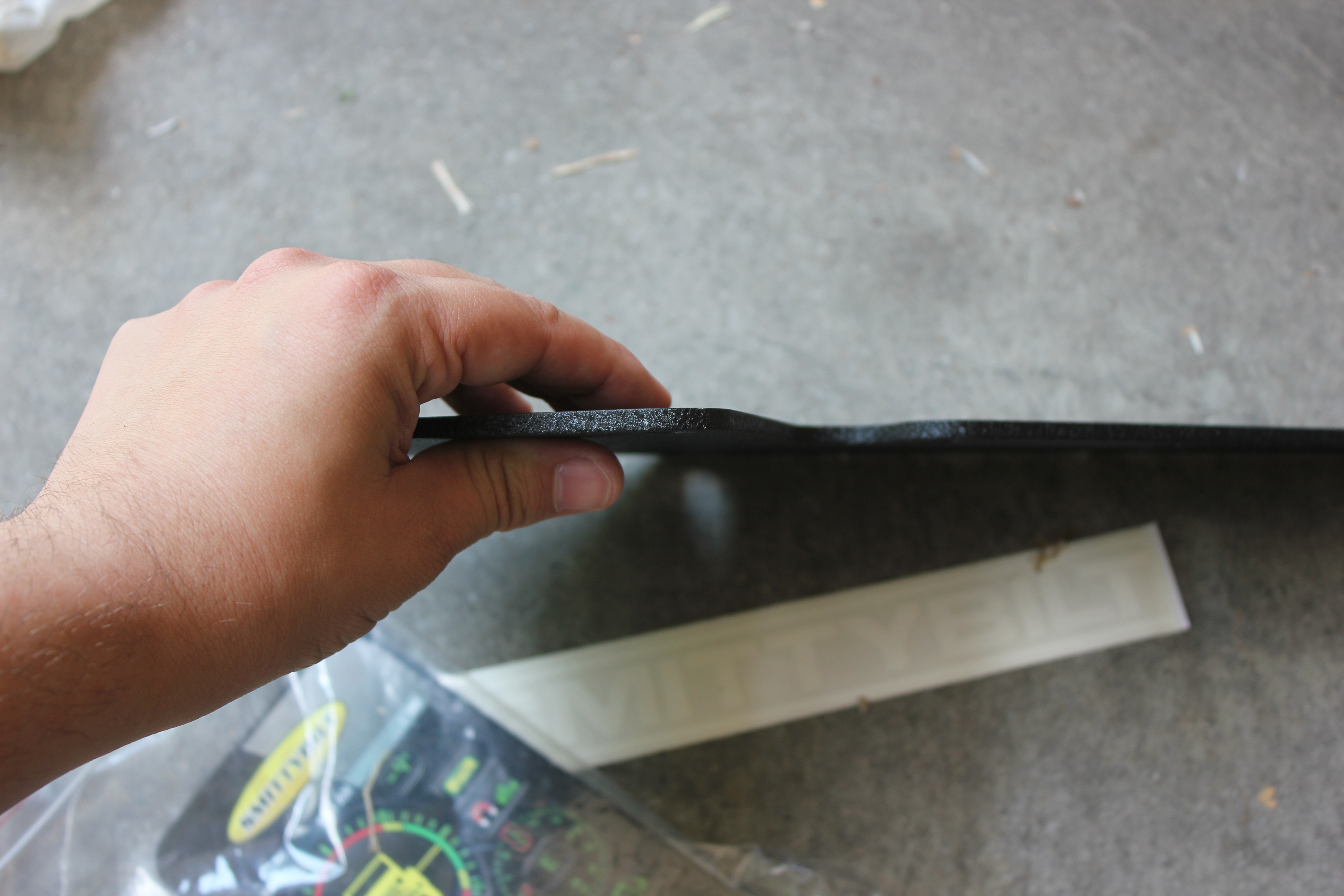
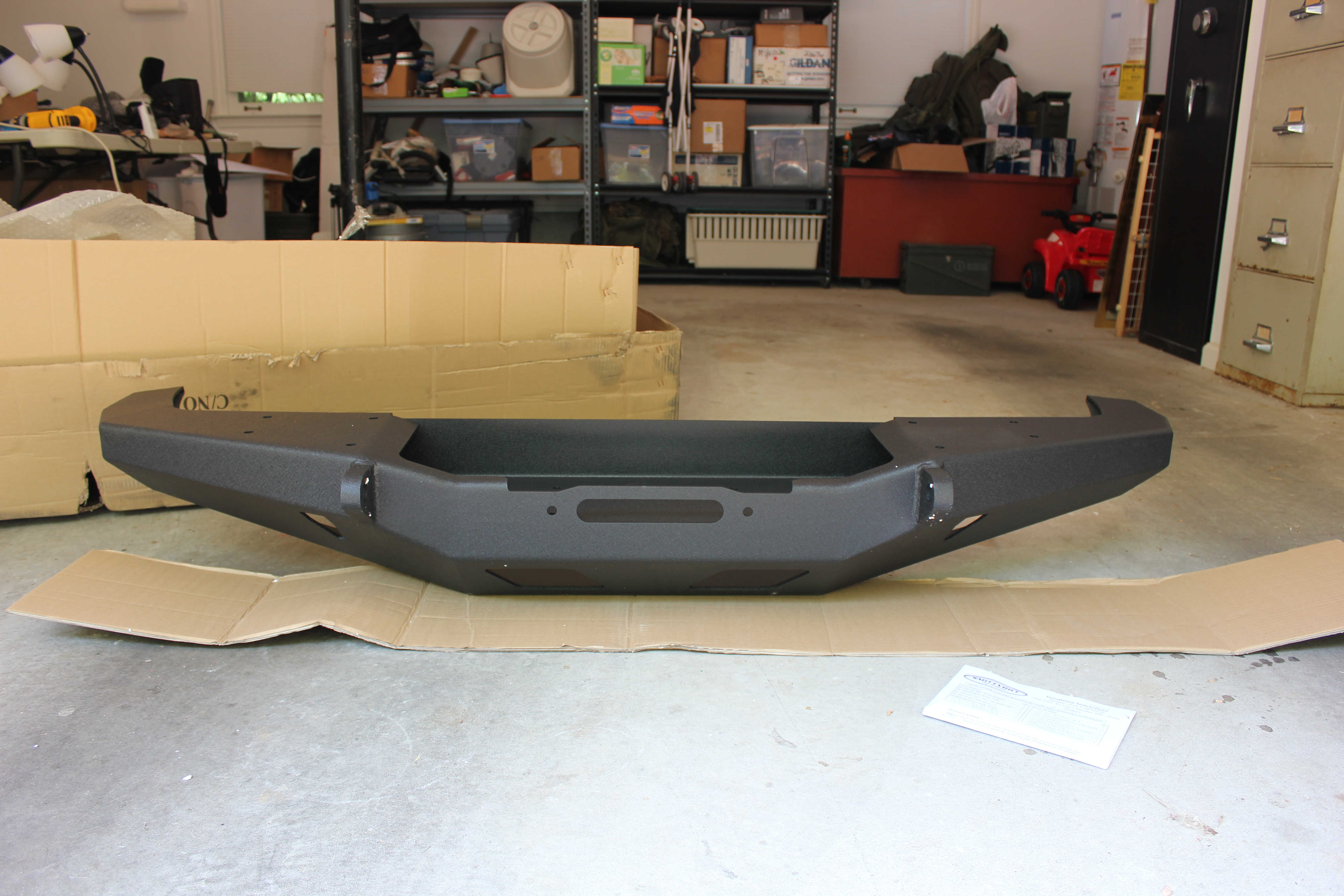
Measurements and other first impressions
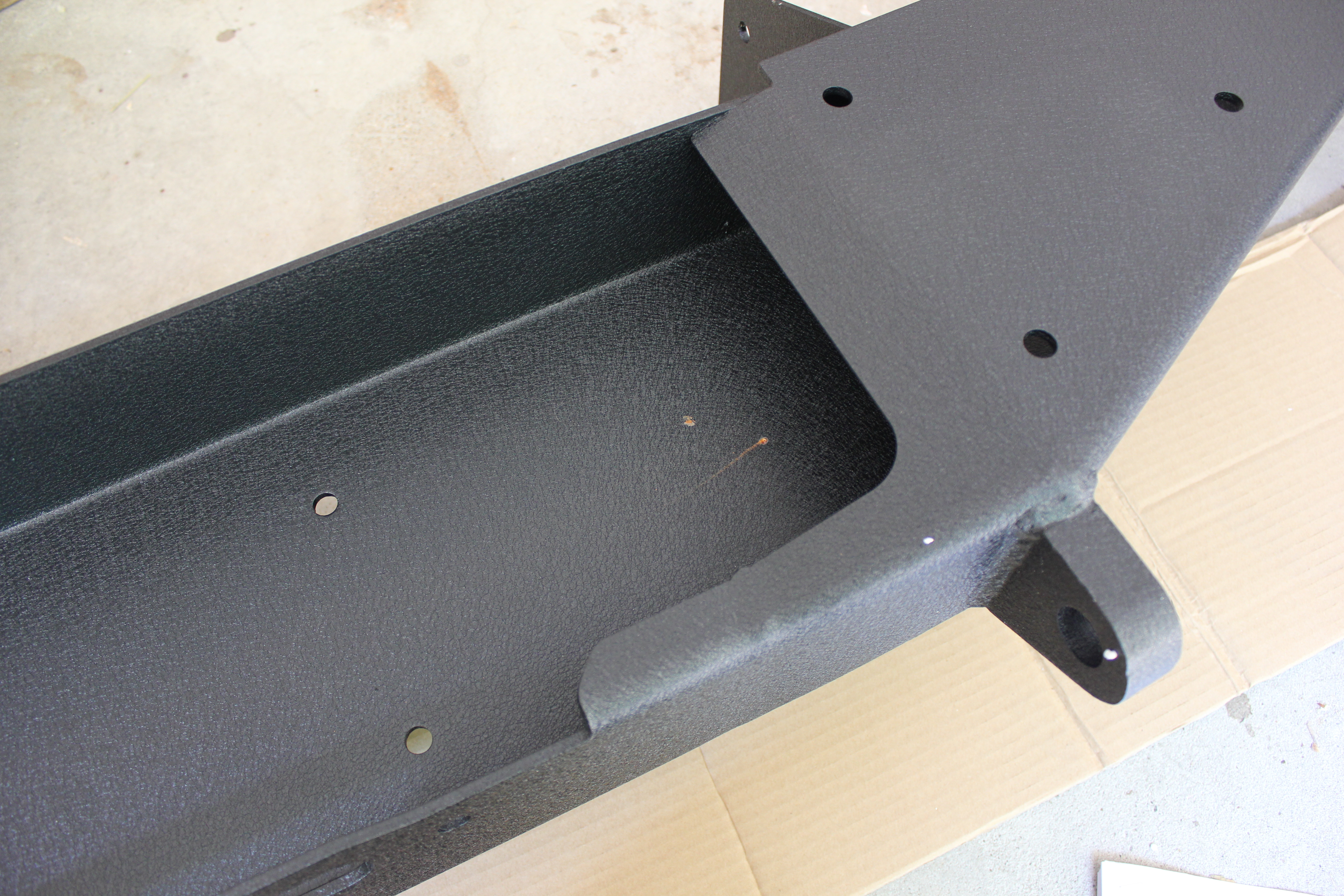
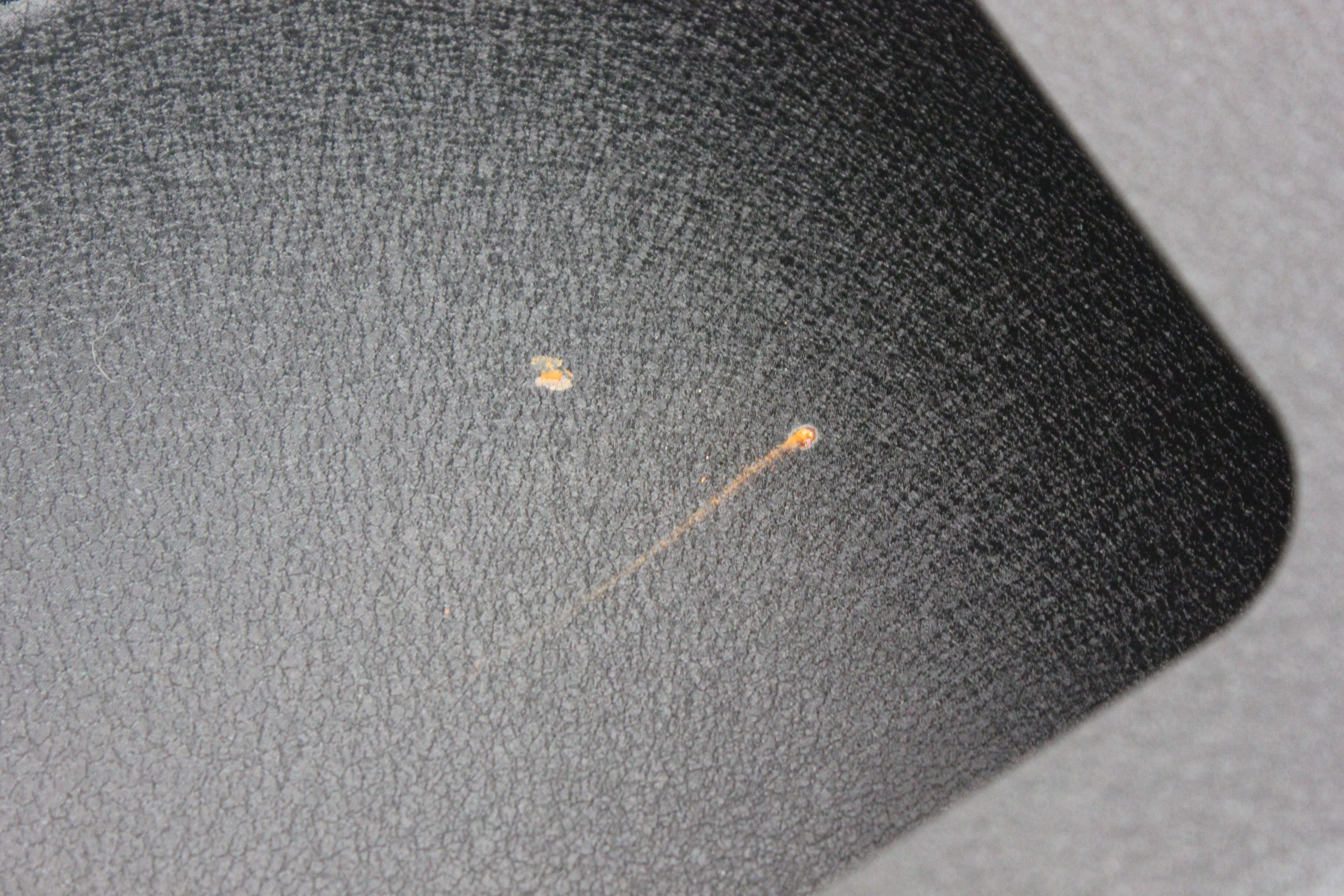
This was practically the first thing I noticed. On my brand new bumper, there were a couple of rust spots where, I guess, the coating chipped off at some point during shipping and started to corrode:
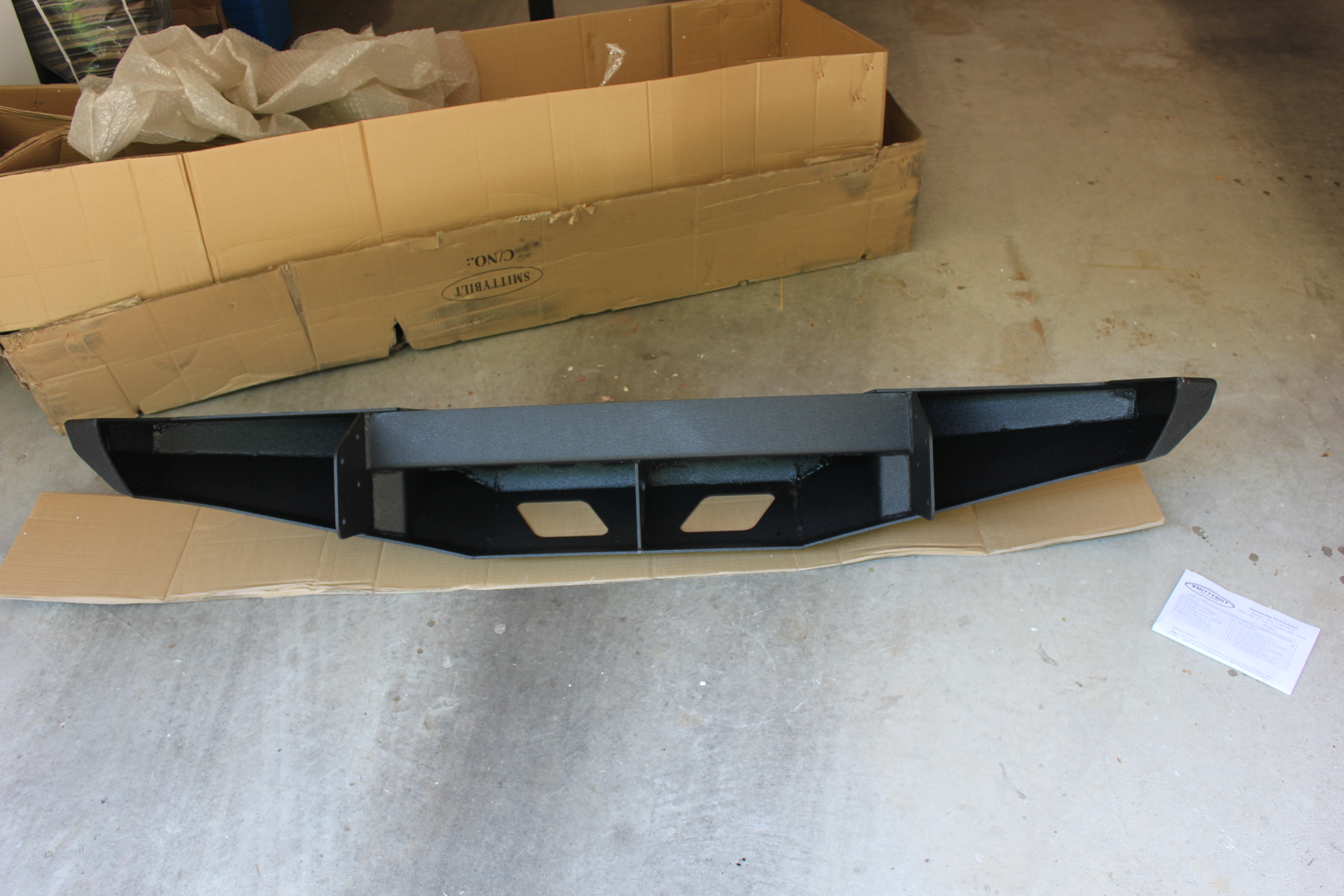
Note that there are basically 4 sections here in the back. There is a center support under the winch plate, and then the two supports that connect to the bumper brackets:
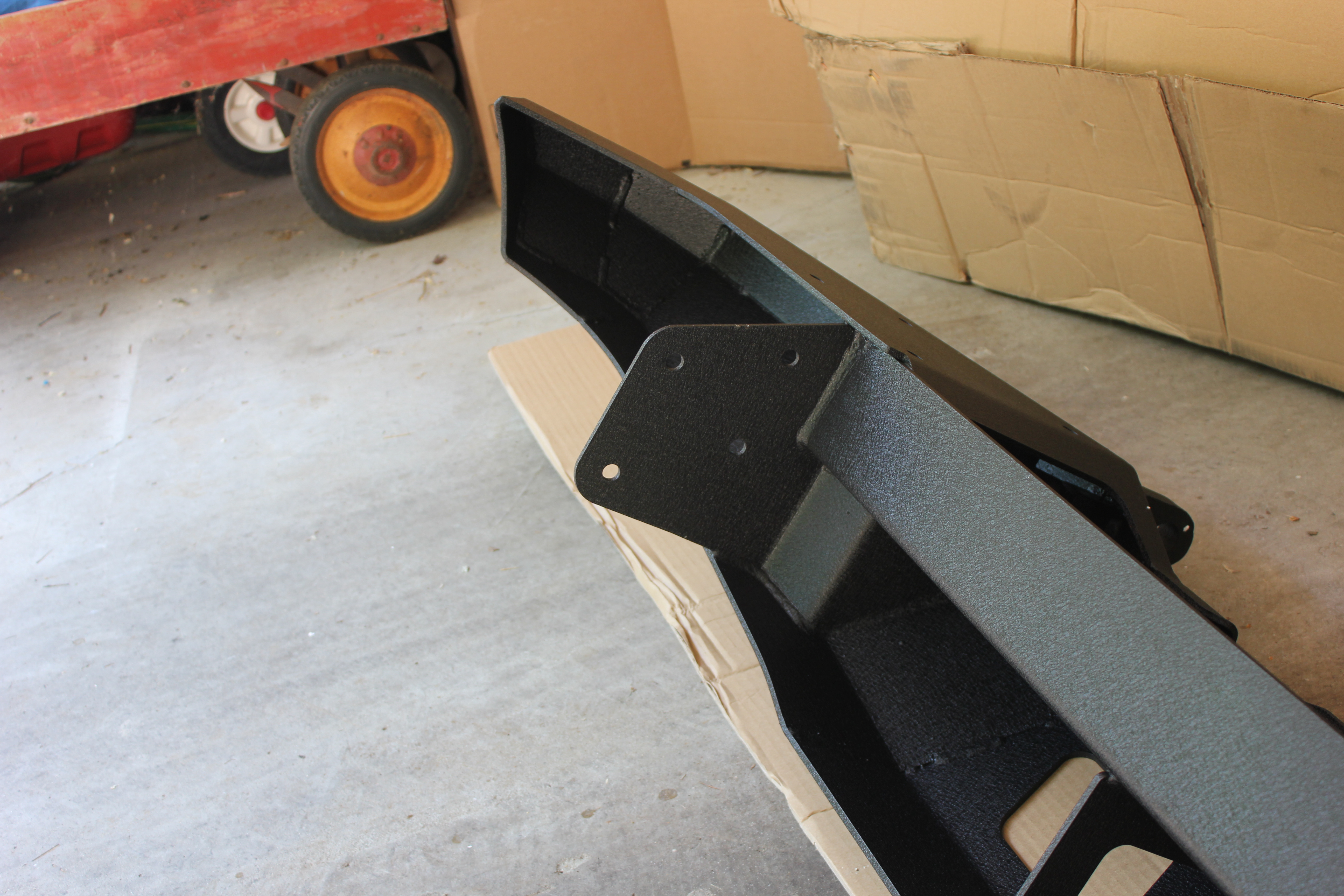
This odd triangular cut is for a Hi-Lift jack. Note how it lines up with the bumper bracket (and, therefore, your unibody rail)
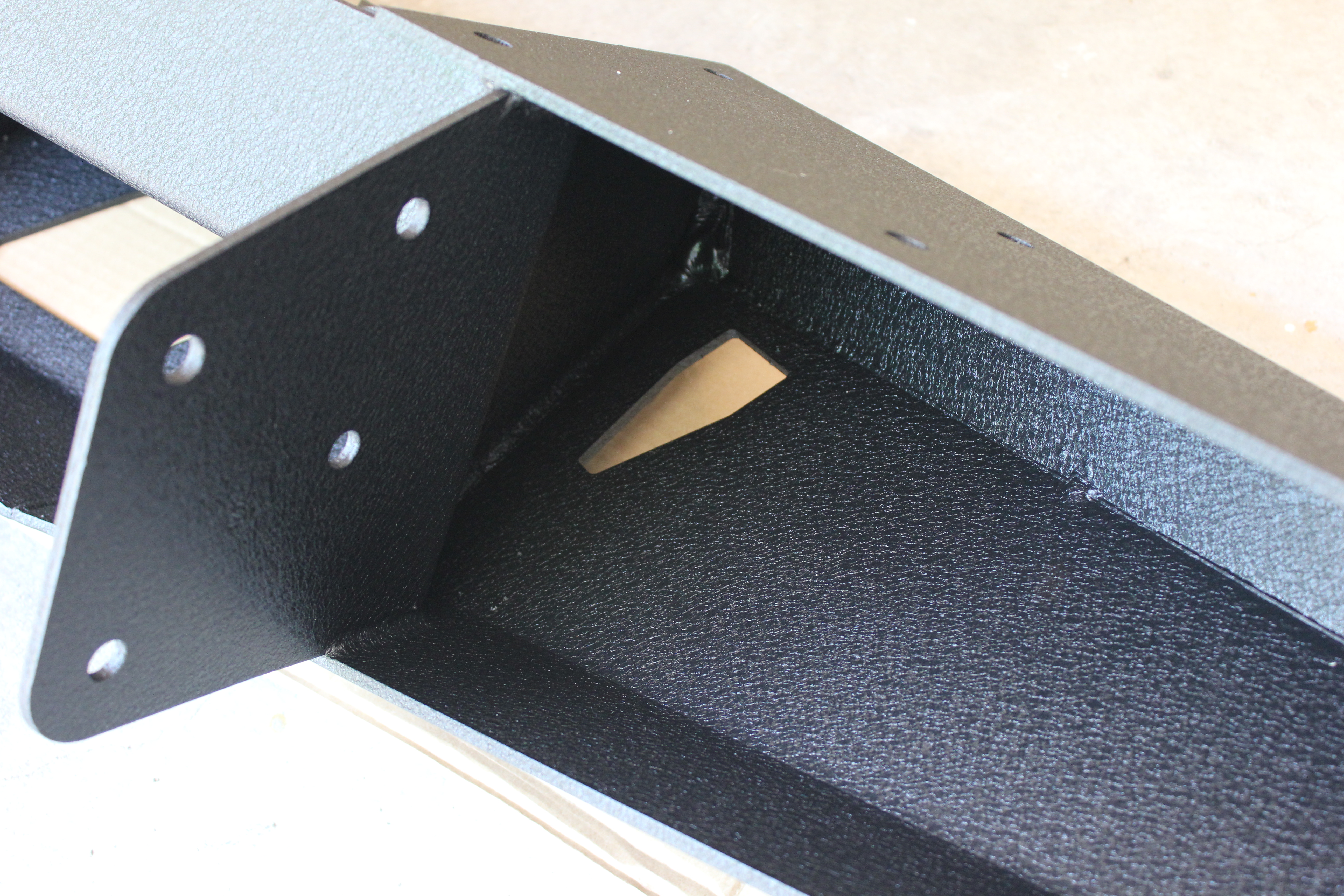
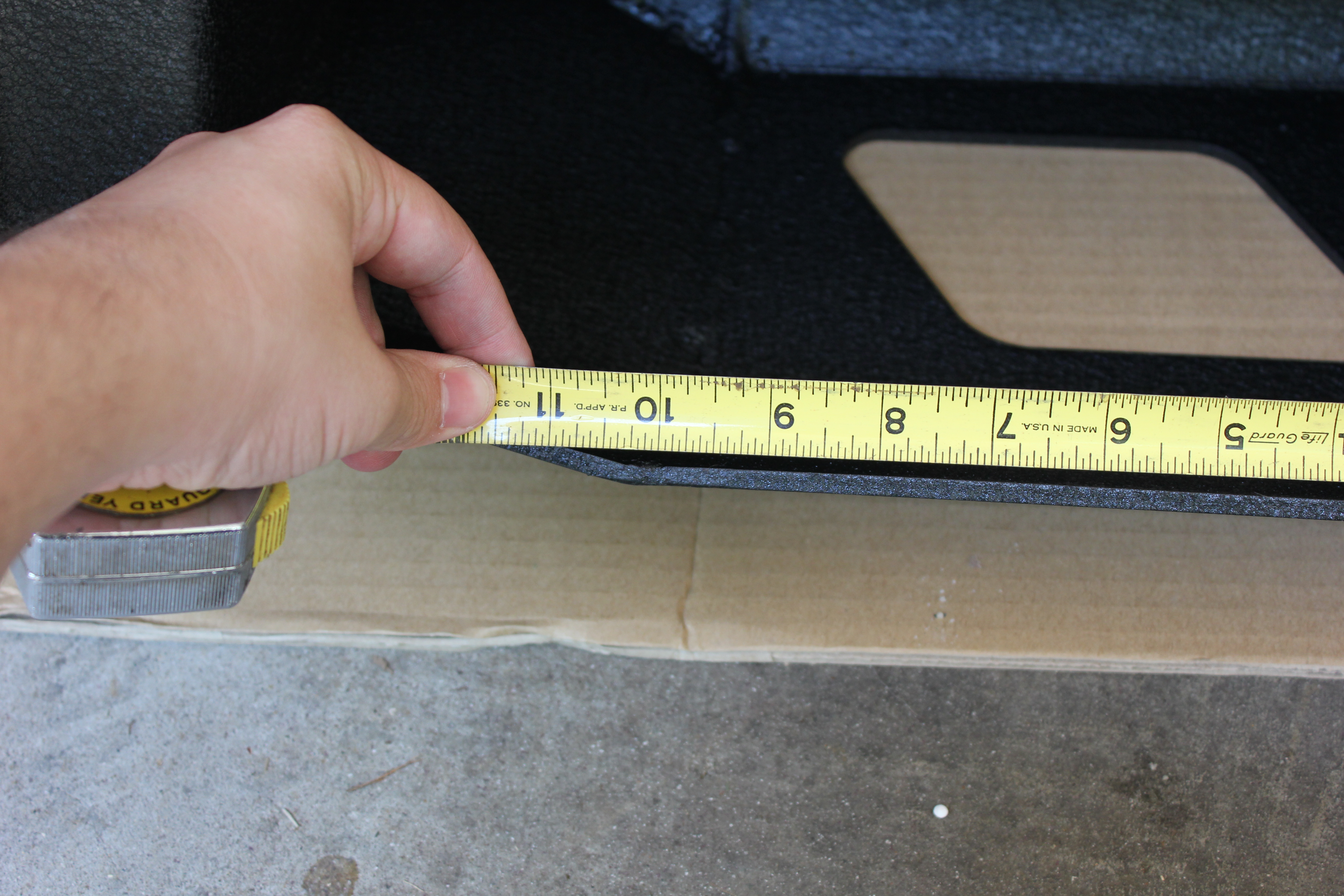
About 10 1/4″ from the center support to where the bumper starts to bend upwards:
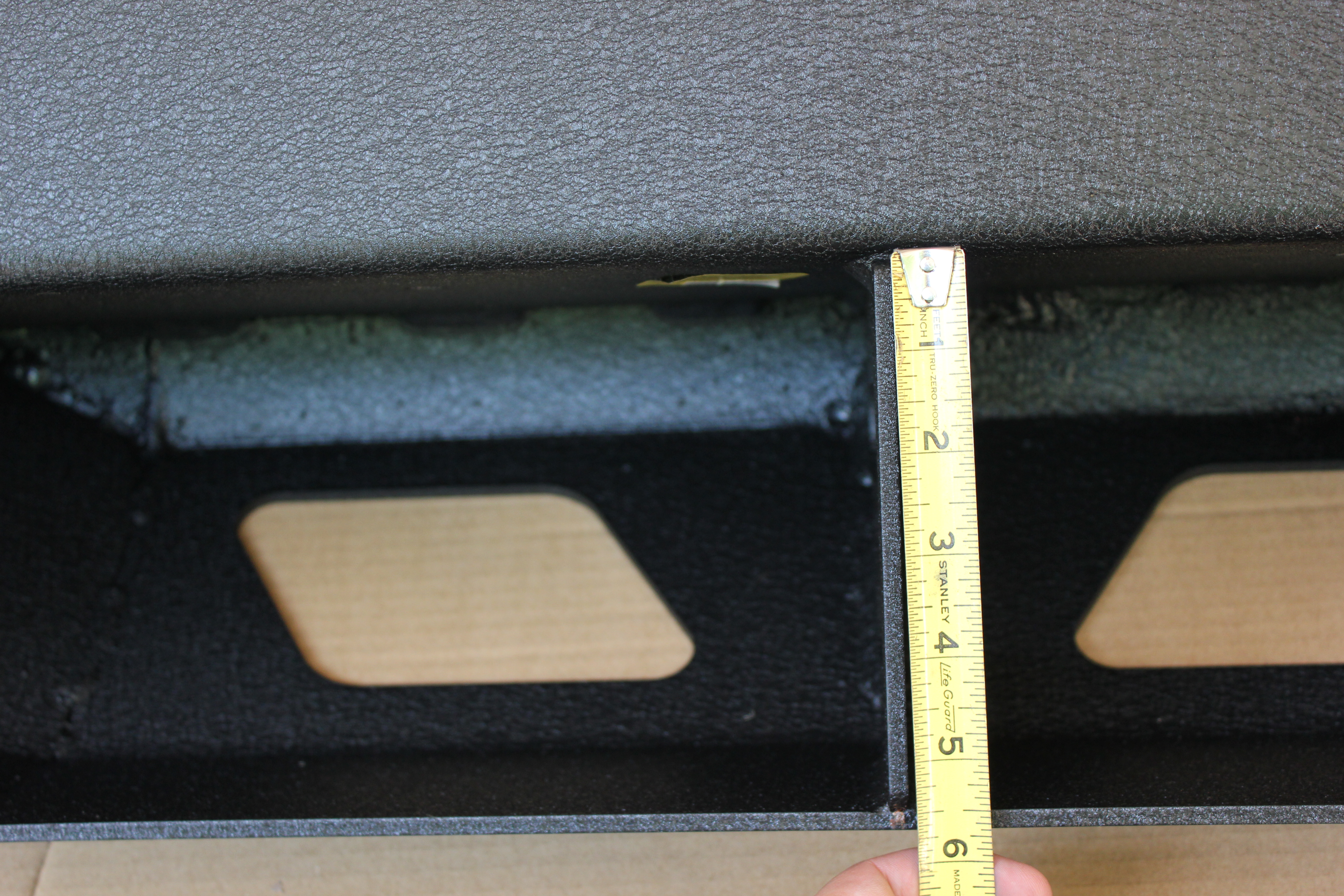
The space between the winch plate and the bottom of the bumper is about 5 1/2″ tall:
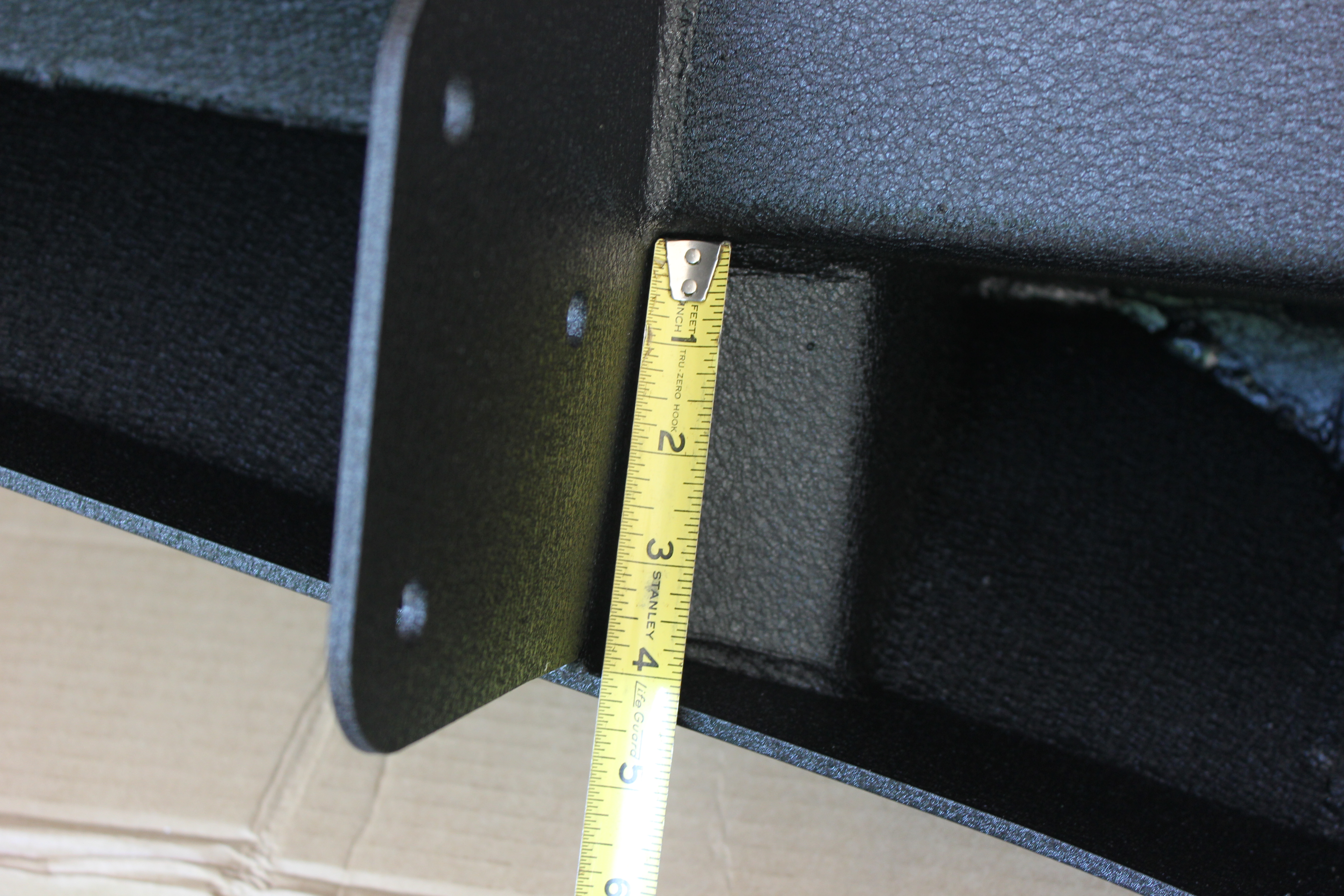
And at the bumper bracket it’s 4″
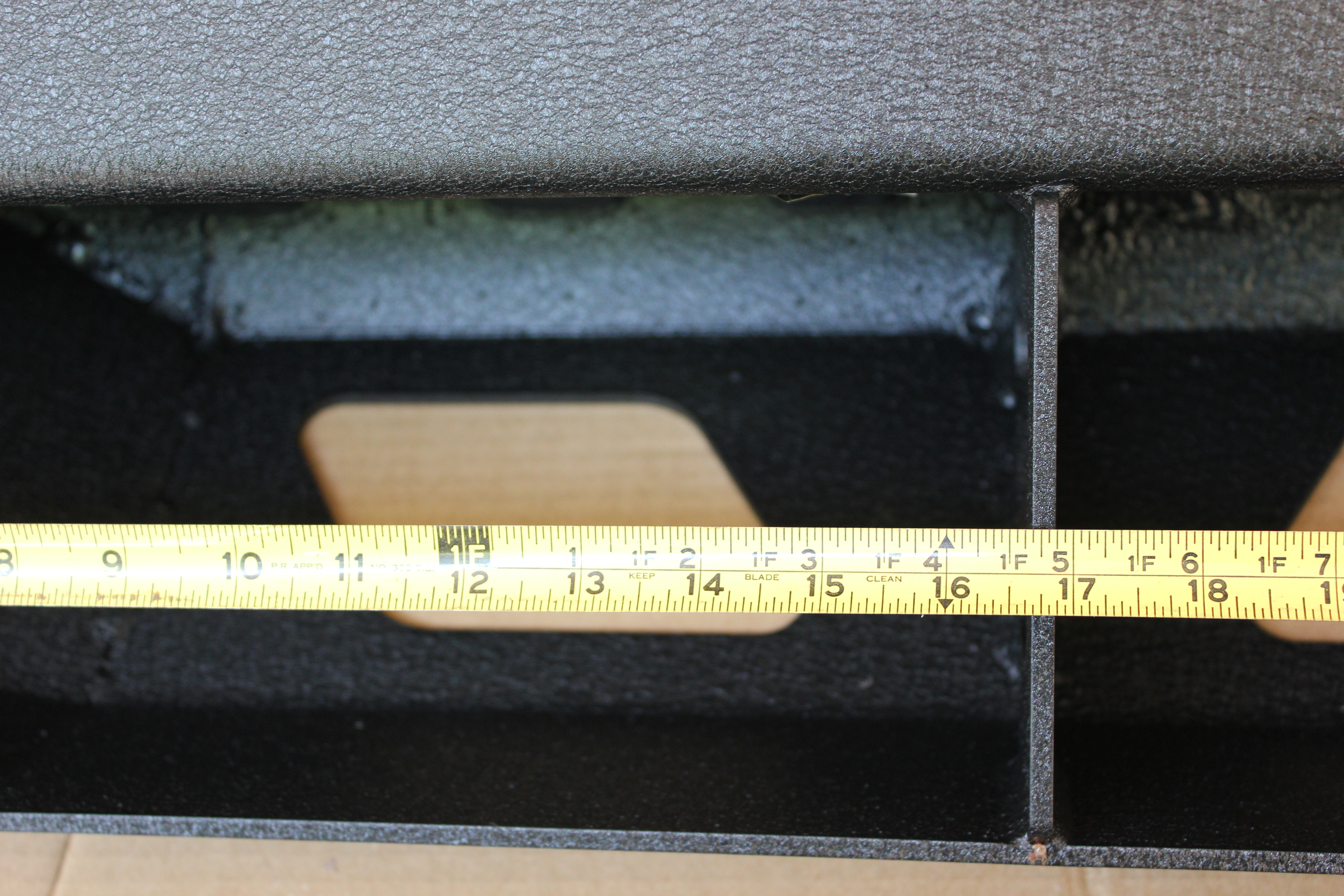
A little over 16 1/2″ between the center support and the bumper bracket:
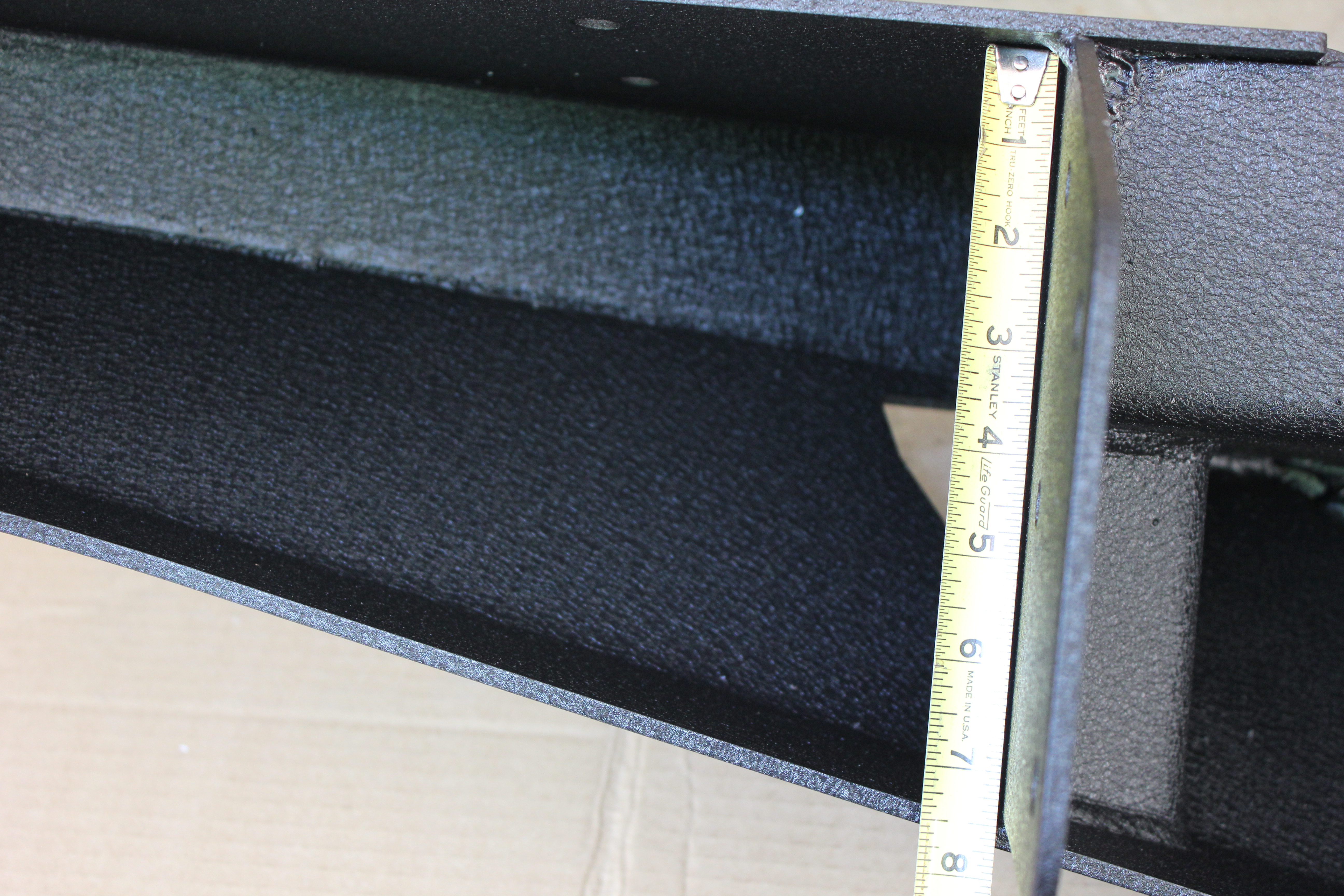
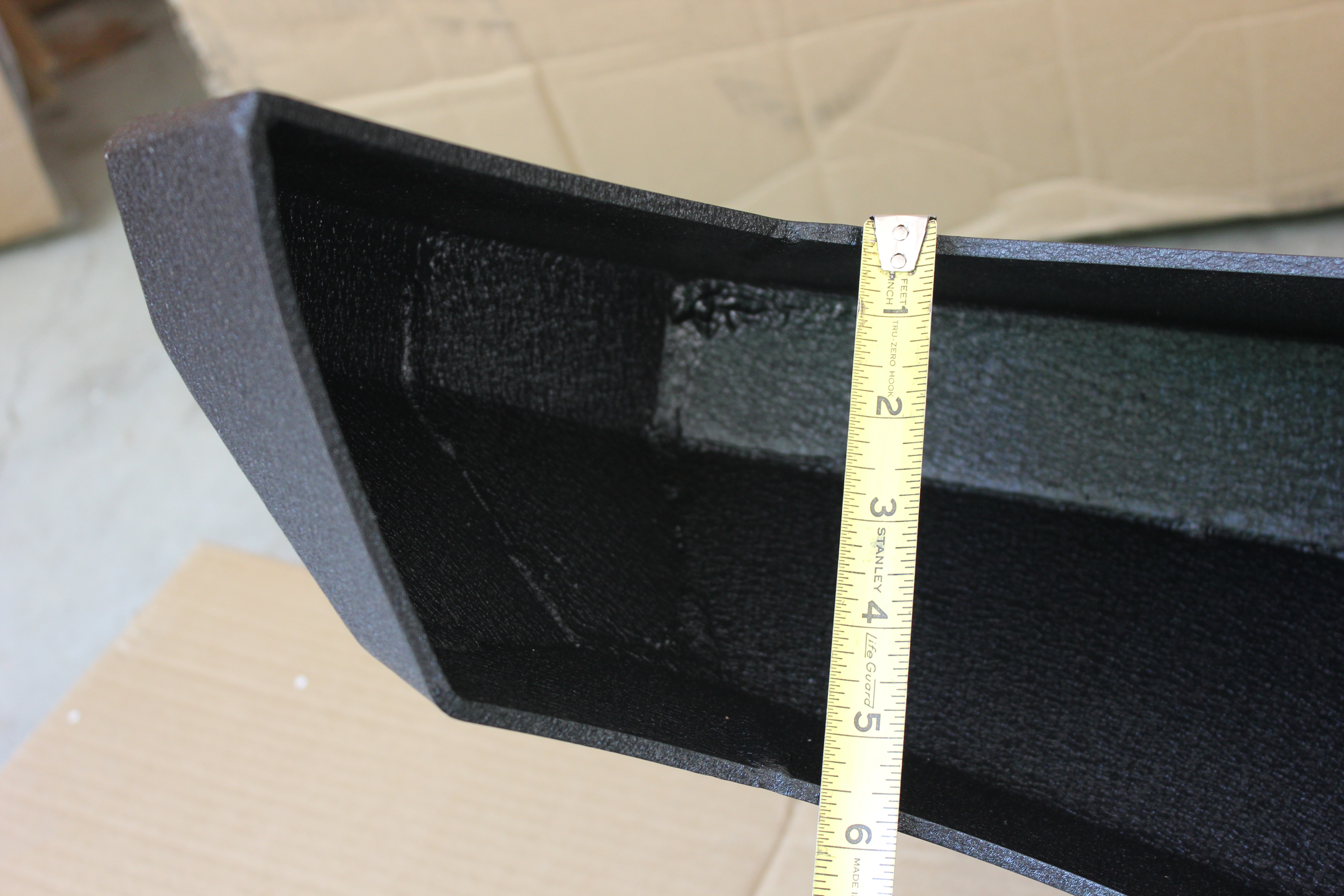
In the outer sections, they start about 7 1/2″ tall:
Tapering down to about 5 1/2″.
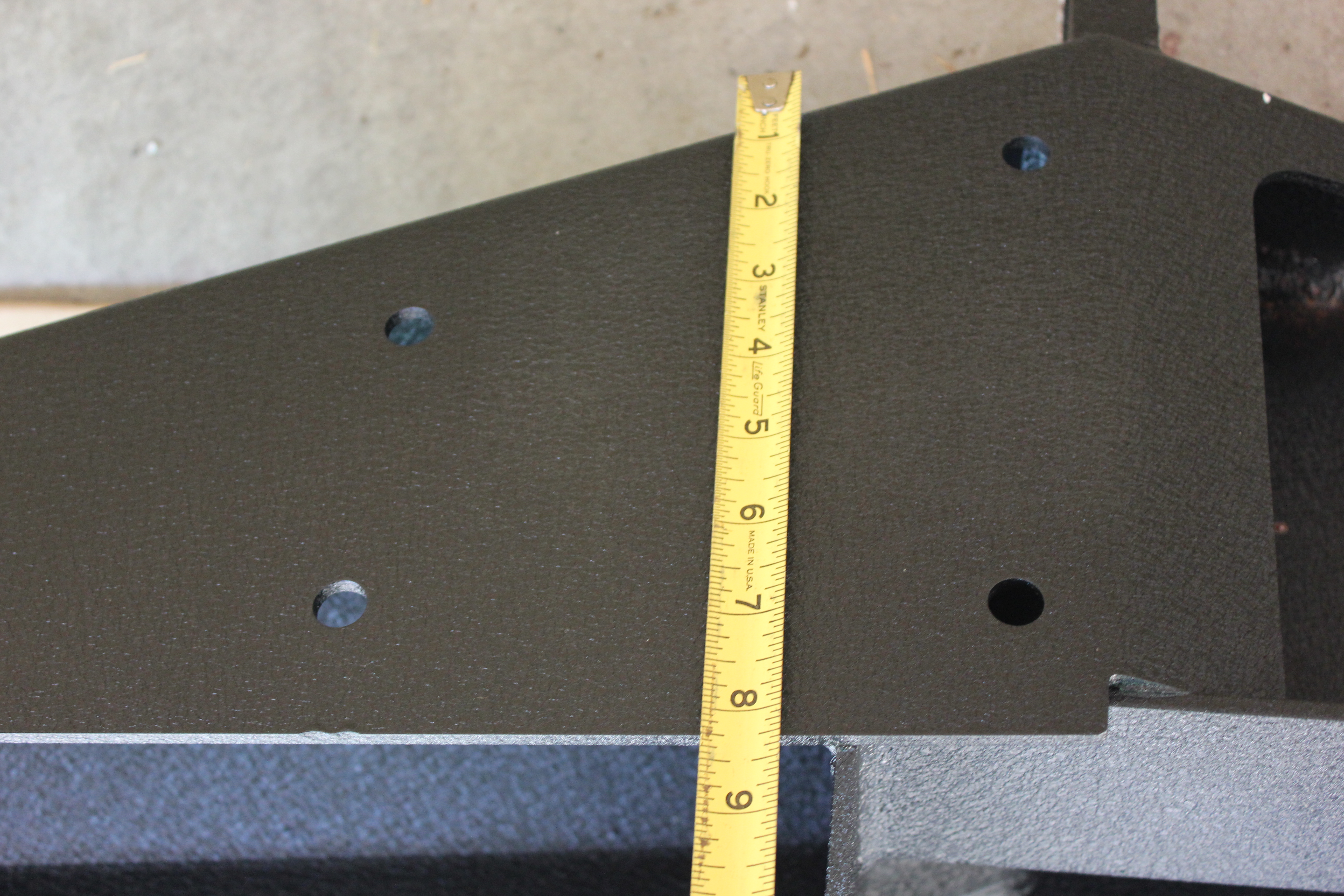
These sections are about 8 1/2″ deep as well. The four holes you see here are for the optional Smittybilt 76811 XRC Front Bull Bar
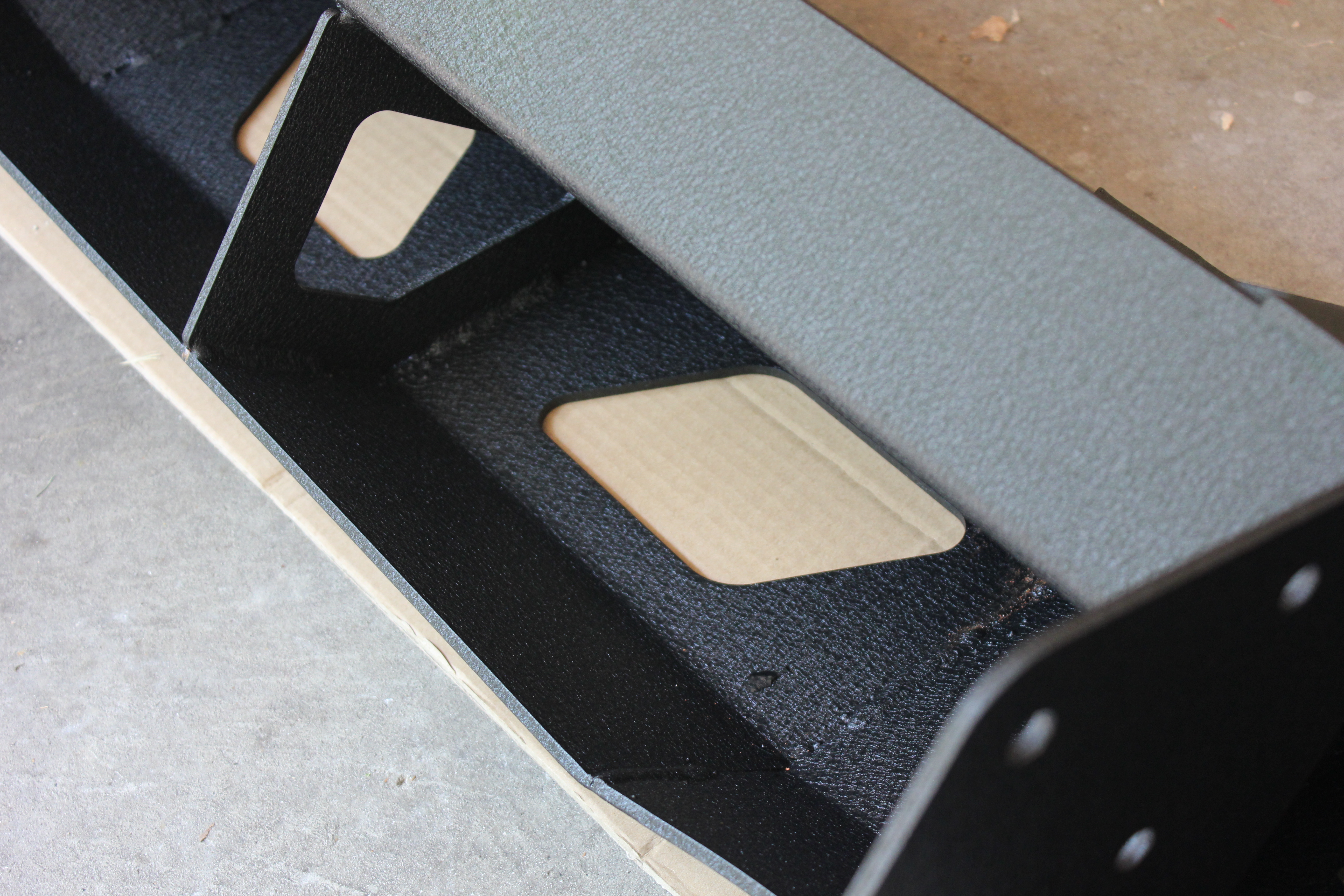
These diamond shaped holes are for….I don’t exactly know, but I will likely be very glad they are there when I go to mount the winch later.
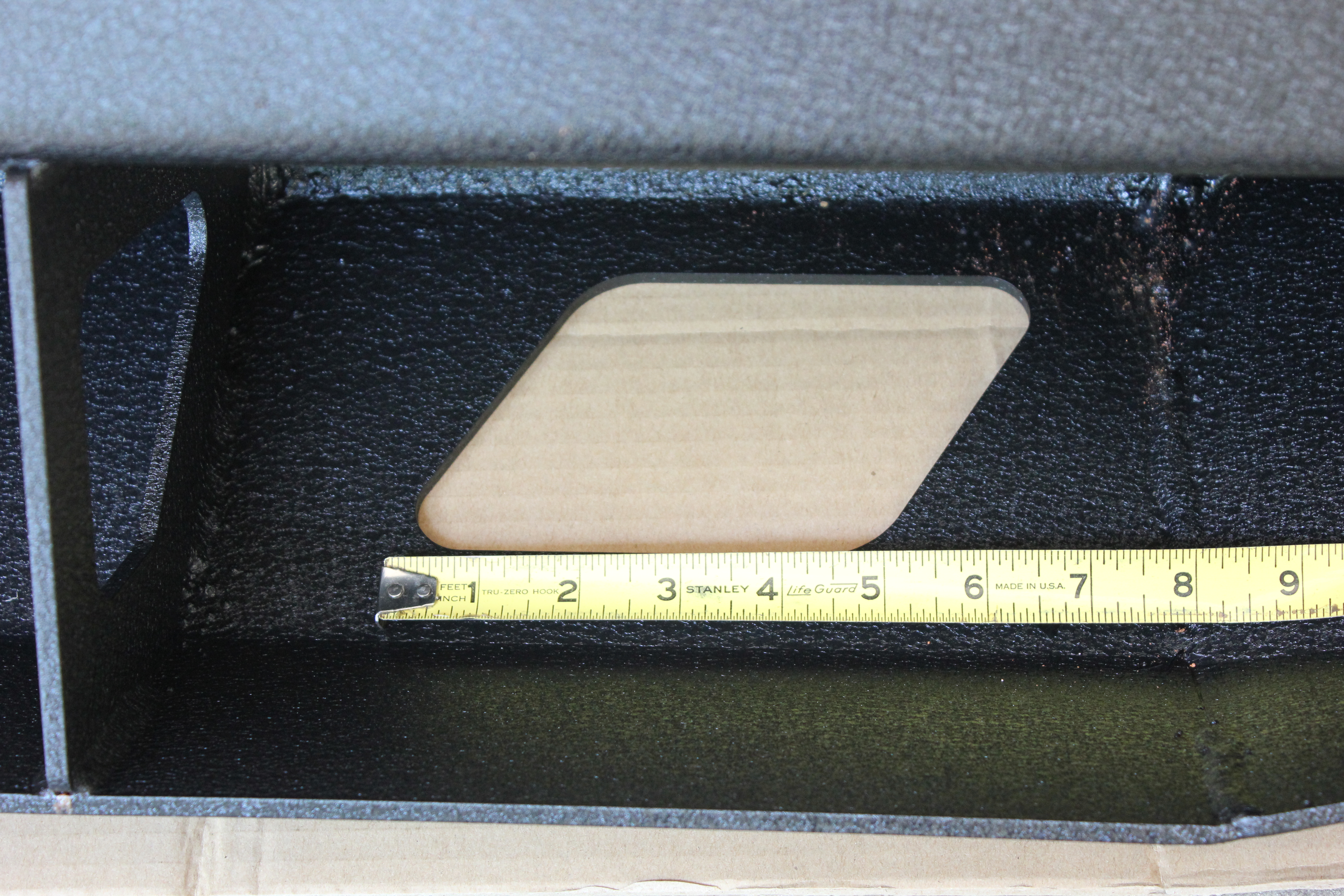
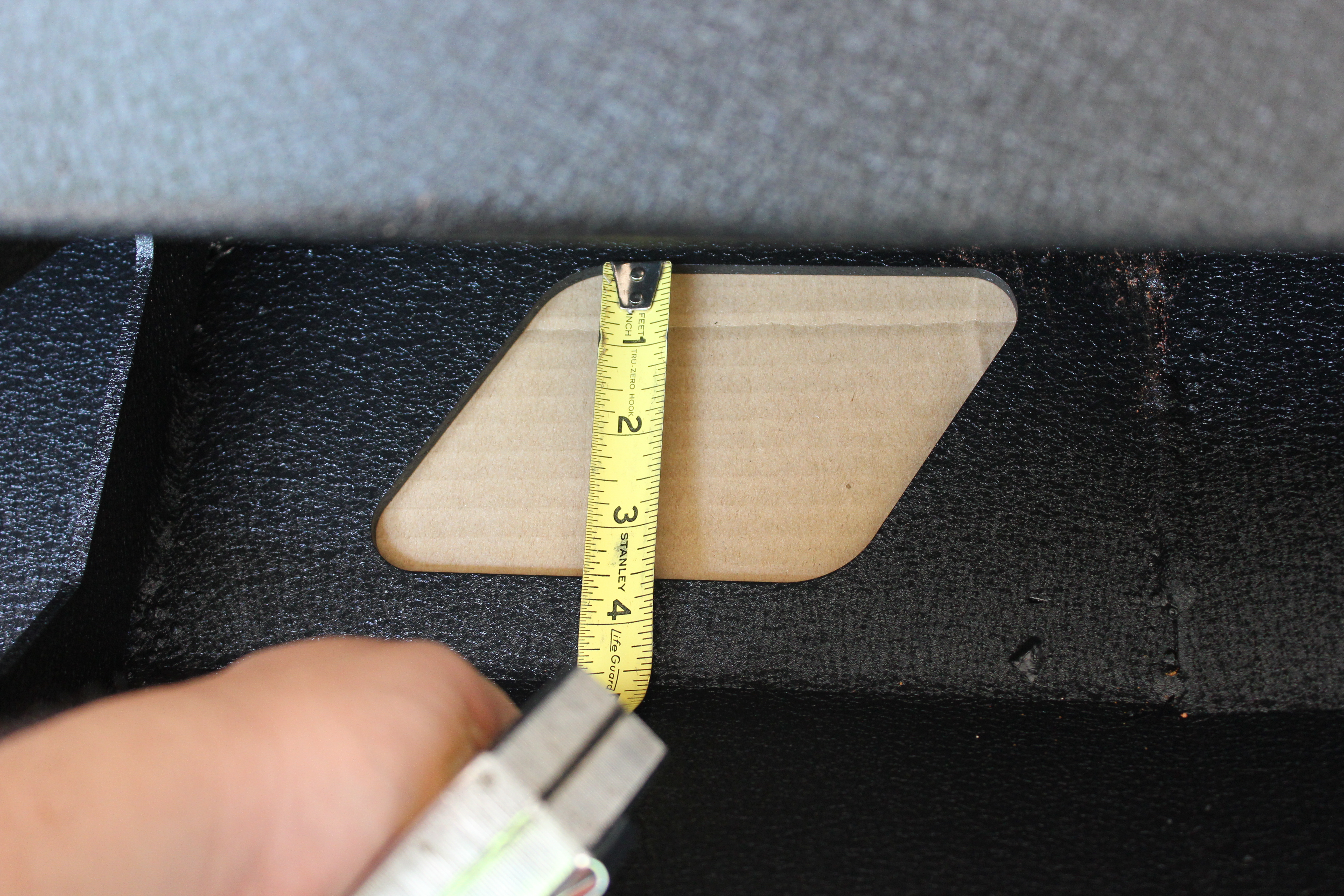
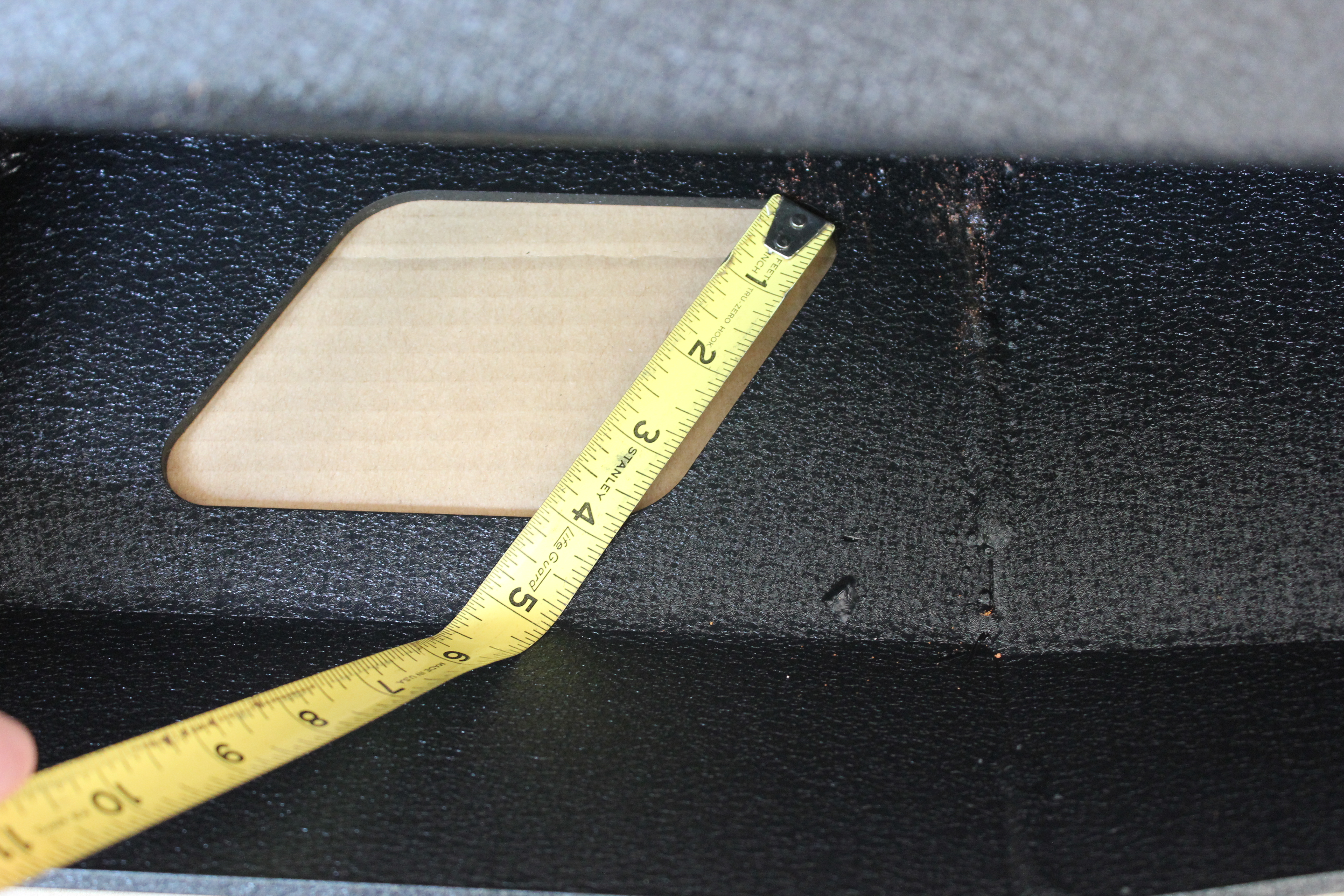
A quick word on the welds
One of the big gripes I read about these were that they had crappy welds. You may have noticed already, but that seems to be a valid complaint for the welds you can’t see. The external ones are fine.
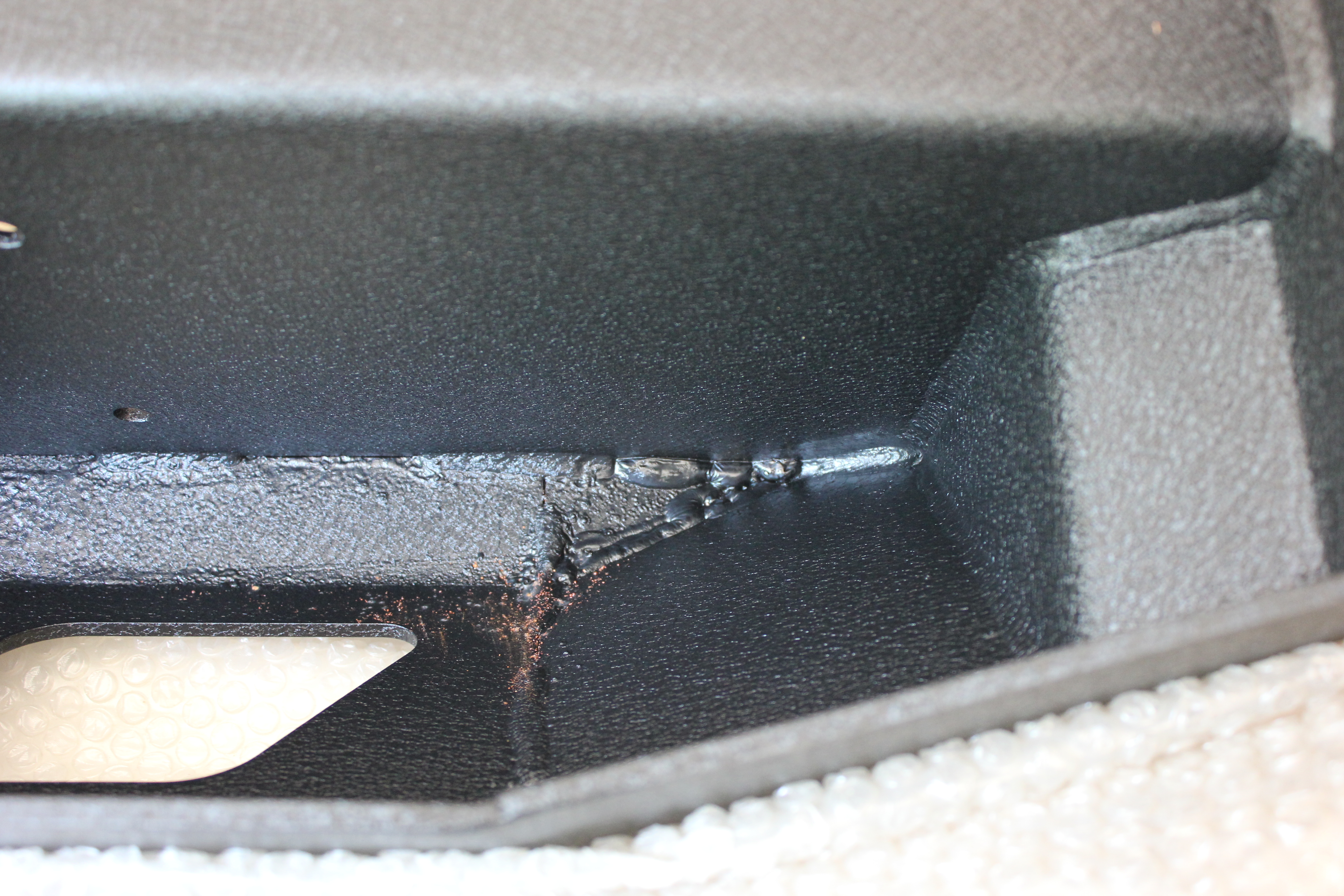
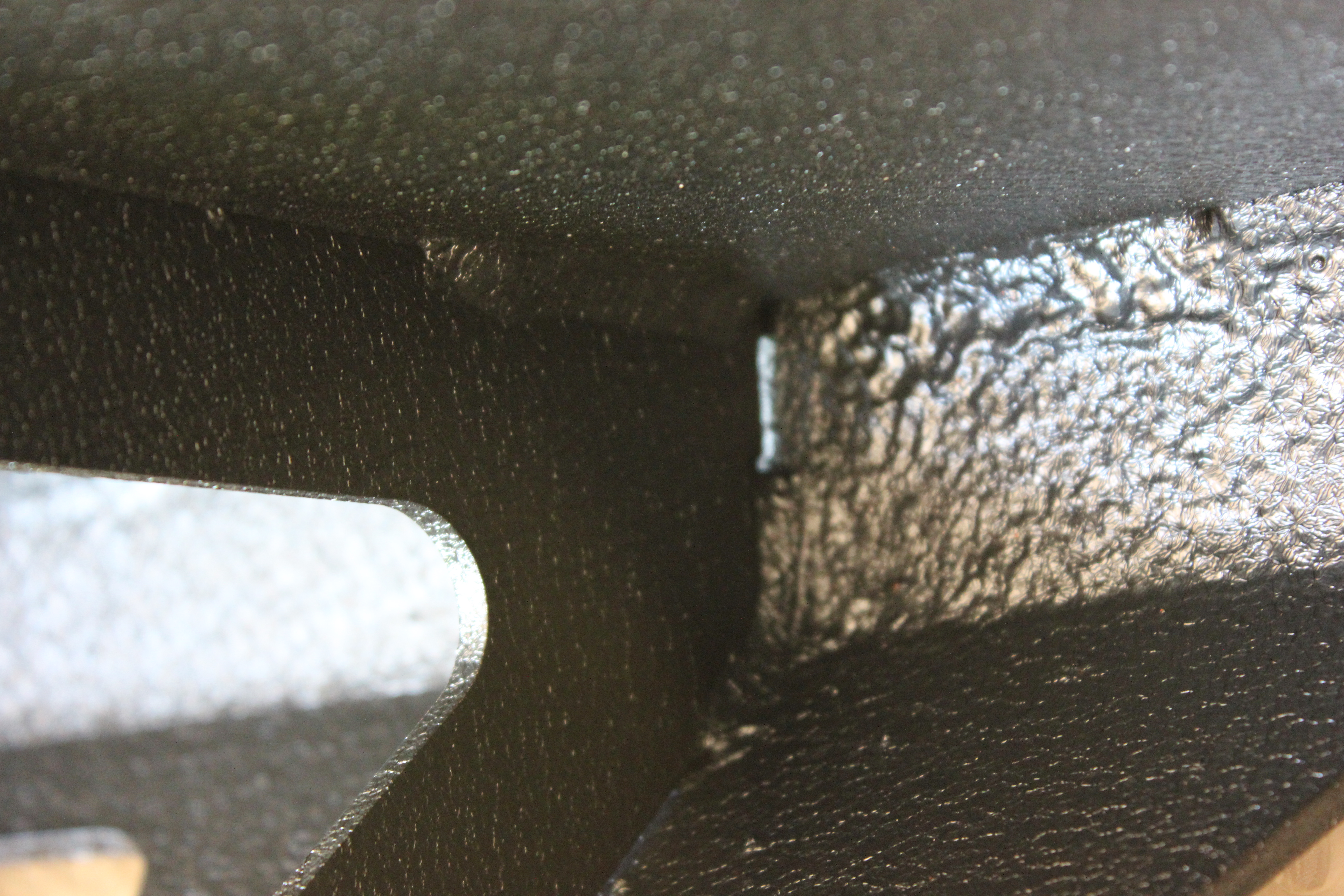
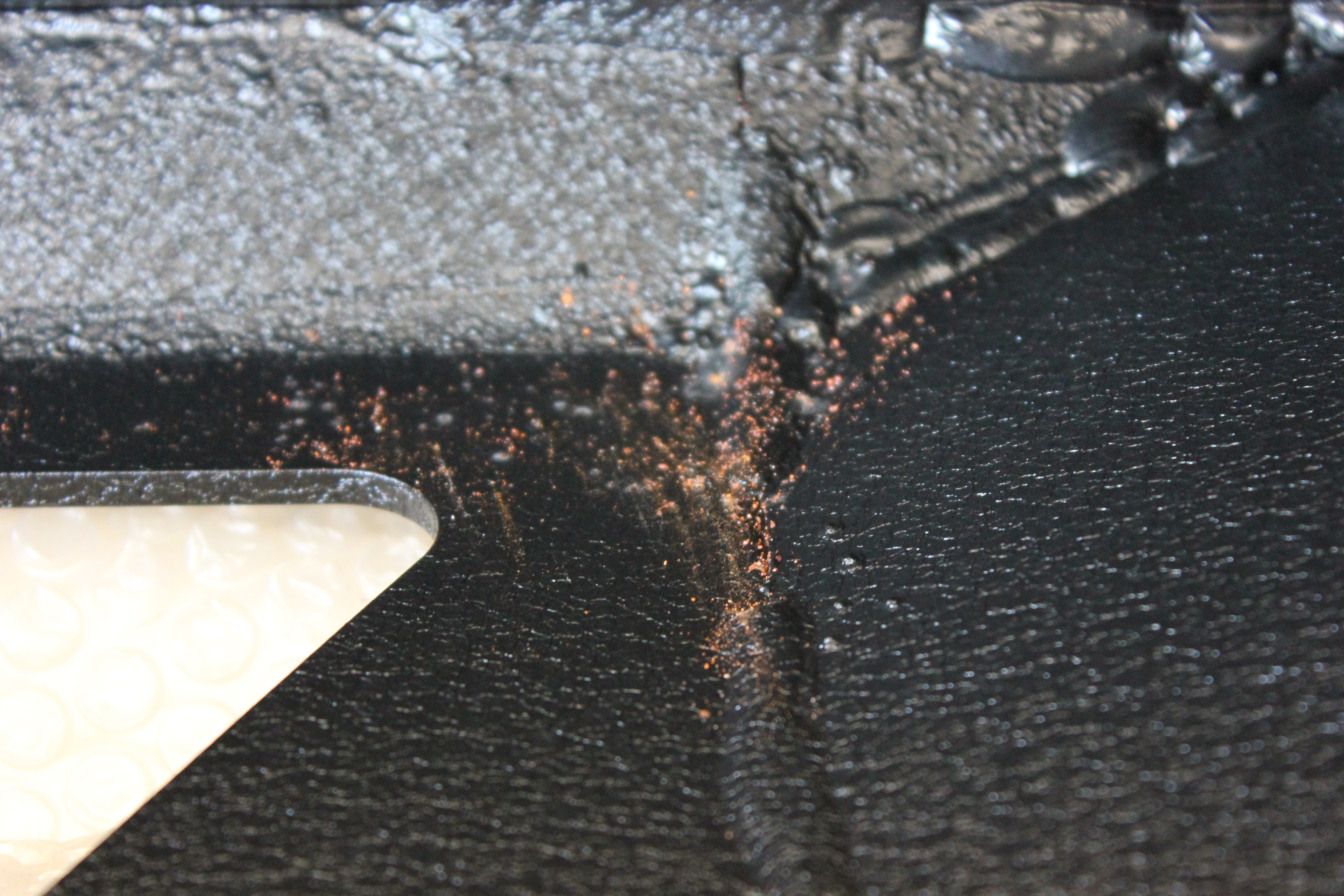
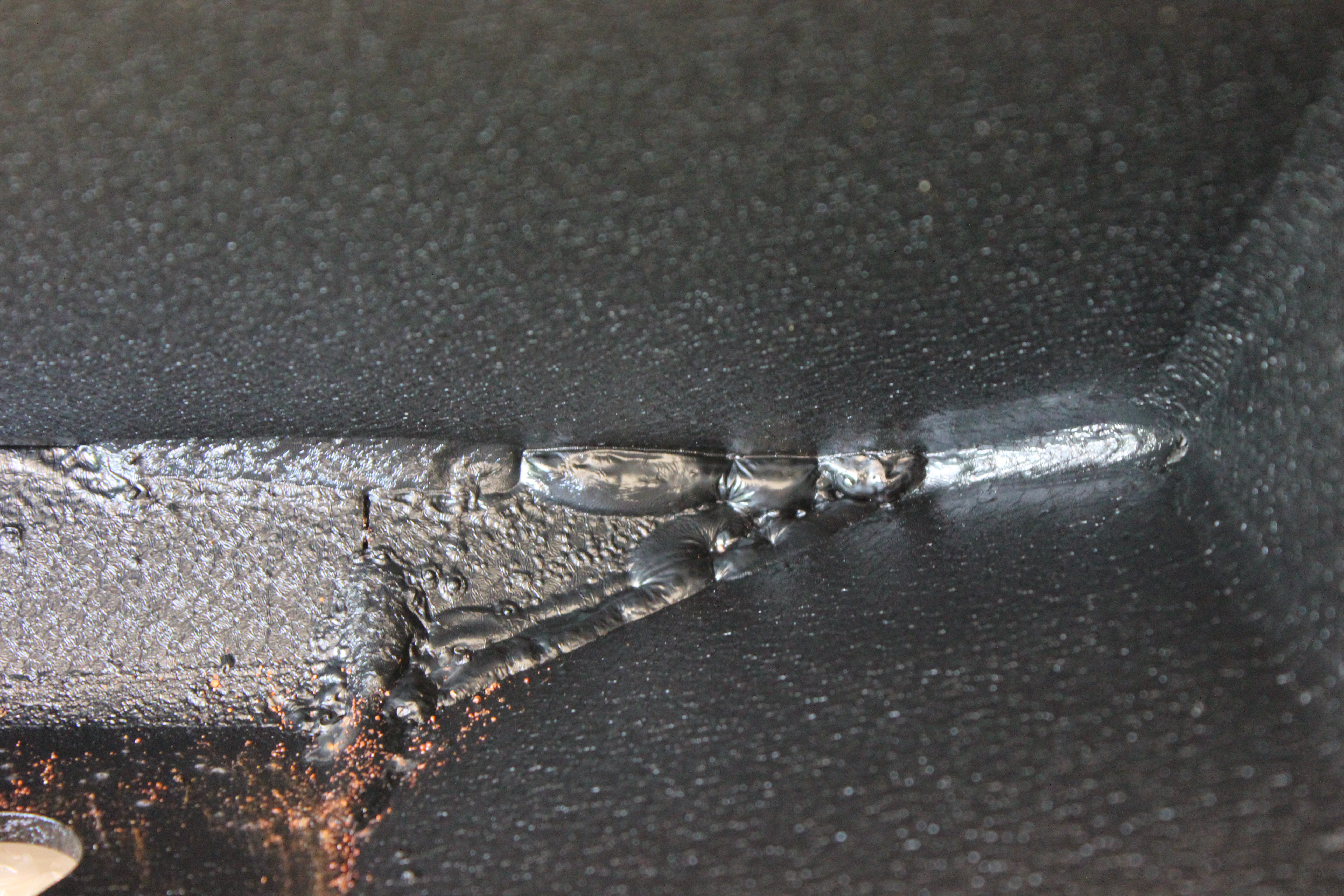
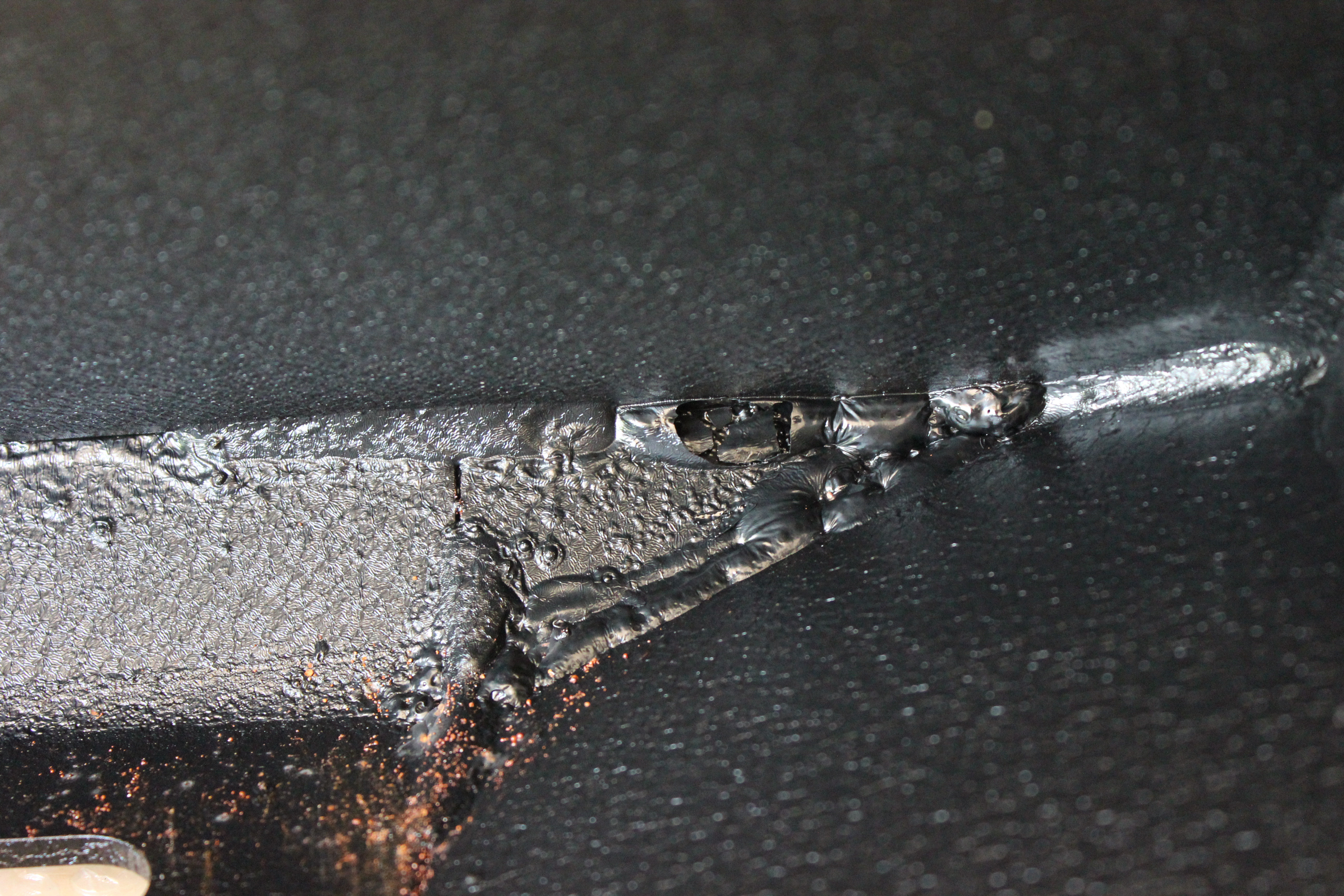
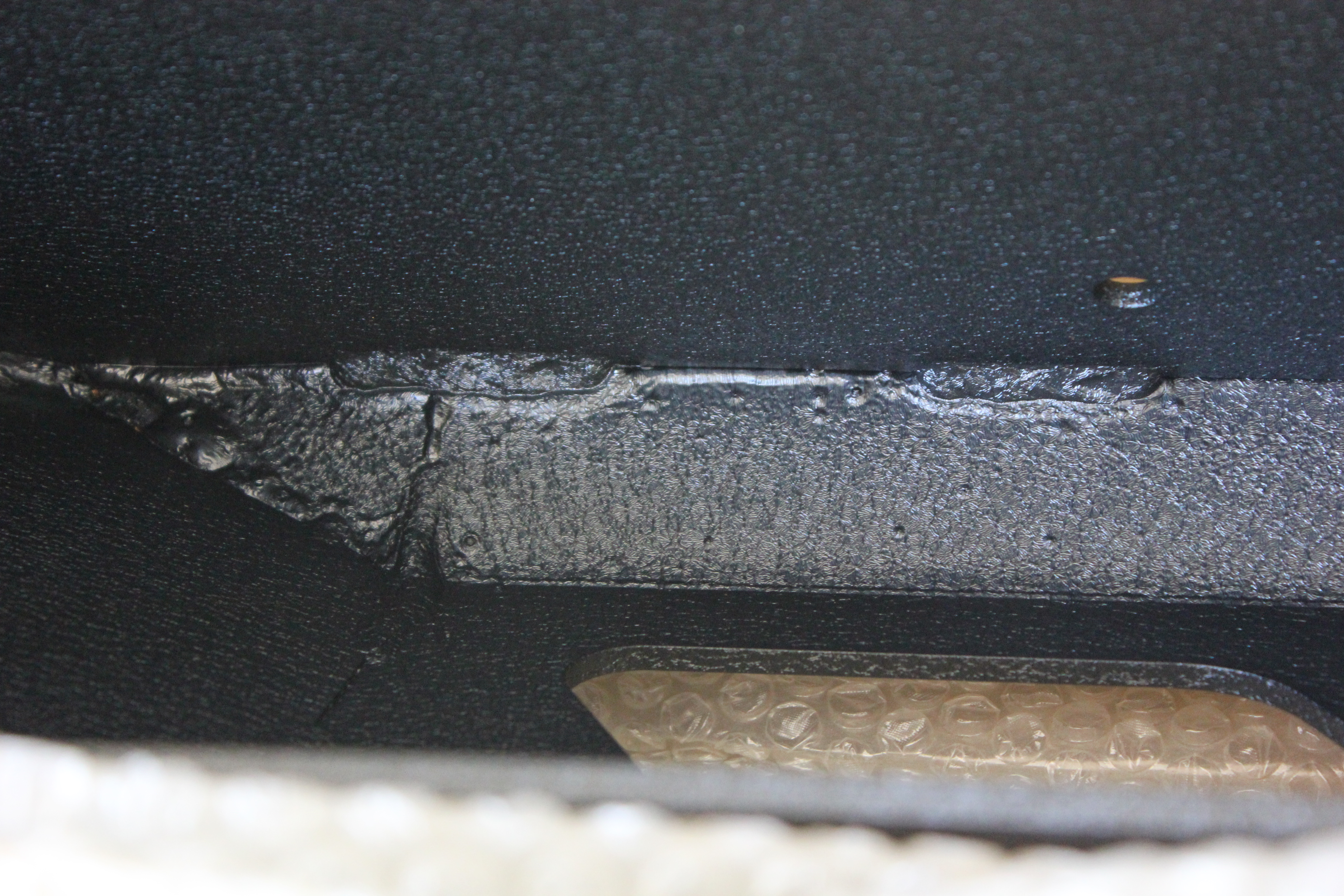
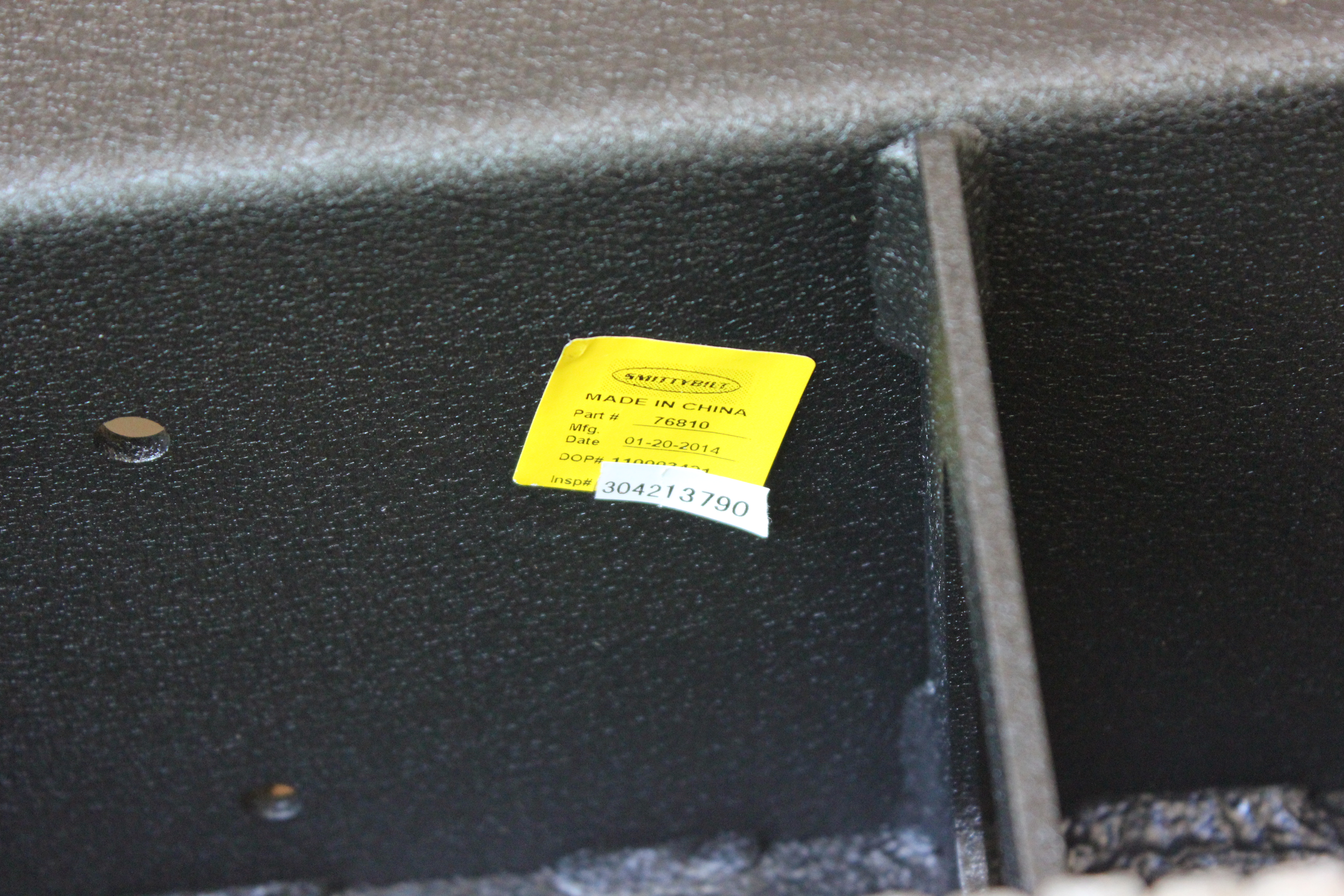
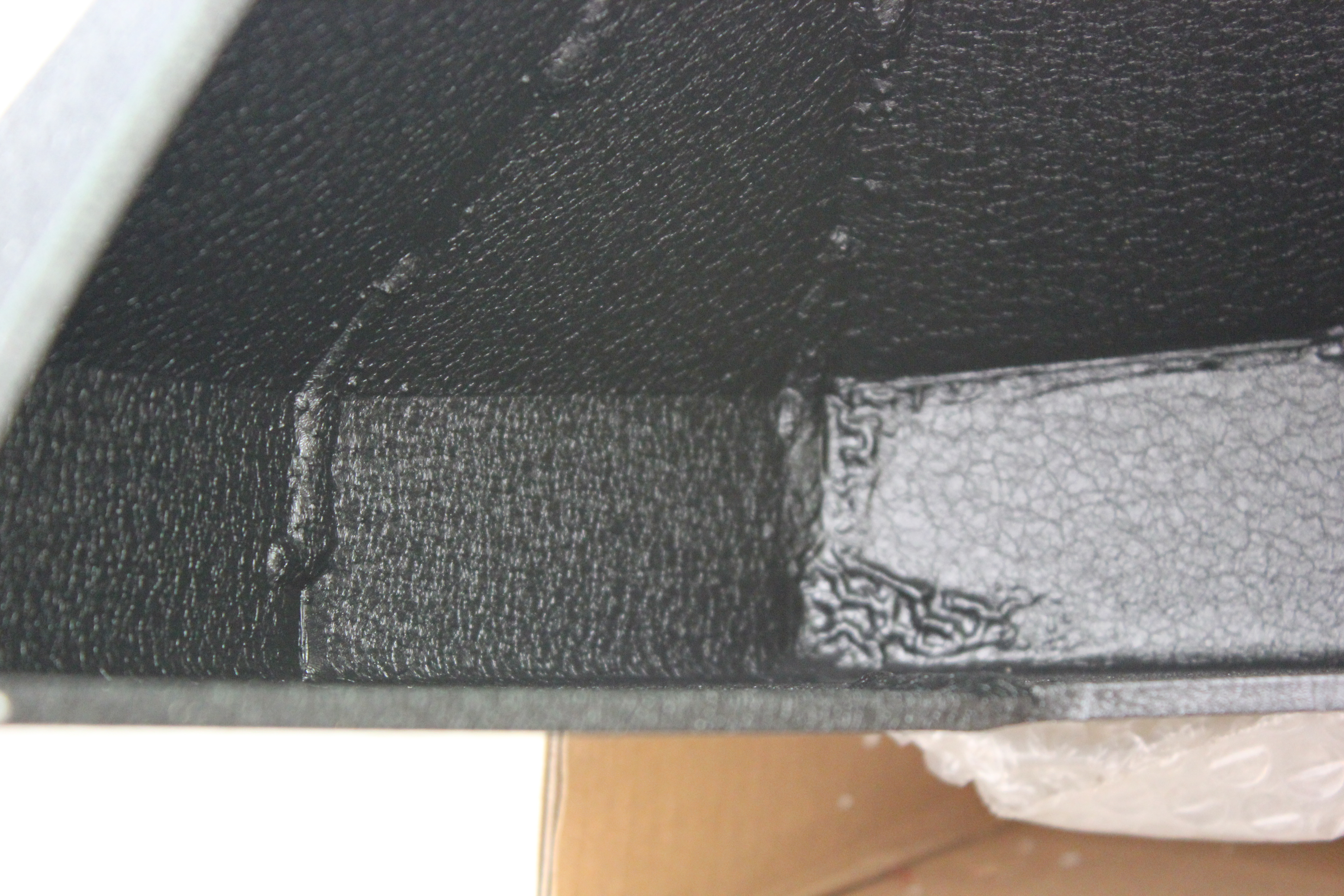
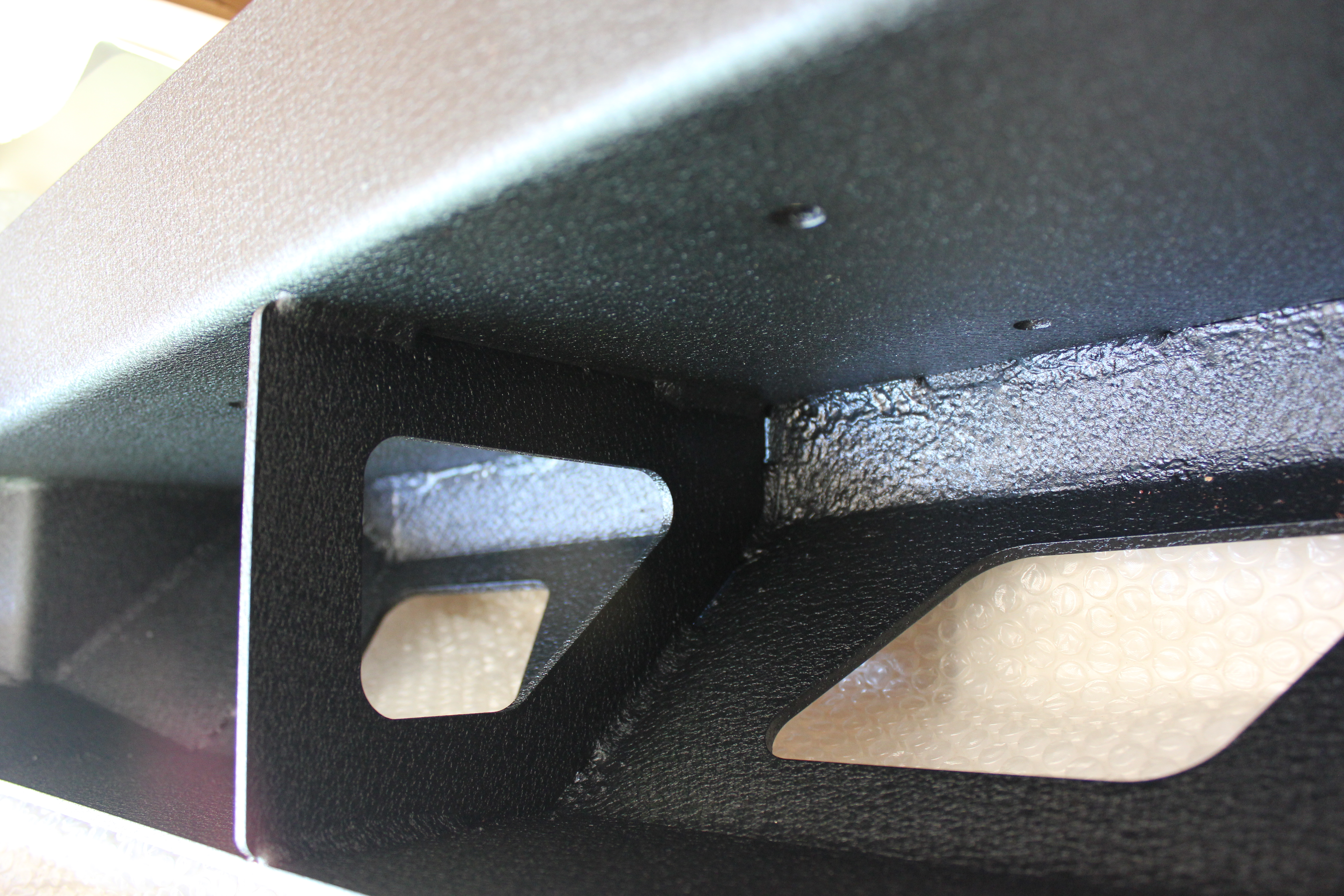
Here we go:
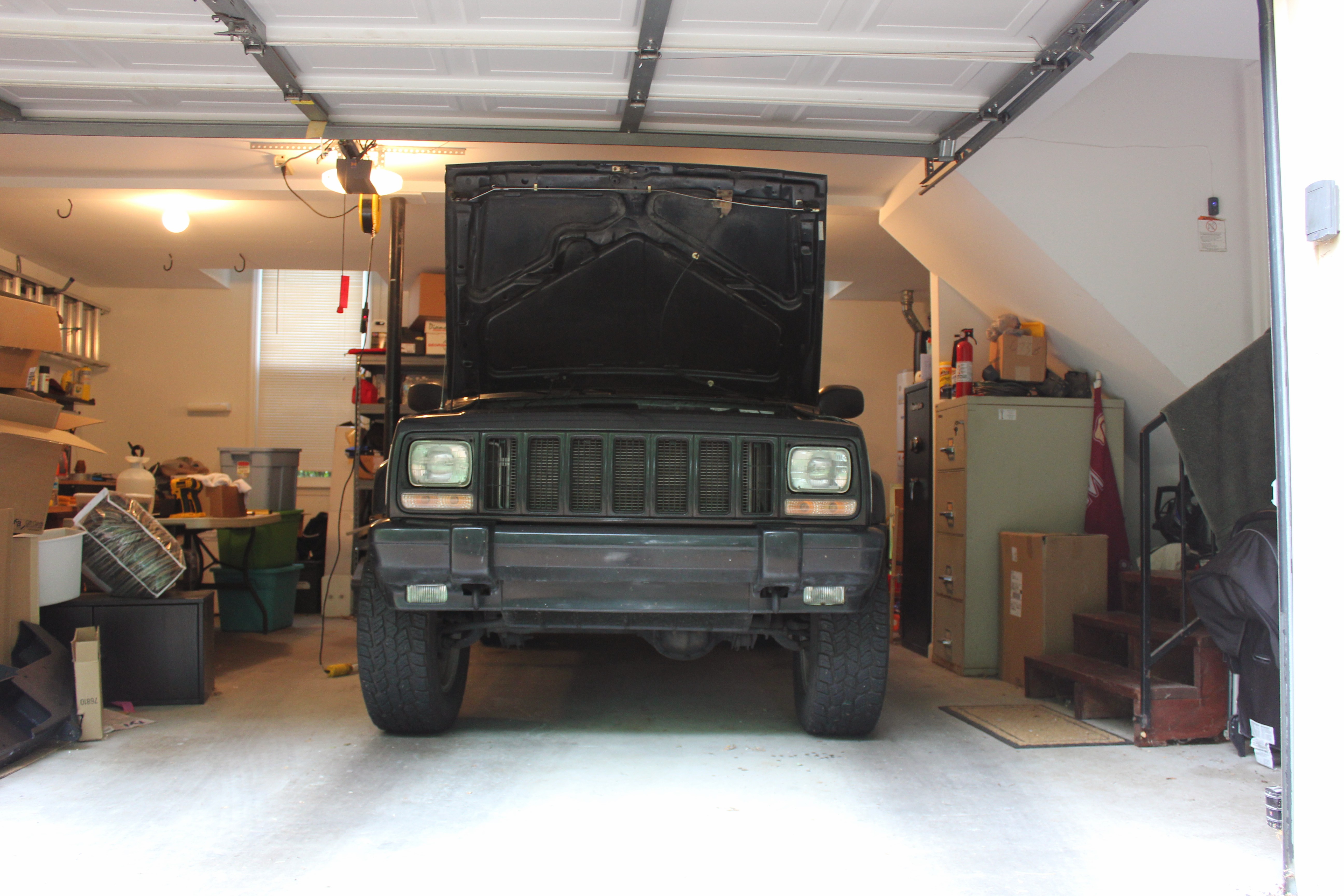
Removing the Bumper End Caps
A lot of instructions out there just simply say “remove the end caps” like you just know how to do that. The XJ Field Service Manual shows you how to do it, but here are the basics.
If you have a skid plate, you’ll want to remove it first. There are three bolts on the passenger side, one on the driver side, and up to three in the front, depending on how thorough the guy installing yours was.
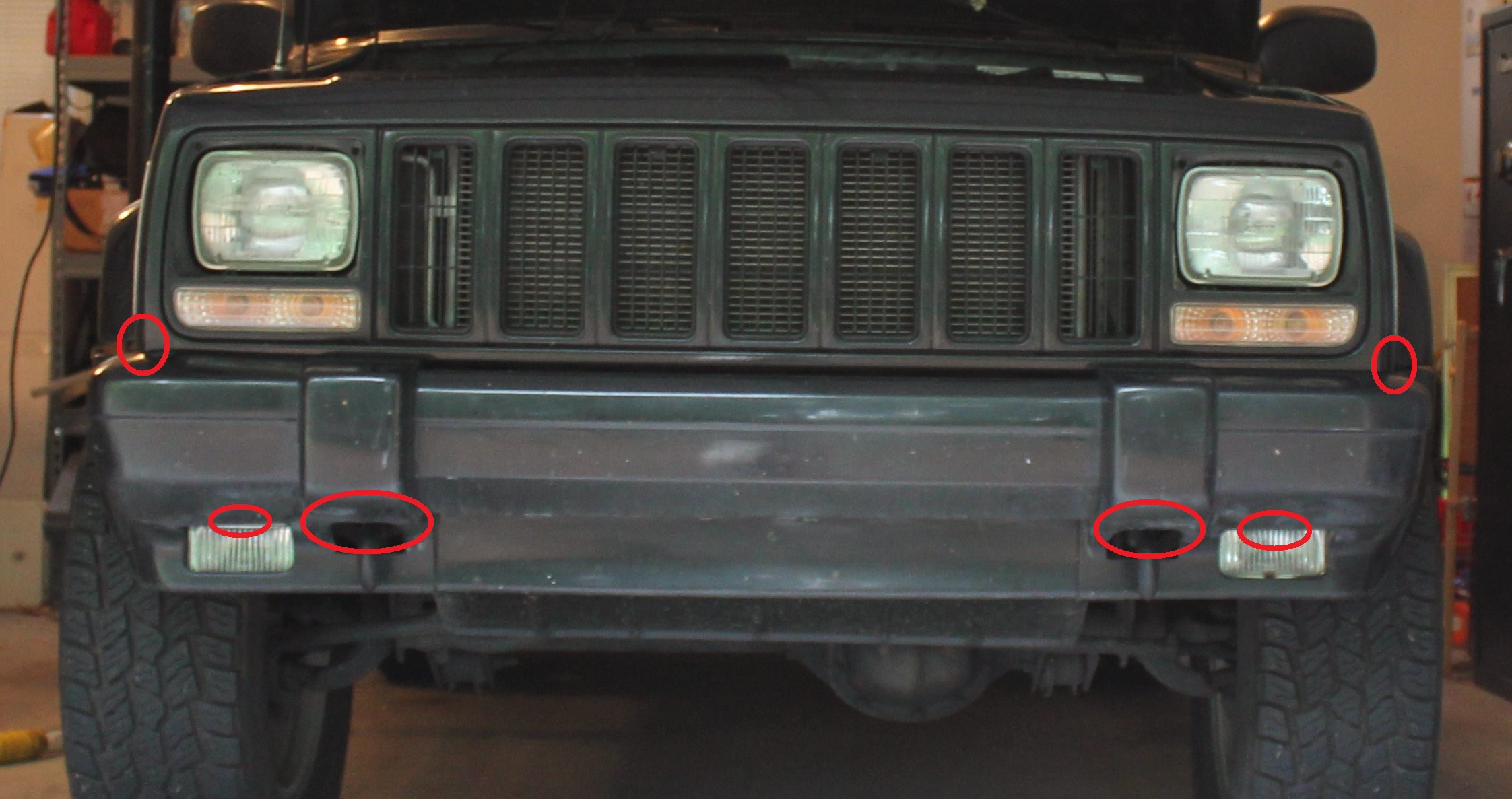
I removed my tow hooks and fog lights before I took off the end caps, but I’m not certain that was necessary. There are 4 bolts that hold on each end cap: One near the fog light (10mm), one near the tow hook (10mm), and two in the wheel well (1/4″):
Here’s one near the tow hook:
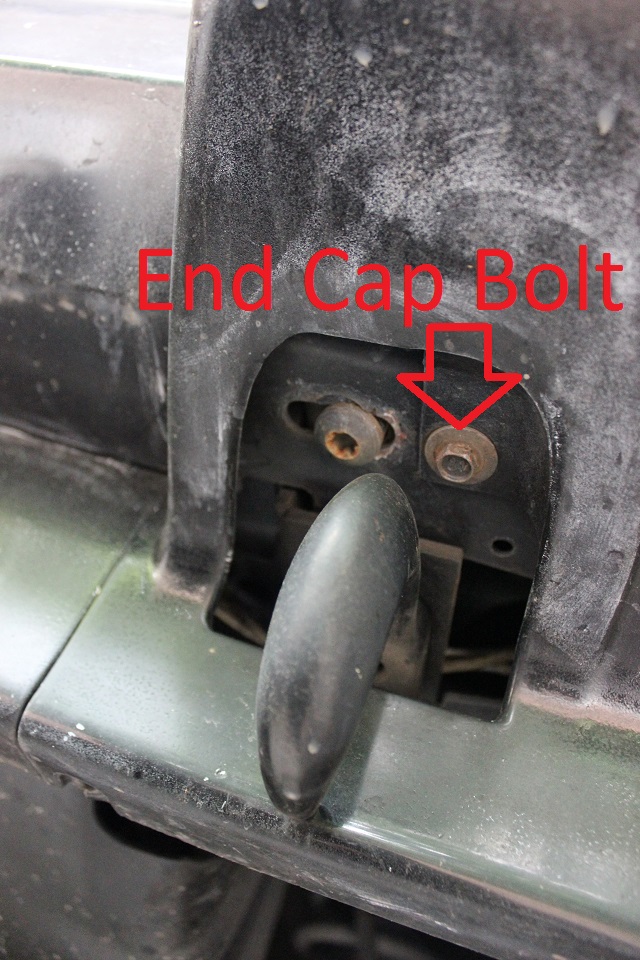
The torx bolt is holding the bumper to the bumper bracket. It might be hard to see from this angle, but the location of the tow hook made it difficult to get to the bolt with a socket. A wrench probably would have worked just fine. Lucky for me, when I bought this Cherokee the tow hooks were installed like this:
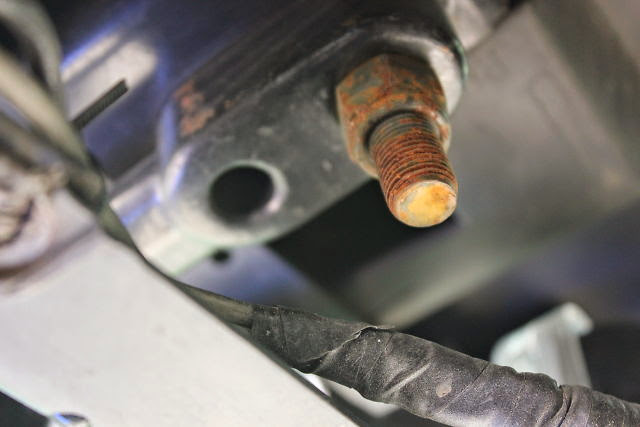
Hint: There’s two holes for a reason…there’s supposed to be a second bolt there. They’re not studs, so you’ll need to put a box wrench or a socket on the top side as well. And, as you can see from the picture, you’ll need a deep socket. Impact wrench FTW.
After you take off the tow hook it’s easy peasy.
And here’s the one near the fog light:
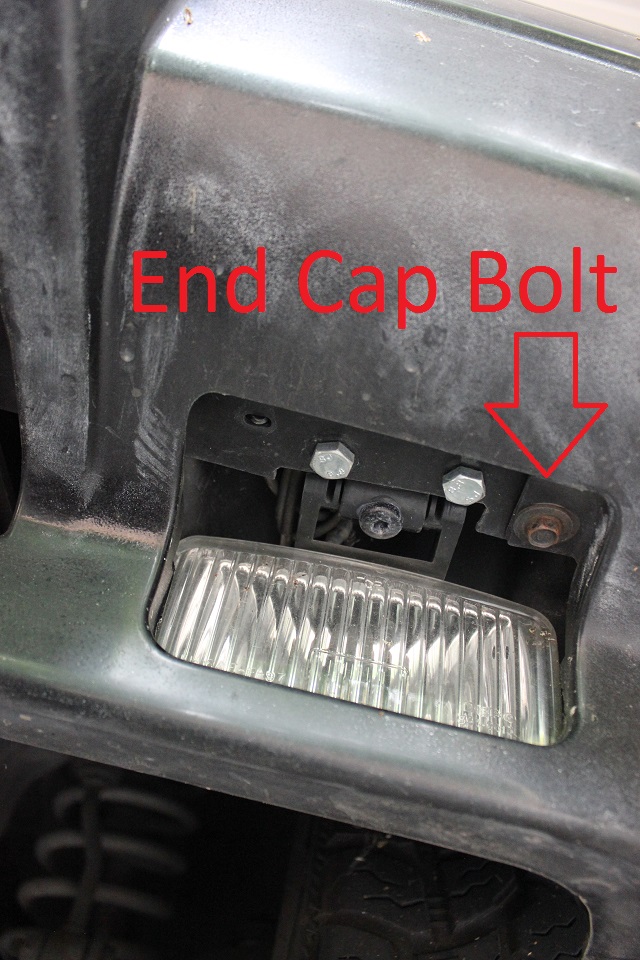
For both the one near the tow hook and this one, there’s a nut on top that you’ll have to grab with a box wrench. In the above picture, the two silver bolts are for the fog light bracket, and they attach to the bumper. You can remove them or not. I did. Fun Fact: Whoever installed these used Grade 8.8 for the fog light brackets, and ungraded zinc for the tow hook brackets and the skid plate. Priorities.
Unfortunately, I didn’t get any pictures of the last two 1/4″ bolts. You’ll need to remove the splash guard to get to them by popping out a couple of plastic rivets with a tool like this
Once all 4 bolts holding on the bumper end cap are removed, you can pop it off by pulling it towards the front of the Jeep and lifting up.
Removing the bumper
Now you have just the bumper, no end caps. You might also still have the front air dam attached to the bumper, and you can leave that on (it’s a piece of plastic on the bottom that extends down a couple of inches). Before you take off any more bolts, you’ll want to remove the two T-25 torx screws that are on the passenger side. They hold the vacuum reservoir to the bumper. The reservoir looks kind of like an old toilet float. Later on, I’ll let you know what I did with it.
There are four T-50 torx bolts holding the bumper onto the bumper brackets. Take off the bottom two (if you haven’t already), then take off the top two. Pull the bumper off.
Removing other bits
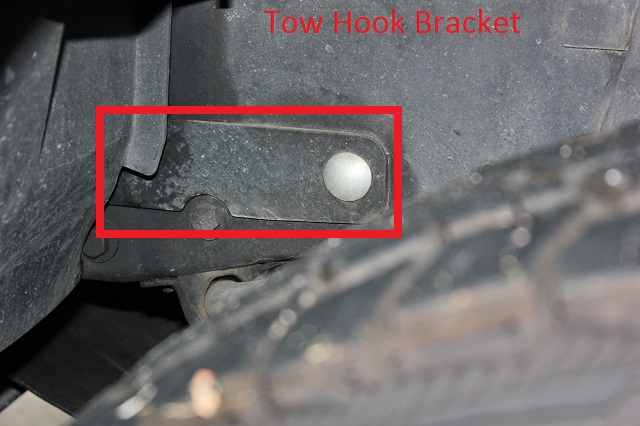
You’ll need to also take off the bumper brackets and tow hook brackets. The bumper brackets are the bits that your bumper attached to, so that’s a no brainer. The tow hook brackets are similar. Be mindful of the rear bolt for the tow hook brackets:
Once all that stuff is off, it’s time to start following Smittybilt’s instructions.
Installing the Bumper
Step 1 is removing the old bumper. That we’ve already done. On to step 2!
Step 2: On the driver’s side of the vehicle, remove the (3) OE steering box bolts. Be sure to
support the steering box after unbolting it, (Fig B)
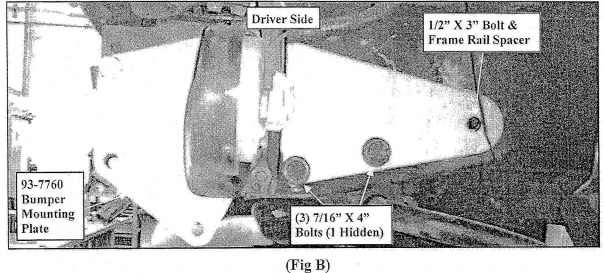
That’s a pretty horrible picture to include in your instructions, don’t you think? And there’s a hidden bolt? What? Where?
They mean hidden in that picture, not like it’s hiding somewhere that’s not obvious. Here’s a pic I took of the “hidden” bolt:
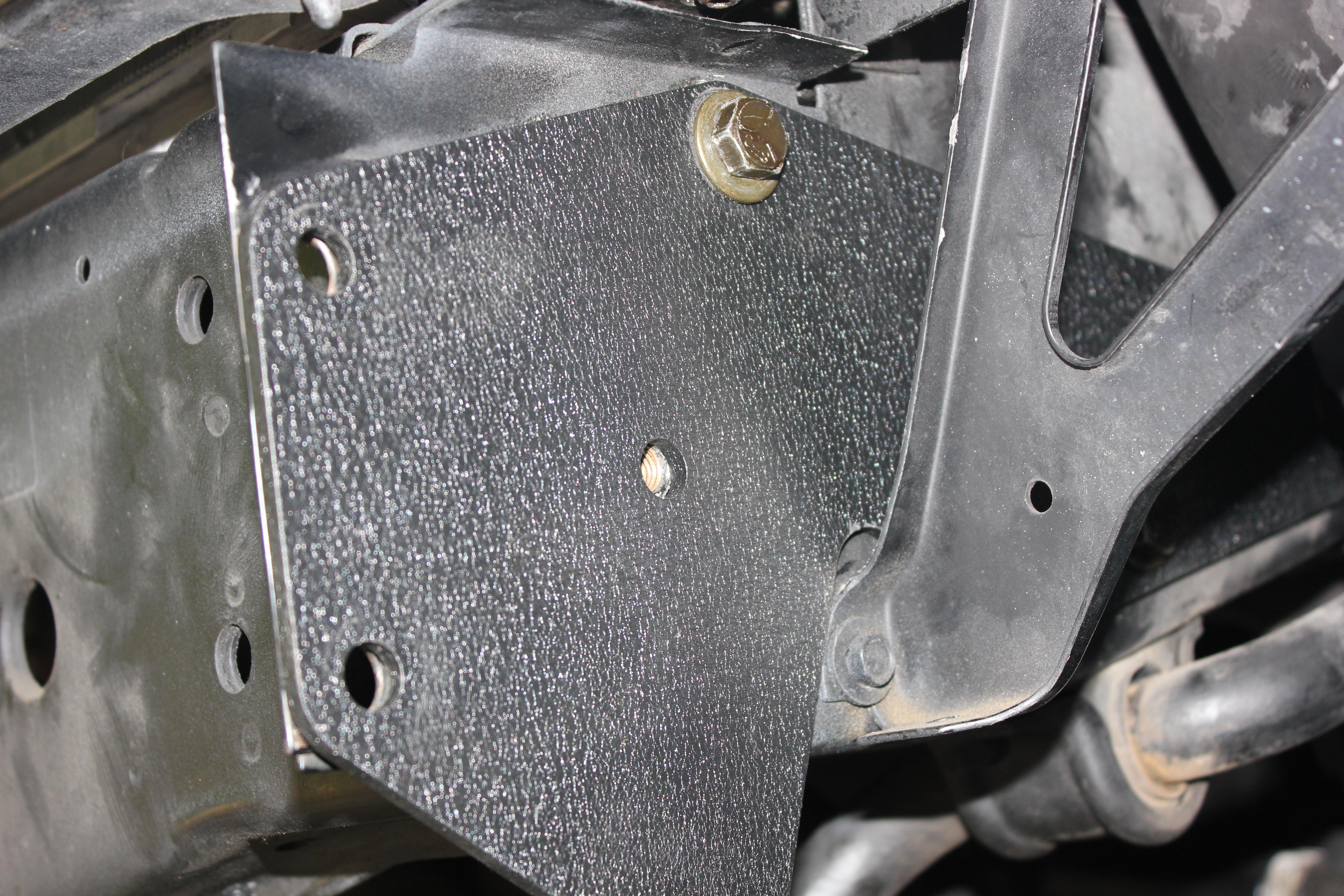
It’s just hidden by the bracket in the picture that Smittybilt took.
This is also a step where you’re going to need a friend. I didn’t really find a good way to “support the steering box after unbolting it” other than being under the jeep and holding up the box while my buddy started the bolts by hand. YMMV.
Oh, one thing that is important to note. My steering box bolts had Loctite on them. They were in there pretty good–to the point that my impact driver
Step 3: Install (1) front bumper mount plate (93-7760) to the outside of the frame rai1. Secure the mount plate and the OE steering box to the frame rail using the (3) provided 7/l6″ X 4″ bolts and hardware in the OE steering box bolt holes. Install the 1/2″ X 3 1/2″ bolt, 2″ spacer (90-1051 inside the frame) and hardware into the rear most hole in the mounting plate.
NOTE: Be sure the (2) front OE bumper mounting plate bolt holes line up with the Remaining holes in the front bumper mount (93-7760). (Fig B)
What I did here, as previously mentioned, was had a friend start the steering box bolts while I held the steering box in place. They were hand-tightened, and then I put in the rear bolt. Remember, on the rear bolt you put the big 2″ washer inside the frame. So it goes Locking Nut->2″ washer->frame->bumper mount plate->small washer->bolt head. Since you’re working with a locking nut, you’ll need to use a wrench on one side and a ratchet on the other. Tighten it down most of the way, but allow the plate to move freely.
At this point the mounting plate should have a little play in it. Why? Well, you see those three empty holes on the picture above? Those need to line up with the holes in the frame. One of them has a nut welded in the frame, but the other two (the ones closest to the front) do not. You have to make sure all these holes line up or you won’t be able to get the bumper on. I did this by using the included mounting hardware to line them up. At one point, I had to use a 1/4″ socket extension as a lever to line up the two front holes.
Once everything is lined up, take out the top bolt for the steering box. Put Loctite on it, and then tighten it down to 70 ft lbs. Make sure the holes continue to line up! Do the same for the other two. There’s no torque spec for the rear bolt, but while you’ve got your torque wrench set to 70, might as well use that.
Now, on to the passenger side…
Step 4: On the passenger side of the vehicle, install (1) front bumper mount plate (93-7760) to the outside of the frame rail. With the bracket secured in it’s proper position, use the (3) middle holes in the mounting plate as a template, center punch and drill through the outer wall of the frame ONLY! NOTE: Be sure the (2) front OE bumper mounting plate bolt holes line up with the front holes in the front bumper mount (93-7760) before drilling. (Fig C)
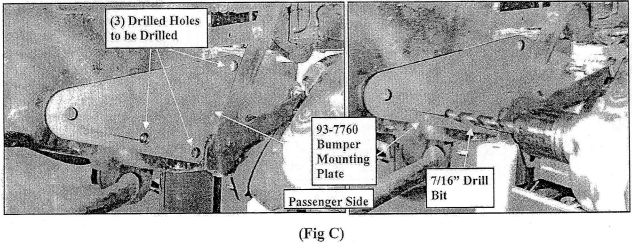
Maybe its because the previous owner installed factory tow hooks, or maybe it’s because Smittybilt was using a 1996 or earlier model to write their instructions, but I only had to drill one hole, not three. The way I made sure everything lined up was to basically bolt the thing in place and mark the missing hole. Then I unbolted everything and drilled it out.
Step 5: Insert the nut plate (90-7758) into the front opening of the passenger side frame rail. Secure the mounting plate through the frame to the nut plate (90-7758) using the (3) supplied 7/16″ X 1 1/4″ bolts and hardware. (Fig D)
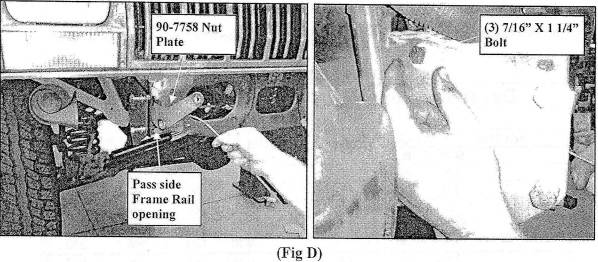
Like I said before–and you can kind of see it in the picture on the left–you have to fish the nut plate inside the frame rail. I had to bend the wire into a Z or an S or maybe an N but you get the point. There was a nut welded inside the frame rail that I had to get up and over in order to get the nut plate where it needed to go. I put one of the bolts into the frame rail first so i could see where I was going, and then tried to match up the nut plate to the bolt. Don’t tighten them all the way down just yet since you’ll still need to do the rearmost bolt in the next step. Lather, rinse, repeat.
Step 6: Install the l/2″ X 3 1/2″ bolt,2″ spacer (90-1051 inside the frame) and hardware into the rear most hole in the mounting plate. (Fig B)
This is just like the driver side. Tighten down most of the way, make sure everything is lined up, then tighten all the bolts down.
Step 7: NOTE: This step might require 2 people. Raise the new XRC front bumper (93-7761) up into place and align the bumper mounting holes with holes on the bumper mounting plates. Secure using the supplied (6) 10mm X 40 bolts and washers. Insert the (2) 7/16″ X 1 1/4″ bolts and hardware into the remaining lower holes and secure using the supplied hardware.
(Fig E)
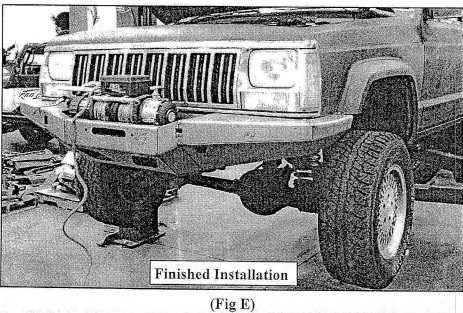
That’s right…. Step 7 is basically “and now, mount the bumper” with a picture of what it looks like when you’re done. What I tried to do was get something tall enough that we could sit the bumper on and scoot it over to line up the holes. That didn’t work out for me, so I decided to try to use the lower hole and swivel the bumper up. SO I got the tallest thing I had and put the bumper on it, like so:
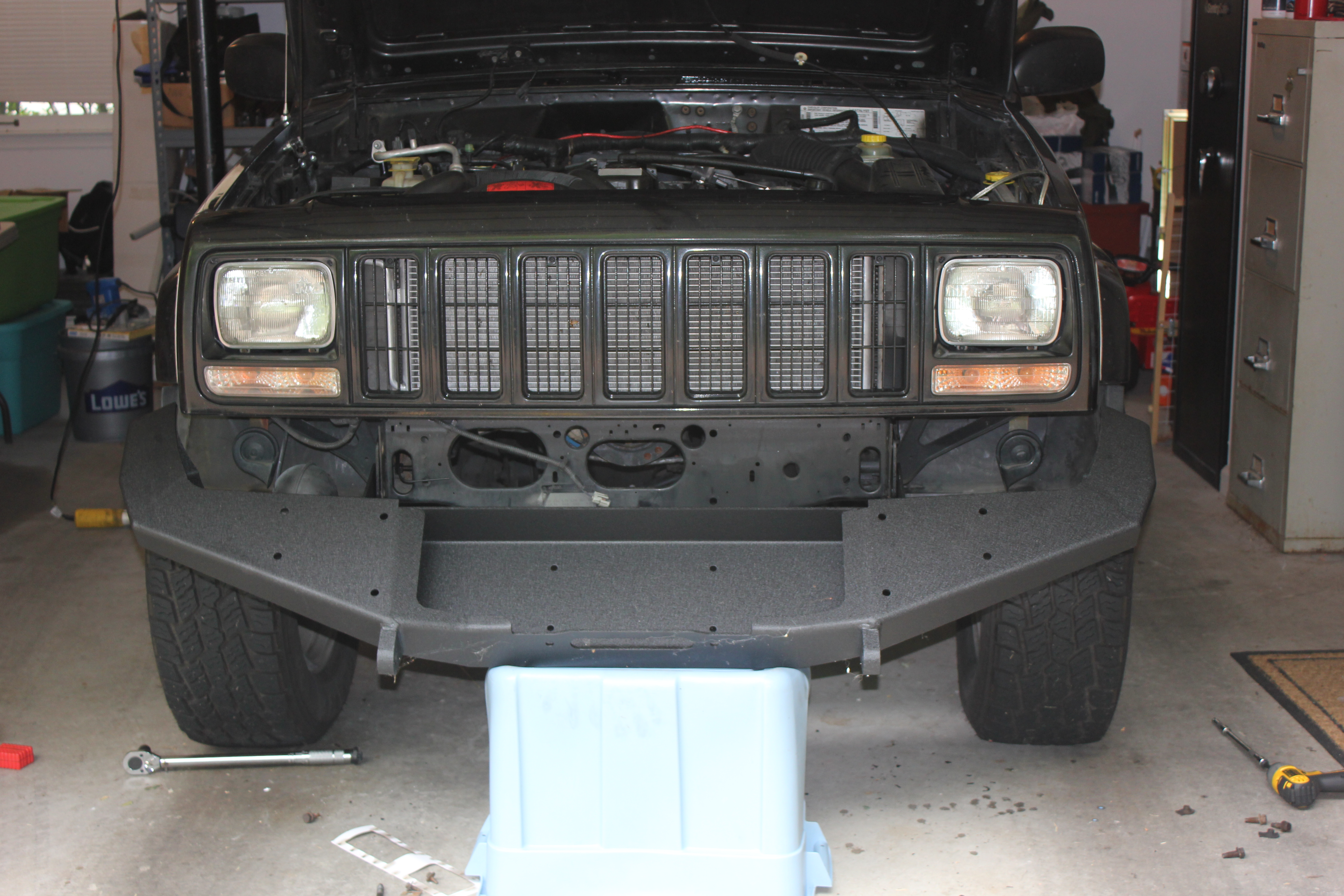
And then I put the bolts in the lower hole on each side, like so (forgive the blurry):
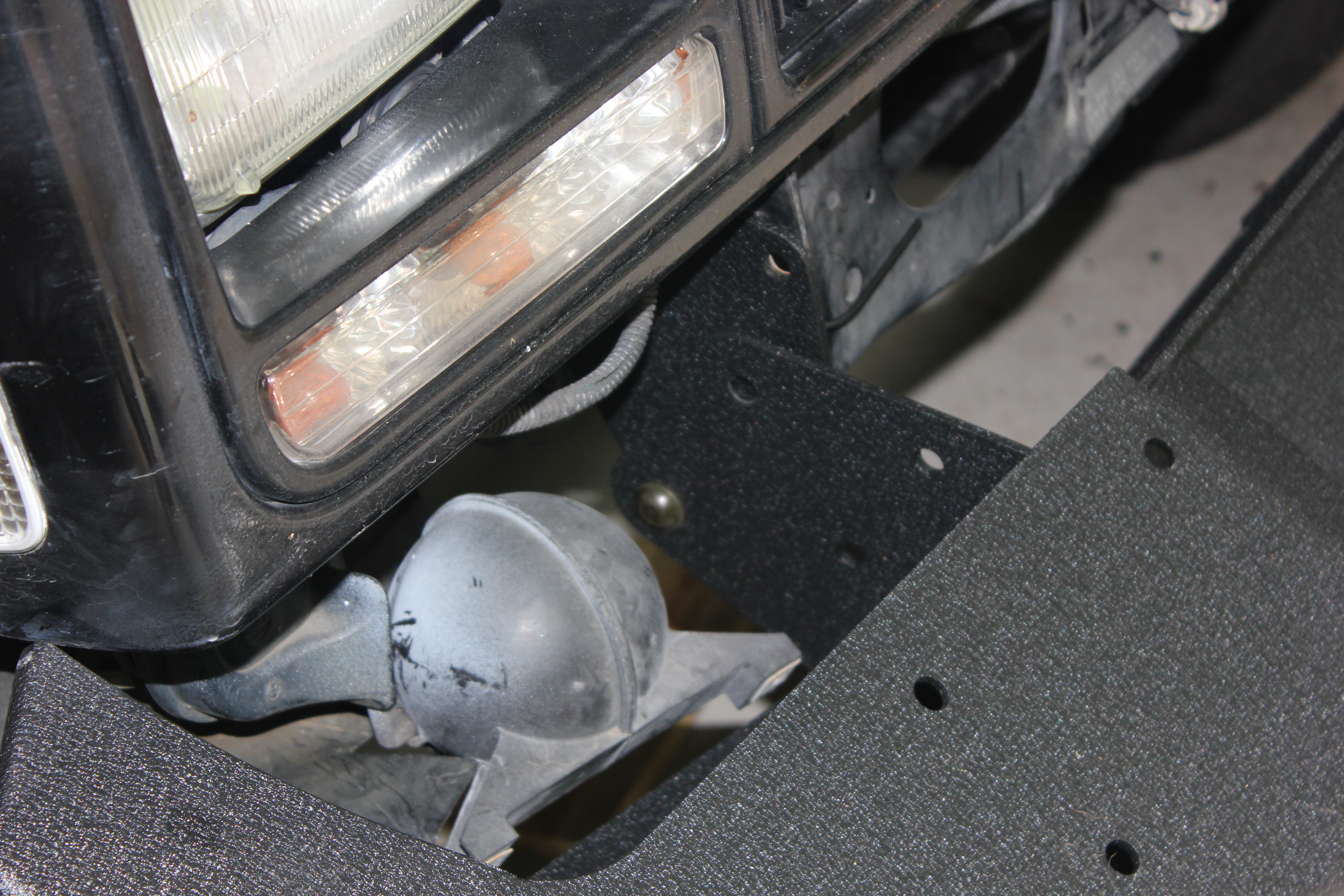
That…..didn’t work. You see, the fenders kind of got in the way. In some later pictures you’ll see some missing paint right where the grille shell meets the front fenders. That’s what happened there.
So plan be was that my friend and I got under the bumper, one on each side, and lifted at the same time. We each put a bolt in two holes to keep the thing in place. Then I went back around to the 8 bolts needed and tightened everything down.
The rest of Smittybilt’s instructions basically say make sure it’s level and torque the bolts down and you’re done, but there’s a couple more things you need to do.
First, your vacuum reservoir is still just kind of hanging out. Now that the bumper is in place and not going anywhere, it’s time to secure that. I used some zip ties and connected it to the bracket that connects the frame rail and the fender–it’s the passenger side version of the bracket that was “hiding” the bolt we talked about earlier. That’s mostly worked out for me but I can hear it rattling around when I go over grooved pavement. If you’ve got a better suggestion, I’m completely open to it.
And the last thing is that even though I have a 97+ Cherokee, I still have to do some trimming! Fortunately, it’s not trimming sheetmetal. The splash guards have to be trimmed because you end up with this:
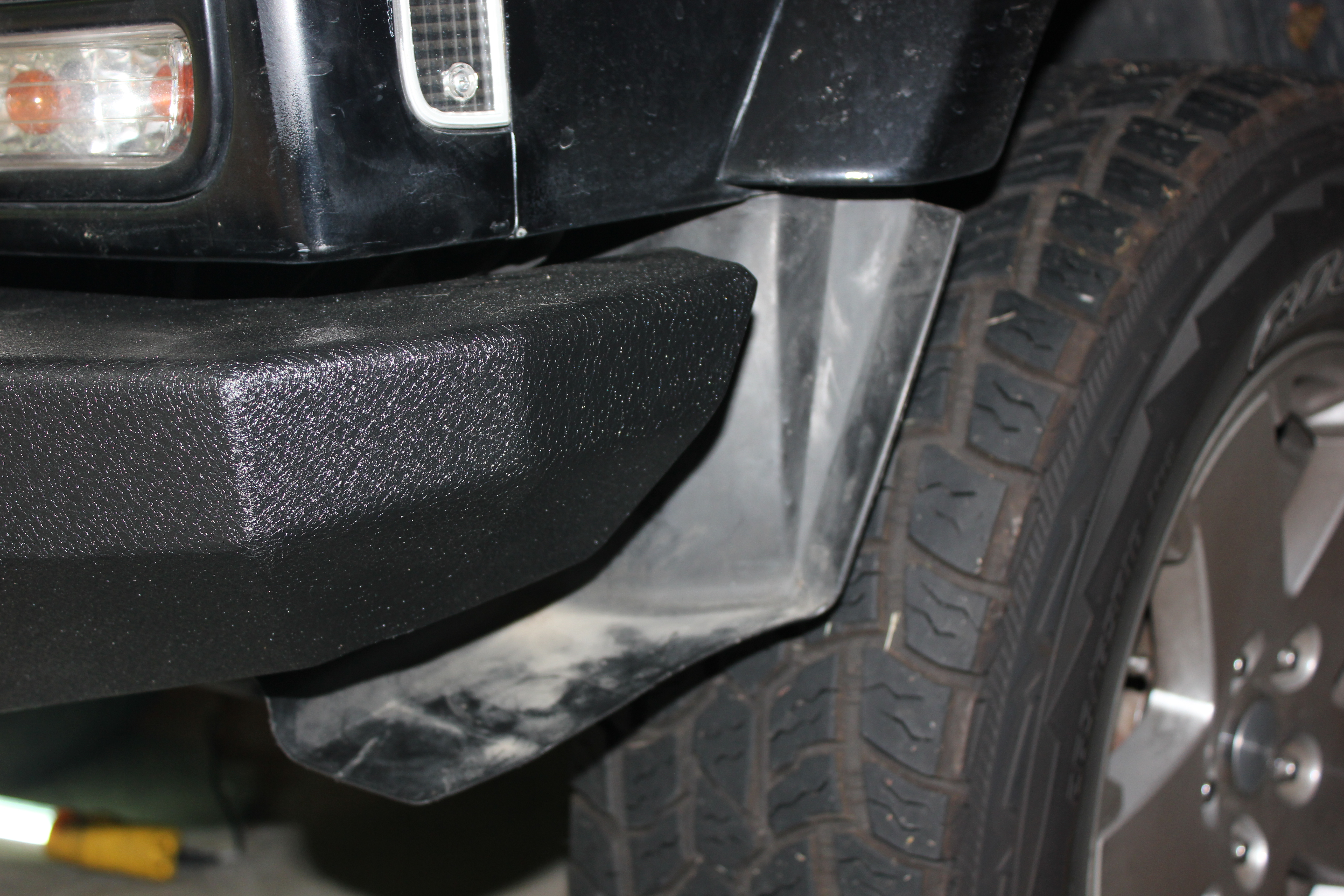
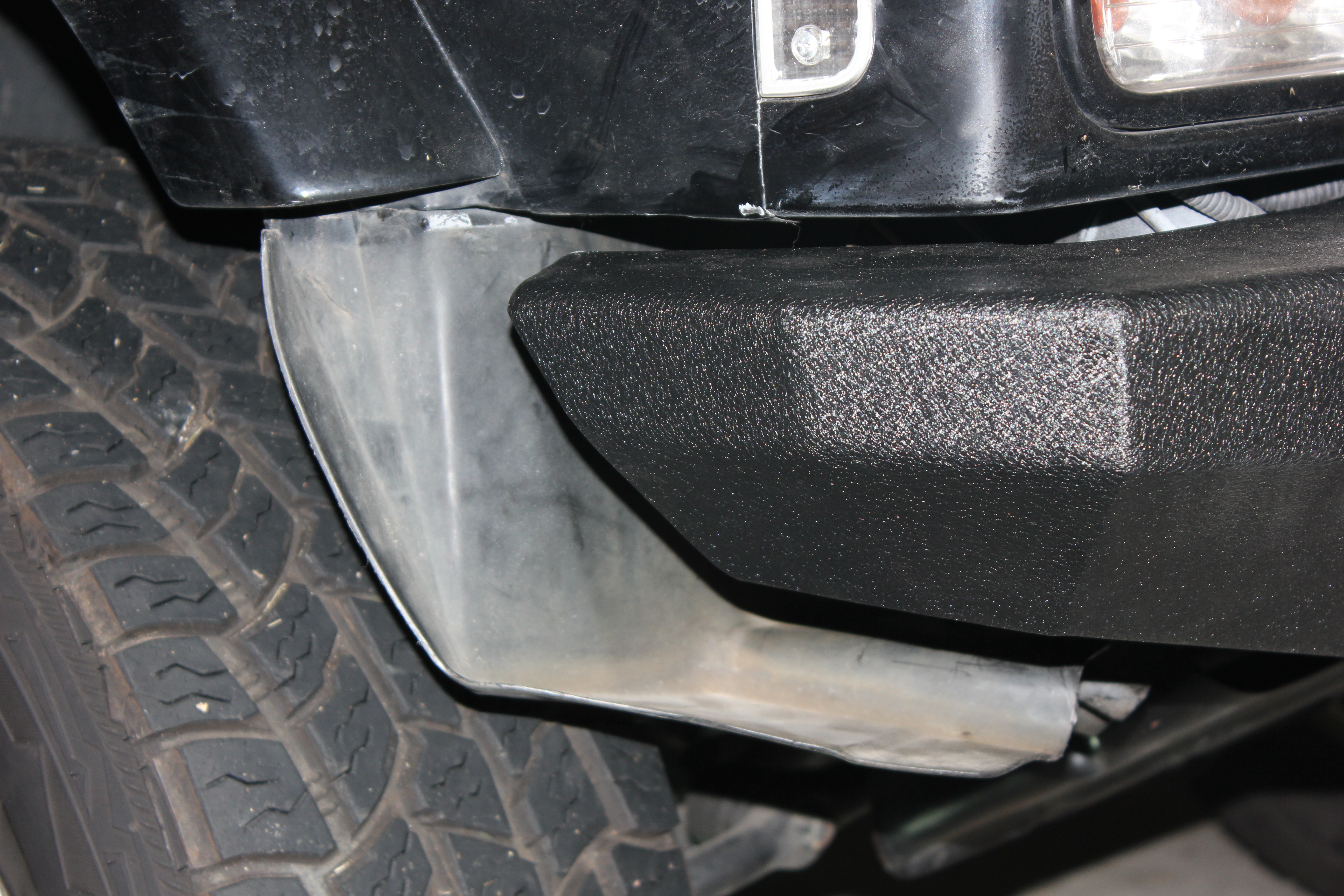
This is pretty easy to fix with some Stanley Snips
Remember earlier when I said to save those plastic rivets for the splash guard? Pop those bad boys back in and use the snips to cut away the excess splash guard. I tried to leave enough that my horns are still somewhat protected. Here is the final result:
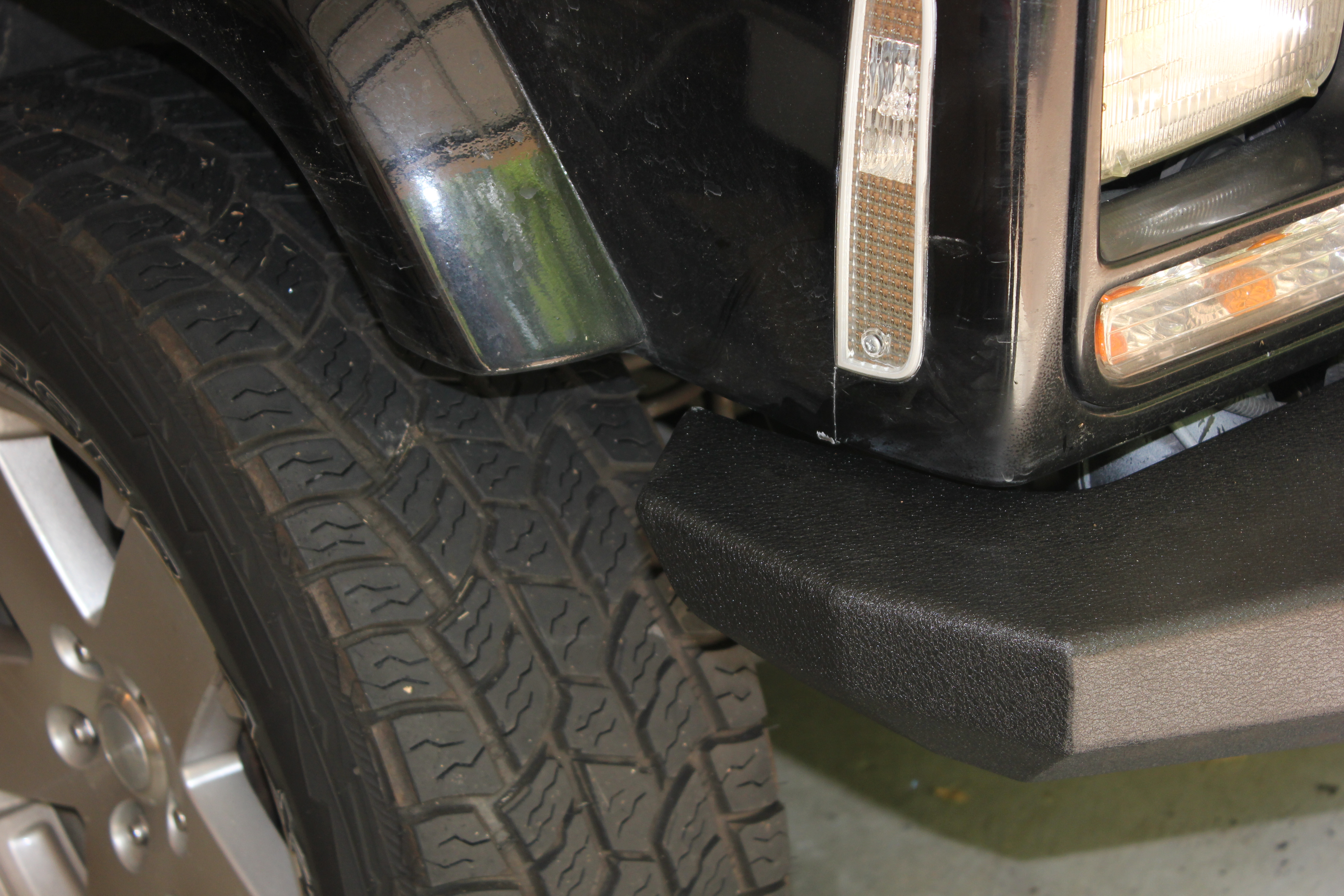
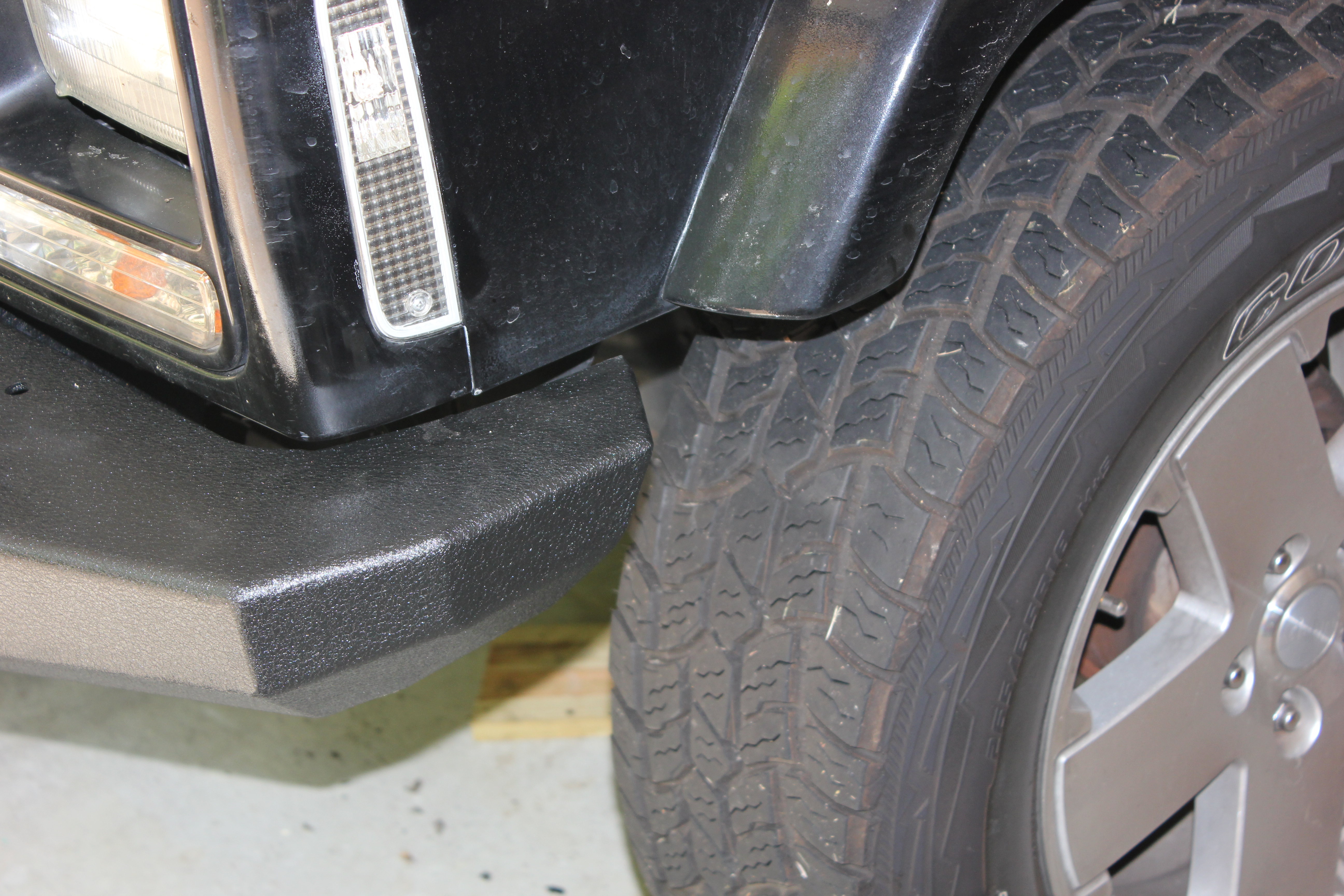
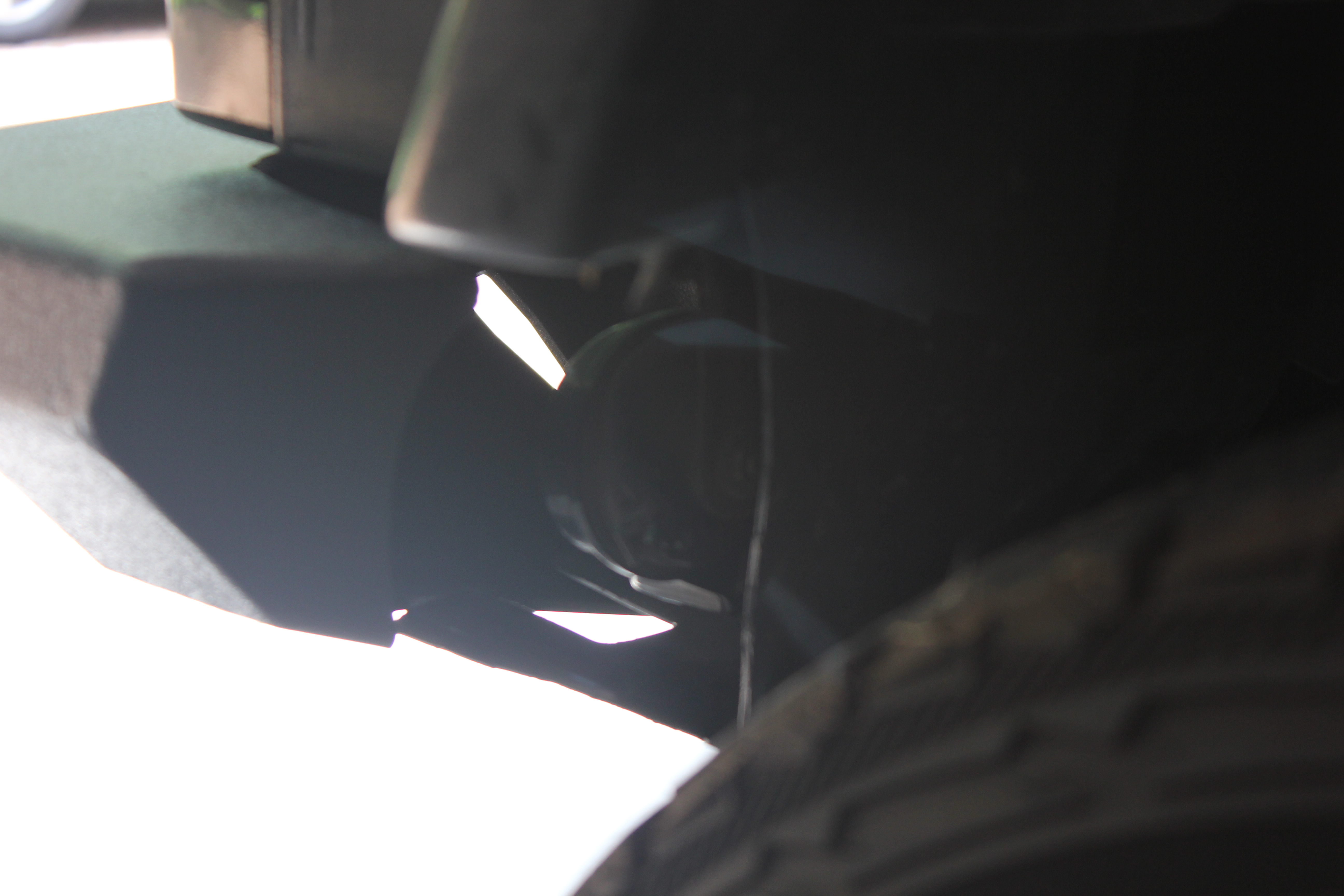
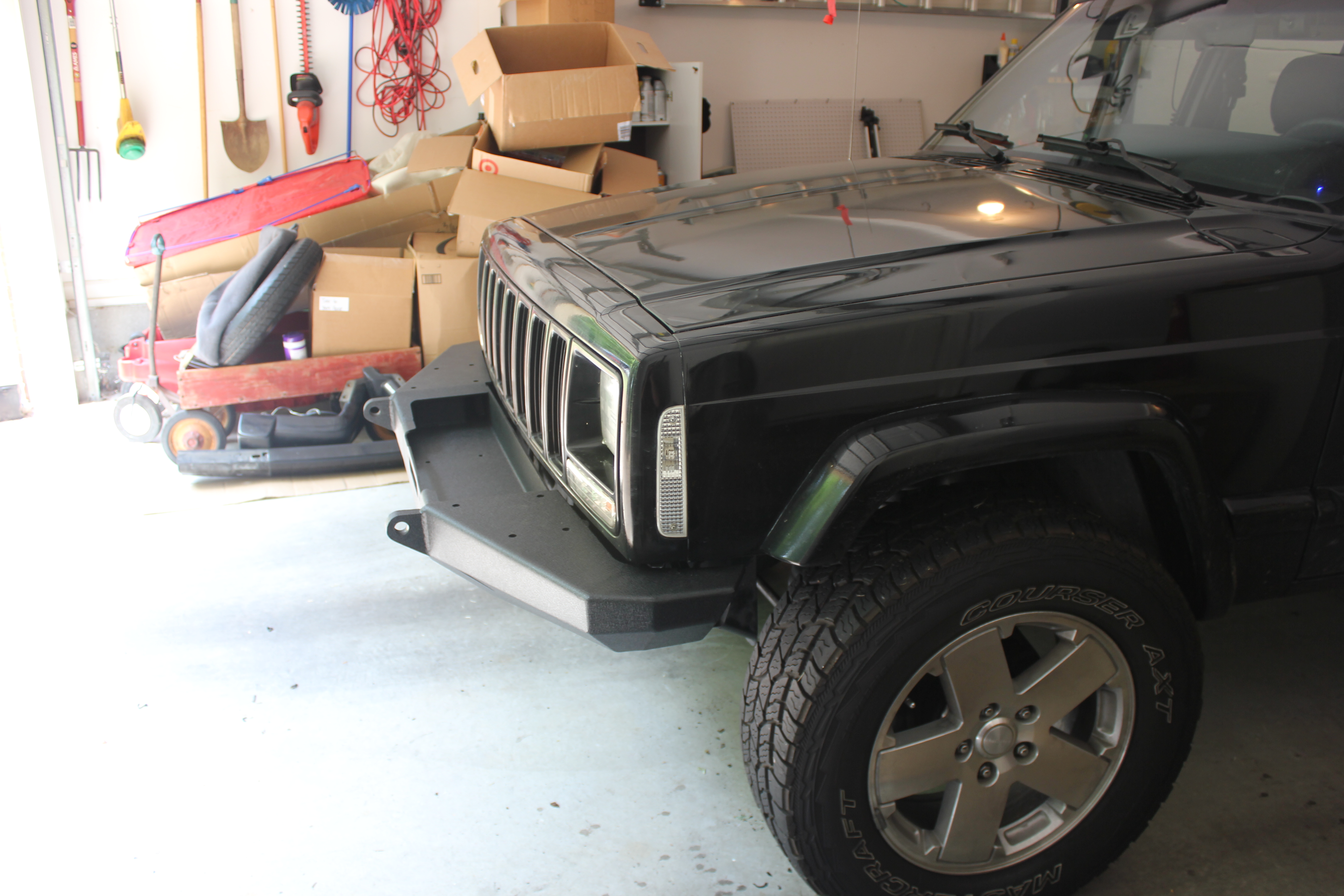
So that’s it! Now it looks like this:
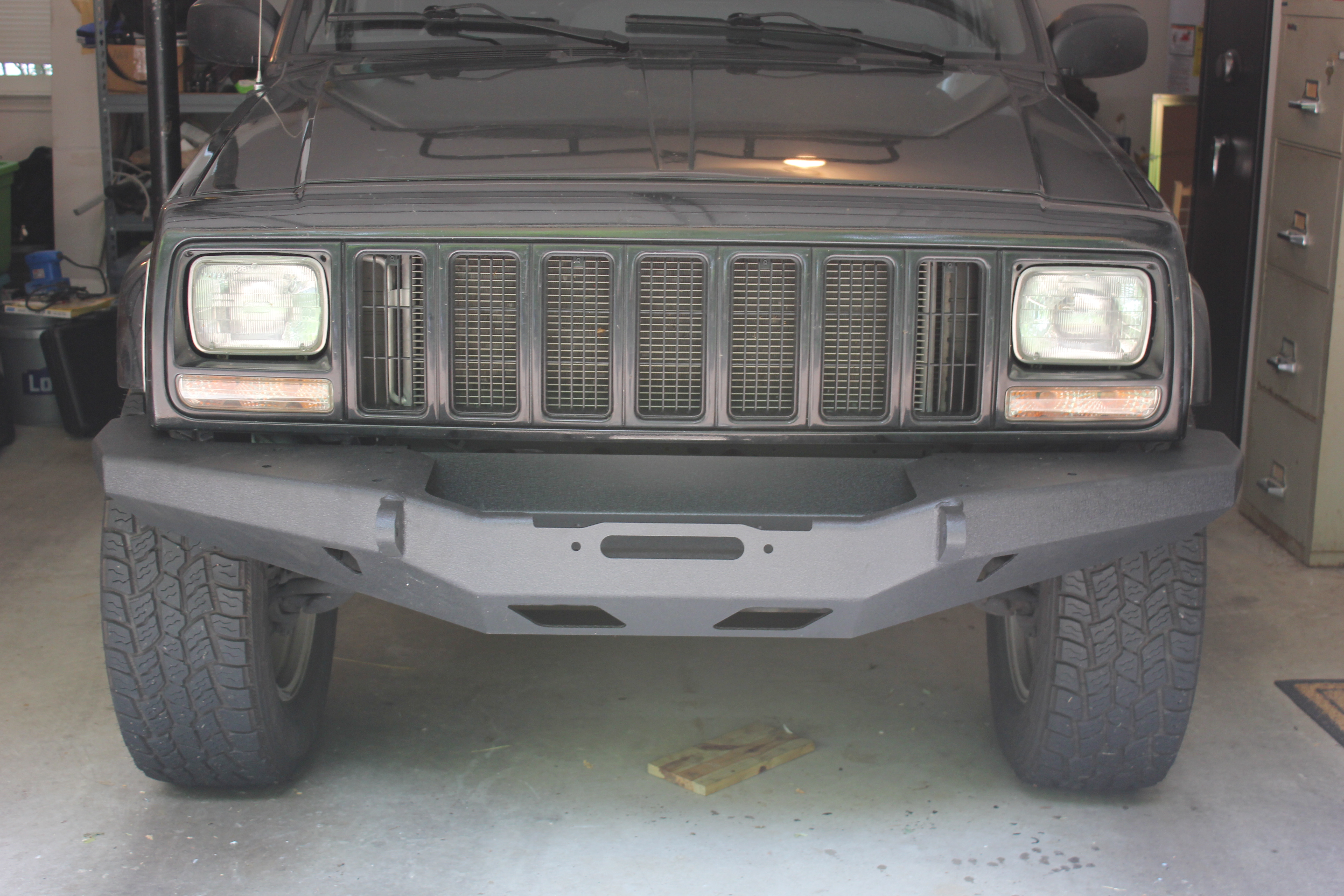
Now here is the problem. It looks kinda dumb to have all that bumper and no winch. Well, that’s coming. I think I’m probably going to get an XRC winch
In the meantime, I can minimize the Fat Lip look by getting the Smittybilt 76811 XRC Front Bull Bar
Other than that, I’m pretty pleased–and in the meantime I’ve got a dinner table on the front of my Jeep!
You can order one from these resellers:
4 Wheel Drive Hardware
4 Wheel Parts
Summit Racing
Morris 4×4 Center


Leave a Reply